How Home Care Helps Couples Age in Place Together in Johnstown
For many couples in Johnstown, the idea of aging in place isn’t just about staying in a familiar home—it’s about staying together. After decades of shared routines, memories, and companionship, the thought of being separated due to changing health needs can feel overwhelming. Families often ask how they can support both partners when one begins to need more help, or when both are facing new challenges that make daily life a little harder.
If you’re noticing signs that your parents—or you and your partner—are struggling with everyday tasks, mobility, or safety, know that you’re not alone. Many couples in Johnstown and the surrounding Fort Collins region want to maintain their independence and remain side by side, even as their needs change. In-home care can play a powerful role in making that possible.
This guide explains how compassionate support at home helps couples stay together safely, comfortably, and confidently.
Why Aging in Place Matters So Much to Couples
For long-term partners, staying together at home is often deeply tied to emotional well-being. The daily rituals—sharing coffee, tending to the garden, watching the sunset over the Front Range—carry meaning that can’t be replicated in a facility. Even when health challenges arise, many couples in Johnstown prefer receiving support at home rather than moving into separate levels of care.
Common reasons couples want to age in place:
- Staying close to familiar surroundings and routines
- Remaining part of the Johnstown community
- Avoiding the emotional strain of living apart
- Maintaining privacy, dignity, and independence
In-home care allows couples to receive individualized support while continuing to enjoy life together.
How In-Home Care Supports Couples With Different Needs
Many couples experience different levels of health or mobility changes. One partner may still be active and independent, while the other needs help with bathing, dressing, or medication reminders. In-home care can adjust to these differences with personalized support for each person.
Support may include:
- Assistance with daily personal care
- Help managing medications and routines
- Meal preparation tailored to individual preferences
- Fall prevention and mobility support
- Light housekeeping and laundry
- Companionship and engagement for both partners
This balanced approach helps ensure that neither partner feels overburdened or overlooked.
Reducing Stress on the Healthier Partner
It’s incredibly common for one partner to take on the majority of caregiving responsibilities. While it comes from a place of love, it can become physically and emotionally taxing—especially in the winter months when snowy and icy roads make daily tasks even more challenging.
In-home care provides relief by:
- Sharing or fully taking over caregiving tasks
- Allowing the healthier partner to rest and recharge
- Preventing injury or exhaustion
- Encouraging quality time focused on companionship rather than caregiving tasks
When the caregiving load is lifted, couples can simply enjoy being together again.
Enhancing Safety in the Home
Colorado homes in Johnstown often feature stairs, multi-level layouts, or outdoor walkways affected by snowy and icy roads. For older adults, these conditions can increase the risk of falls or injuries.
Caregivers can help by:
- Offering steady support with mobility
- Ensuring walking paths are clear and safe
- Assisting with bathing, toileting, and dressing
- Monitoring for changes in health or behavior
- Encouraging healthy hydration at altitude
Simple adjustments can make a significant difference in long-term safety.
Supporting Couples With Memory Loss
When one partner is living with dementia or memory loss, the other often feels a mix of love, worry, and grief. Many spouses do everything they can to help but may feel overwhelmed, exhausted, or uncertain about what to do next.
In-home care provides stability through:
- Gentle redirection and reassurance
- Consistent routines that reduce stress
- Safe engagement and meaningful activities
- Supervision that allows the other partner to rest
- Support navigating behaviors that can be confusing or unpredictable
This helps preserve the couple’s connection while reducing stress for both individuals.
Strengthening Emotional Well-Being
Companionship is one of the greatest joys of aging together. Yet when health challenges arise, couples can unintentionally become isolated—especially during long winter months or when driving becomes difficult.
Caregivers offer:
- Friendly conversation and emotional support
- Help staying connected with family and community
- Walks, activities, and shared hobbies
- Transportation to appointments, errands, or social outings
These meaningful interactions support a positive outlook for both partners.
A Tailored Plan for Two
Every couple’s situation is different. At Touching Hearts, care plans are created based on each person’s unique needs—whether that means a few hours of help each week or daily support.
Caregivers can help with:
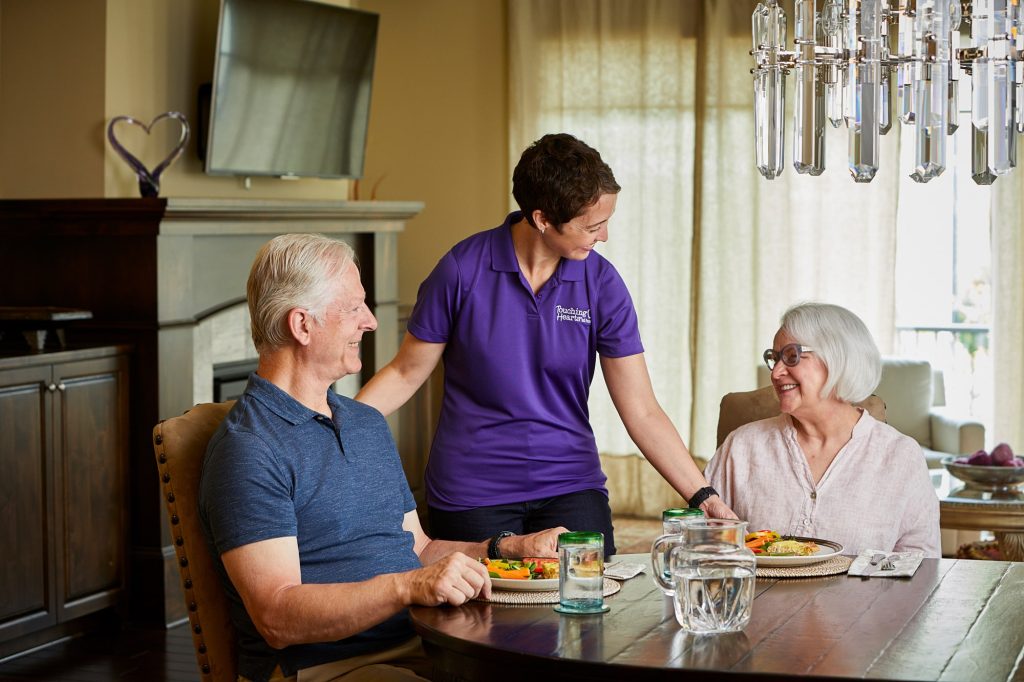
- Coordinated meal times
- Assistance with getting ready for the day
- Evening routines
- Overnight support, if needed
- Keeping both partners engaged, safe, and supported
This flexible structure allows couples to stay in their home and continue living life on their own terms.
If you’re feeling unsure about your parent’s needs, Touching Hearts offers a free, no-pressure in-home consultation in Johnstown. We’re here to support your family every step of the way.
Frequently Asked Questions
Can one caregiver support both partners?
Yes. Care plans are designed to meet the needs of both individuals, whether those needs are similar or very different.
What if one partner needs a lot more help than the other?
Care can be customized so each person receives the appropriate level of support without overwhelming the healthier partner.
Can care be scheduled only during certain times of day?
Absolutely. Many couples choose morning or evening support, while others prefer longer daytime hours.
Is in-home care more affordable than moving to assisted living?
Often, yes—especially when only one partner needs higher levels of care. In-home support can be tailored to fit your budget and needs.
Can in-home care help couples with dementia or memory loss?
Yes. Caregivers can provide structure, safety, and meaningful engagement for partners experiencing memory changes.