
How to Make a Colorado Home Safer for Aging in Place in Greeley
For many families, helping an aging parent remain at home is about much more than where they live. Home represents familiar routines, favorite belongings, neighbors, memories, and a sense of independence. But as parents get older, a home that once felt completely comfortable may develop challenges that are easy to overlook.
For adult children in Greeley, those concerns can become more noticeable when mobility changes, everyday tasks become harder, or Colorado weather creates additional obstacles. A staircase, slippery bathroom floor, cluttered hallway, or icy walkway can suddenly require more attention than it did a few years ago.
The good news is that making a home safer does not always require a major renovation. Small, thoughtful changes can reduce hazards and make everyday routines easier while allowing your parent to continue doing as much as they safely can. This guide walks through practical areas of the home that Greeley families can review when planning for aging in place.
Start With a Room-by-Room Safety Walkthrough
One of the simplest ways to identify potential problems is to walk through your parent’s home as though you were seeing it for the first time.
Look at the places your parent uses every day and pay attention to what could make movement, personal care, cooking, or getting in and out of the home more difficult.
Touching Hearts’ caregiver training emphasizes thinking about home safety every day and developing regular safety habits. The handbook explains that eliminating home hazards is an important part of helping seniors and people with disabilities remain safe and healthy in their own homes.
Rather than trying to change everything at once, start with the areas your parent uses most.
Pay particular attention to:
- Entryways
- Hallways
- Stairs
- Bathrooms
- Bedrooms
- Kitchens
- Living areas
- Outdoor walkways
- Areas where frequently used belongings are stored
Ask yourself whether your parent can move through each space comfortably and whether important items are within easy reach.
Keep Walkways Clear
Clutter can become more than a housekeeping issue when an older adult has difficulty walking, uses a mobility aid, or needs additional stability.
Boxes, baskets, electrical cords, loose rugs, shoes, magazines, and decorative objects can create obstacles in frequently used areas.
Touching Hearts’ emergency guidance specifically recommends keeping walkways and common areas clear of debris and keeping doorways unobstructed so people can exit quickly during an emergency.
Look for potential obstacles such as:
- Shoes left near doorways
- Cords crossing walking paths
- Small tables that narrow hallways
- Stacks of newspapers or magazines
- Laundry baskets
- Loose rugs
- Decorative items on stairs
- Boxes stored in commonly used areas
This does not mean your parent’s home needs to look empty.
The goal is to preserve the things that make the home feel like home while creating enough open space for safe movement.
If your parent has a favorite chair, for example, keep it where they enjoy sitting. Instead of removing the chair, look at whether the path to and from it is clear.
Pay Special Attention to Stairs
Stairs can become more challenging as balance, strength, vision, or mobility changes.
The Touching Hearts caregiver handbook identifies stairways as a high-risk area when appropriate safety precautions are not used. It recommends good lighting at the top and bottom of stairs and checking for worn or loose carpeting, carpet tracks, temporary storage, and decorative items.
Review your parent’s stairs for:
- Adequate lighting
- Secure handrails
- Loose carpeting
- Objects stored on steps
- Slippery surfaces
- Rugs at the top or bottom of the staircase
- Clutter around the landing
The handbook also recommends using skid-resistant backing or carpet tape for rugs located near stairways and using handrails when navigating stairs.
For an older adult who is becoming less confident on stairs, consider whether frequently used items can be relocated to reduce unnecessary trips up and down.
A parent who normally manages stairs independently may appreciate having commonly needed clothing, toiletries, or household supplies on the same level as their bedroom.
Make the Bathroom a Priority
Bathrooms deserve special attention because water and smooth surfaces can create slippery conditions.
Touching Hearts’ caregiver training recommends using grab bars when available near the bathtub, shower, and toilet. It also identifies non-slip strips in the tub or shower and a bathmat with a non-skid bottom as useful safety measures.
Walk through the bathroom and ask:
- Is the floor dry and easy to walk across?
- Can your parent get into and out of the shower safely?
- Are grab bars available where appropriate?
- Is the bathmat secure?
- Are frequently used toiletries easy to reach?
- Is the bathroom adequately lit?
- Is there enough space to maneuver safely?
Do not assume that a bathroom is safe simply because your parent has used it successfully for years.
Needs can change gradually.
A parent who once stepped easily over the edge of a bathtub may eventually find that movement uncomfortable or less secure. That is a good reason to review the environment rather than waiting for a problem.
Be Careful Around Water and Wet Surfaces
Water safety is another important part of home safety.
The Touching Hearts handbook notes that slippery surfaces and electrical supplies can create unsafe conditions around water sources. It recommends cleaning slippery surfaces and taking precautions around standing water.
If water spills on the floor, it should not simply be left for later.
An older adult may not notice a wet area or may have difficulty stepping around it.
In the bathroom and kitchen especially, make sure wet areas are addressed promptly.
Families can also consider:
- Keeping towels within easy reach
- Making sure bathmats have non-skid backing
- Keeping electrical equipment away from water
- Storing cleaning supplies safely
- Avoiding unnecessary clutter around sinks and tubs
These small habits can make everyday routines feel more predictable.
Improve Lighting Throughout the Home
Good lighting can make a meaningful difference when an older adult is moving around the home.
Dark hallways, poorly lit stairways, and dim entryways can make it harder to see changes in flooring, furniture, or objects left on the ground.
The Touching Hearts handbook specifically recommends that the areas at the top and bottom of stairways be well lit.
Walk through the home during different times of day.
A room that looks bright in the afternoon may be surprisingly dark in the early morning or evening.
Consider lighting in:
- Hallways
- Stairways
- Bedrooms
- Bathrooms
- Entryways
- Kitchens
- Outdoor paths
- Areas between the bedroom and bathroom
Night lights can also make familiar routes easier to navigate after dark.
The goal is not necessarily brighter lighting everywhere. It is making sure your parent can clearly see where they are going.
Keep Frequently Used Items Within Reach
Aging in place becomes easier when your parent does not have to stretch, climb, bend, or use a chair to reach everyday belongings.
Look at the items your parent uses most often.
In the kitchen, that might include plates, cups, commonly used cooking utensils, and pantry items.
In the bathroom, it might include towels, toiletries, and grooming supplies.
In the bedroom, it could include clothing, shoes, books, or other personal items.
Reorganizing these belongings can make everyday routines easier without changing the entire room.
A helpful question is:
“Does my parent have to take an unnecessary risk to get this?”
If the answer is yes, consider whether the item can be moved somewhere more accessible.
Make the Kitchen Easier to Navigate
The kitchen is often one of the busiest rooms in a home.
Your parent may move between the refrigerator, sink, stove, cabinets, and table several times while preparing a meal.
A safer kitchen starts with keeping those pathways clear.
Touching Hearts’ caregiver training identifies meal preparation as part of non-medical home care and encourages attention to client needs and preferences during meal planning and preparation.
Families can review whether commonly used kitchen items are easy to access and whether countertops and floors are free of unnecessary obstacles.
Look for:
- Cluttered walkways
- Items stored too high
- Heavy objects that are difficult to lift
- Spills on the floor
- Poor lighting
- Appliances or cords creating obstacles
- Frequently used items stored far from the main work area
If your parent enjoys cooking, the goal is not necessarily to stop them from using the kitchen.
Instead, make the kitchen work better for their current abilities.
Think About Colorado Weather
A home may be comfortable and safe during much of the year but present additional challenges when Colorado weather changes.
Greeley families know that winter can bring snow, ice, freezing temperatures, and changing road conditions. Summer can bring periods of heat that affect outdoor errands and activities.
Outdoor areas deserve the same attention as the inside of the house.
Before winter weather arrives
Check:
- Walkways
- Driveway surfaces
- Entry steps
- Handrails
- Porch lighting
- Door thresholds
- Areas where snow or ice tends to collect
If your parent has difficulty walking, plan ahead rather than expecting them to manage icy conditions independently.
A caregiver or family member may be able to assist with errands and transportation when outdoor conditions make getting around more difficult.
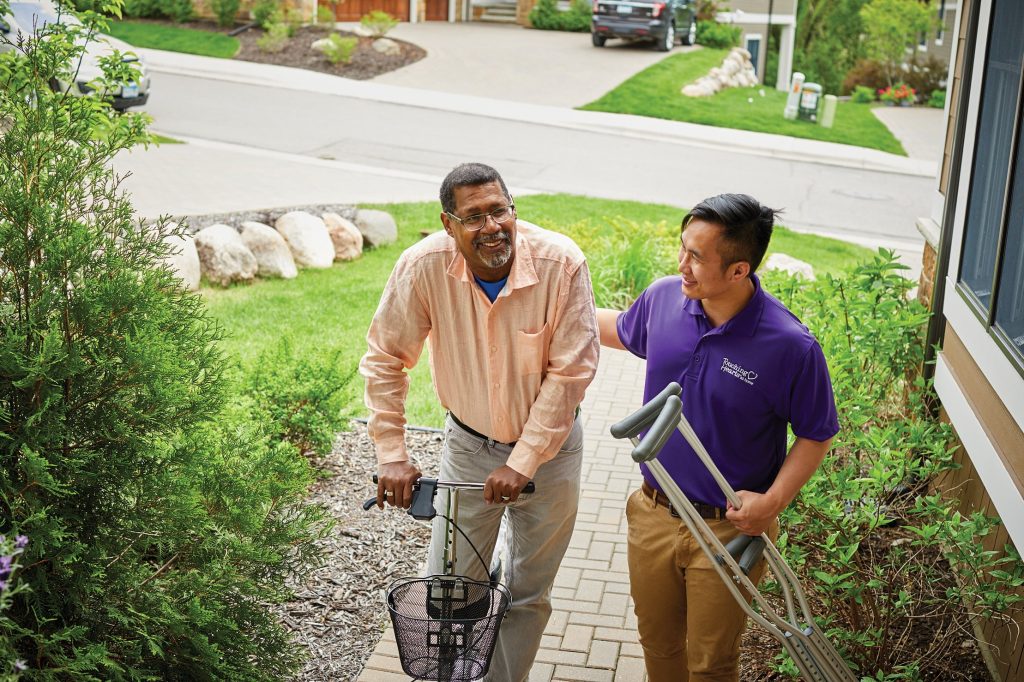
Make Entryways Easier and Safer
The entrance to the home is easy to overlook.
Yet your parent may use it while carrying groceries, answering the door, retrieving mail, or leaving for an appointment.
Look for obstacles around the threshold and make sure the path is adequately lit.
Touching Hearts’ safety guidance recommends keeping doorways clear and ensuring that exits remain unobstructed.
Consider:
- Clear access to the door
- Good lighting
- A stable place to stand while unlocking the door
- Secure handrails where needed
- Clear pathways to the driveway or sidewalk
- A place for frequently used items such as keys and mail
During winter, pay particular attention to snow and ice around the entrance.
A parent should not have to navigate an avoidable obstacle simply to leave or enter their home.
Check Smoke and Carbon Monoxide Safety
Home safety also includes preparation for emergencies.
The Touching Hearts handbook explains that carbon monoxide is an odorless, invisible gas produced by fuel-burning appliances and equipment. It also emphasizes that carbon monoxide alarms and smoke alarms serve different purposes and that homes need both types of protection.
Families should make sure their parent knows where alarms are located and what to do if one sounds.
Also consider whether your parent could hear an alarm clearly from their bedroom or usual living area.
If you are unsure whether the home’s safety equipment is appropriate or functioning properly, seek guidance from qualified professionals rather than guessing.
Keep Emergency Exits Accessible
A safer home should also allow your parent to get out quickly if an emergency occurs.
Touching Hearts’ emergency procedures emphasize keeping walkways clear, keeping doorways unobstructed, and ensuring that the walkways outside doorways remain clear.
This is particularly important for an older adult who uses a walker, cane, wheelchair, or other mobility aid.
Walk through the home and identify the easiest exit.
Then ask:
- Can my parent reach it without navigating clutter?
- Is the route adequately lit?
- Are doors easy to access?
- Are mobility aids available when needed?
- Does the family know where to meet if evacuation becomes necessary?
Emergency planning does not need to be frightening. It is simply another way of preparing for the unexpected.
Store Household Products Safely
Cleaning products, medications, and other household substances should be stored carefully.
Touching Hearts’ caregiver training instructs caregivers to keep household products in their original containers, follow manufacturer storage recommendations, and avoid mixing products because some combinations can react dangerously.
For an older adult, clearly organized storage can also make the home easier to manage.
Keep potentially hazardous products secured appropriately and avoid leaving chemicals or medications where they could be accidentally accessed.
If a product is unlabeled or its contents are unclear, do not assume what it contains.
Consider Your Parent’s Mobility
Aging in place is easier when the home supports the way your parent moves.
Some older adults use a cane or walker. Others may need assistance standing from a chair or moving between rooms.
Touching Hearts’ caregiver training emphasizes that when supporting a client’s movement, the client should do most of the work while the caregiver provides assistance, stability, and confidence. Caregivers are also instructed to recognize their limitations and contact the office when a client requires more help than they can safely provide.
This is an important distinction for family members, too.
If your parent requires more physical assistance than you can safely provide, do not simply try to lift them yourself.
Consider whether the home needs additional equipment or whether professional support is appropriate.
Keep the Home Familiar
Safety improvements should not make your parent feel like they no longer live in their own home.
Touching Hearts’ caregiver training emphasizes that caregivers are guests in a client’s home and that clients are entitled to safety, security of their possessions, and respect for their home.
That principle can guide family members as well.
Avoid rearranging everything without talking with your parent first.
If a favorite chair needs to move because it blocks a walkway, explain why. If frequently used items need to be relocated, involve your parent in the decision.
A safer home can still feel personal and familiar.
Look Beyond Physical Safety
Aging in place is not only about preventing physical hazards.
Your parent’s emotional well-being matters, too.
If safety concerns lead to your parent giving up hobbies, social activities, or normal household routines, the solution may need to include more support rather than simply more restrictions.
Touching Hearts’ training encourages caregivers to learn clients’ interests, participate in hobbies and activities when appropriate, encourage household activities, and plan outings that fit the client’s service plan.
For a parent in Greeley, that might mean keeping up with a favorite hobby, spending time with family, visiting friends, or continuing familiar routines with appropriate support.
The safest home is not necessarily the one where your parent does the least.
It is the one where they can continue participating in daily life with the right support.
Know When Home Safety Changes Mean More Support Is Needed
Sometimes a home-safety review reveals more than a few loose rugs or dark hallways.
You may realize that your parent is having difficulty with several parts of daily life.
Maybe the laundry has become overwhelming. Perhaps meals are being skipped because cooking takes too much effort. Your parent may no longer feel comfortable driving, or they may need help with bathing.
These are signs that the conversation may need to move beyond home modifications.
Touching Hearts provides non-medical home care services that include light housekeeping, meal planning and preparation, home-safety monitoring, companionship, personal care, medication reminders, and transportation or errands according to the client’s care plan.
For some Greeley families, a caregiver a few hours a week may provide exactly the additional support needed to make aging at home more manageable.
Create a Simple Home Safety Routine
You do not have to inspect the entire house every week.
Instead, make safety part of normal family conversations and visits.
Every few months, walk through the home again.
Ask whether anything has changed.
Check for:
- New clutter
- Changes in mobility
- New furniture
- Poor lighting
- Loose rugs
- Bathroom challenges
- Stairway concerns
- Outdoor hazards
- Difficulty reaching household items
- Changes in transportation needs
A home that was appropriate last year may need adjustments today.
That is normal.
Aging in place is an ongoing process rather than a one-time project.
How In-Home Care Can Support a Safer Home
Professional home care can complement home-safety improvements by providing another set of eyes and practical assistance during everyday routines.
Touching Hearts’ caregiver services include home-safety monitoring and supervision of home maintenance, along with light housekeeping, personal care, meal preparation, companionship, and transportation or errands.
A caregiver may notice that a walkway has become cluttered, that groceries are running low, or that a routine task has become more difficult for your parent.
Caregivers are also expected to notify the office of changes in a client’s health or appearance and to communicate concerns appropriately.
This does not mean a caregiver diagnoses problems or makes medical decisions.
Instead, consistent in-home support can help families notice practical changes sooner and respond appropriately.
Make Safety About Independence, Not Restriction
It is understandable for adult children to become protective when they see potential risks.
But telling a parent, “You can’t do that anymore,” can quickly feel like a loss of independence.
A better conversation focuses on how to make an activity safer.
Instead of saying:
“You shouldn’t use the stairs.”
Try:
“Let’s figure out how we can make the stairs easier and safer for you.”
Instead of:
“You can’t cook anymore.”
Try:
“Let’s move the things you use most often so cooking is easier.”
This approach respects your parent’s abilities while acknowledging that some environments may need to change.
Touching Hearts’ caregiver training emphasizes maintaining client dignity, privacy, comfort, and independence while providing appropriate assistance.
That philosophy is at the heart of aging in place.
A Safer Home Can Give the Whole Family More Confidence
Making a Colorado home safer for aging in place is not about creating a perfect house.
It is about noticing the small things that can make everyday life harder and addressing them thoughtfully.
For families in Greeley, that may mean improving lighting, clearing walkways, making the bathroom easier to use, reviewing stairs, preparing for winter conditions, keeping emergency exits accessible, or making frequently used items easier to reach.
Sometimes it also means recognizing that your parent could benefit from another person in the home.
You do not have to wait for a crisis to begin that conversation.
Start with one room.
Then one routine.
Then one practical improvement.
Over time, those small changes can help your parent remain comfortable in a familiar home while giving your family greater confidence that their environment is supporting—not limiting—their independence.
Frequently Asked Questions
These questions can help Greeley families begin reviewing a parent’s home for aging in place.
What should I check first when making my parent’s home safer?
Start with the areas your parent uses most often, especially bathrooms, stairs, hallways, bedrooms, kitchens, and entryways. Look for clutter, poor lighting, slippery surfaces, and anything that requires unnecessary reaching, bending, or climbing.
Are bathrooms especially important for aging in place?
Yes. Bathrooms can involve water and slippery surfaces, so they deserve careful attention. Touching Hearts’ caregiver training recommends appropriate use of grab bars, non-slip shower or tub surfaces, and non-skid bathmats.
How can I make stairs safer for my parent?
Keep stairs free of objects and loose carpeting, make sure the top and bottom are well lit, and ensure handrails are available and used appropriately. If stairs are becoming difficult for your parent, consider whether frequently used items can be relocated to reduce unnecessary trips.
What should Greeley families do differently during Colorado winters?
Review outdoor walkways, entry steps, handrails, lighting, and areas where snow and ice tend to accumulate. Consider arranging assistance with errands or transportation when weather conditions make outdoor travel more difficult.
Can a home caregiver help with safety?
Depending on the client’s care plan, Touching Hearts caregivers can monitor home safety, supervise home maintenance, assist with personal care, provide light housekeeping, prepare meals, offer companionship, and help with errands and transportation.
When should I consider more than home modifications?
If your parent is having difficulty with meals, personal care, transportation, household tasks, mobility, or spending too much time alone, the issue may involve more than the physical environment. Additional non-medical home care may help provide practical support while your parent continues living at home.
If you’re feeling unsure about your parent’s needs, Touching Hearts offers a free, no-pressure in-home consultation in Greeley. We’re here to support your family every step of the way.