Personal Care at Home in Windsor: Dignified Support for Daily Routines
There are some parts of daily life that feel deeply personal. Getting dressed, bathing, brushing your hair, using the bathroom, and preparing for the day are routines most of us have handled privately for years. When an aging parent begins needing help with these tasks, the change can be difficult for everyone.
For adult children, offering personal care assistance can also feel delicate. You want your parent to be safe and comfortable, but you do not want them to feel as though they have lost their independence or privacy.
Personal care at home can provide a thoughtful middle ground. In Windsor, a trained caregiver can assist with appropriate daily routines while encouraging an older adult to do as much as they comfortably can for themselves. The goal is not simply to complete a task. It is to provide support while protecting dignity, comfort, and a sense of control.
What Is Personal Care at Home?
Personal care means helping with everyday care of a person’s body when physical limitations, illness, frailty, or other circumstances make some routines difficult to manage independently.
Touching Hearts’ caregiver training describes personal care as assistance with tasks such as bathing, toileting, dressing, grooming, eating, shaving, mouth care, and mobility-related assistance.
The exact services a caregiver provides are determined by the client’s assessment and individual needs. The handbook explains that each client’s assessment specifies the type and frequency of services to be provided.
This individualized approach matters because no two older adults have exactly the same routine.
One Windsor senior may only need a little help getting dressed in the morning. Another may need more consistent assistance with bathing and toileting. Someone else may simply need a caregiver nearby on days when they feel weak or unsteady.
Personal Care Can Help Preserve Independence
Needing help with a daily task does not mean a person has stopped being independent.
In fact, appropriate assistance can sometimes make it possible for an older adult to continue living at home rather than needing a different living arrangement. Touching Hearts’ training materials specifically describe personal care assistance as a way to help clients remain at home while preserving their sense of well-being and dignity.
The caregiver’s role is to help without unnecessarily taking over.
Most adults want to remain involved in their own routines. The handbook instructs caregivers to encourage clients to do as much as they can themselves and, whenever possible, allow the client to direct the care.
That might mean a caregiver lays out clothing while the client dresses independently. Or perhaps the caregiver provides stability while the client moves from one position to another.
Small amounts of assistance can make a meaningful difference.
What Personal Care Services Can Include
Personal care looks different from household to household. The following are examples of support that may be included when they are part of the client’s established care plan.
Bathing and Shower Assistance
Bathing can become more difficult when an older adult has trouble standing, balancing, reaching, or moving safely in the bathroom.
A caregiver can provide appropriate assistance with bathing when it is included in the client’s care plan.
The focus should be on safety and comfort while allowing the client to participate as much as possible.
Privacy is especially important during bathing. Touching Hearts’ personal care training emphasizes gathering supplies, washing hands, identifying yourself, providing privacy, explaining what you are doing, and making sure the area is left in order afterward.
For families in Windsor, this kind of support can help make a morning or evening routine feel calmer and less stressful.
Dressing and Undressing
Choosing and putting on clothing can become challenging when a parent has difficulty bending, reaching, standing, or coordinating certain movements.
A caregiver may assist with dressing and undressing according to the client’s assessment.
The goal is not to choose everything for the client or rush the process. It is to provide the amount of help needed while respecting personal preferences.
A parent may still want to choose what they wear, decide when they are ready to get dressed, and participate in the process.
Grooming and Hair Care
Grooming is about more than appearance.
Feeling clean, comfortable, and well-groomed can contribute to a person’s sense of confidence and well-being. Touching Hearts’ training notes that hair care can affect a client’s sense of dignity and well-being and encourages clients to do as much as possible for themselves.
Depending on the care plan, assistance may include brushing or combing hair, helping with shaving, or other appropriate grooming tasks.
Oral and Mouth Care
Oral care is another routine that can become harder when an older adult has difficulty with hand movement or coordination.
Caregivers may assist with mouth care when it is included in the client’s assessment.
The objective is to support an established daily routine while helping the client remain involved in their own care.
Toileting Assistance
Toileting can be one of the most sensitive areas of personal care.
It is also an area where safety, privacy, patience, and communication are especially important.
Caregivers may assist with toileting according to the client’s care plan. Touching Hearts’ training emphasizes providing privacy and not rushing the client during bathroom-related assistance.
A respectful approach can make an intimate task feel much more comfortable for both the client and caregiver.
Assistance With Eating
Some clients may need assistance during meals.
This does not necessarily mean the caregiver takes over the entire meal. Depending on the assessment, support may involve helping the client with eating while allowing them to remain as involved as possible.
Meal preparation and other household assistance may also be part of the broader home care routine.
Dignity Should Be Part of Every Personal Care Routine
Personal care is different from many other home care tasks because it involves a person’s body and privacy.
That makes the caregiver’s communication especially important.
Touching Hearts’ training instructs caregivers to communicate directly and respectfully, maintain appropriate eye contact, and avoid speaking to adults as though they were children. The handbook also reminds caregivers that they are guests in the client’s home and should help maintain the client’s dignity.
Give the Client Choices
Whenever possible, let the client make choices.
They may want to decide:
- What clothing to wear
- When they want to bathe
- Which grooming routine they prefer
- How much assistance they need
- Which parts of a task they want to complete themselves
These choices may seem small, but they can help an older adult maintain a sense of control.
Explain What You Are Doing
A caregiver should not silently begin assisting with an intimate task.
Explaining what is happening gives the client an opportunity to understand, participate, and communicate if something feels uncomfortable.
This simple practice can make personal care feel more collaborative.
Protect Privacy
Closing a door, using appropriate covering, gathering supplies ahead of time, and exposing only the area that needs attention are practical ways to protect privacy.
The Touching Hearts personal care training specifically includes providing privacy as part of its S.W.I.P.E.S. approach.
Personal Care Should Be Based on the Client’s Needs
There is no single schedule that works for every Windsor senior.
One person may need assistance every morning. Another may need help only on certain days.
Touching Hearts’ caregiver training notes that some clients require personal care assistance only when they are feeling weak or unsteady and need a stand-by.
This flexibility can be important for families who want to support a parent without unnecessarily taking over routines they can still manage.
The client’s assessment establishes the services and frequency of care.
If the client’s needs change, the caregiver should communicate those changes through the appropriate office and care-plan process rather than independently changing the scope of service.
Personal Care and Mobility Often Go Together
Daily routines frequently involve movement.
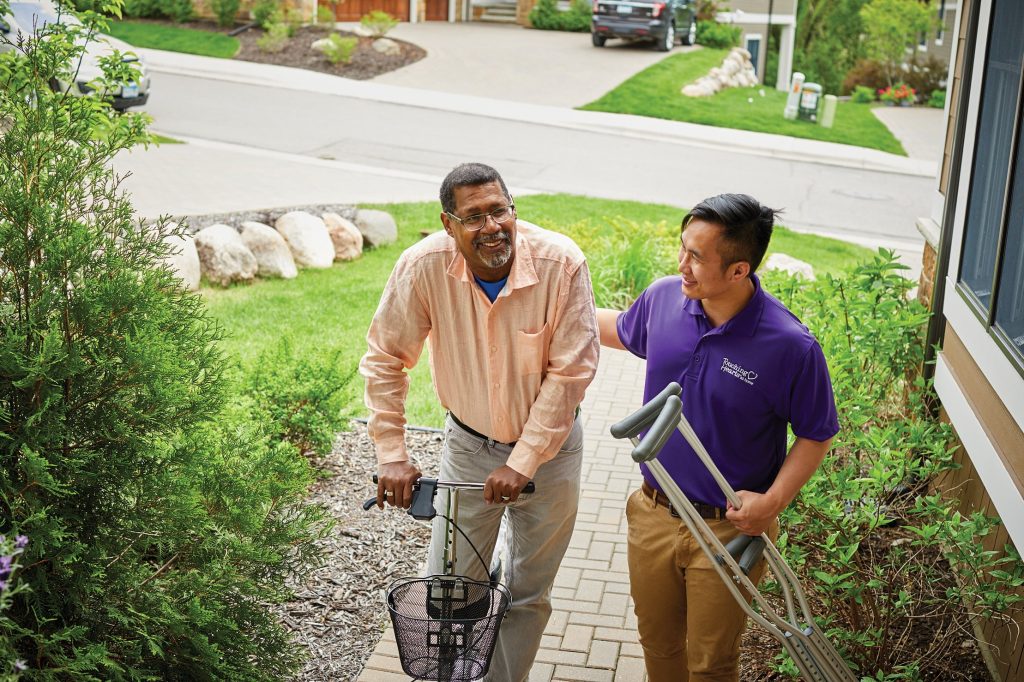
Getting out of bed, walking to the bathroom, stepping into a shower, standing from a chair, and getting dressed can all require mobility.
Touching Hearts’ training emphasizes that when caregivers assist with movement, clients should be able to do most of the work themselves. The caregiver provides assistance, stability, and confidence rather than physically moving the person.
This distinction helps protect both the client and caregiver.
For example, if a parent can stand independently but needs someone nearby for stability, the appropriate level of assistance may be different from someone who cannot safely perform the movement themselves.
Caregivers are also instructed to understand their limitations and contact the office if a client requires more physical assistance than the caregiver can safely provide.
Making the Windsor Home More Comfortable for Daily Routines
The home environment can influence how easily a parent completes personal care tasks.
Bathrooms deserve particular attention because wet surfaces can create additional challenges.
Touching Hearts’ caregiver training recommends using available grab bars, non-slip surfaces, and appropriate bath mats when assisting vulnerable clients in bathrooms. It also emphasizes taking time and providing stability during bathing and toileting routines.
Families can also look at the everyday layout of the home.
Consider whether:
- Frequently used clothing is easy to reach
- The path to the bathroom is clear
- Frequently used personal care supplies are accessible
- Bathroom floors can be kept dry
- Lighting is adequate
- Mobility equipment can be used without unnecessary obstacles
These practical considerations can make daily routines feel less frustrating.
For Windsor families, seasonal changes can also affect routines. Snow, ice, and colder temperatures may make movement around entrances and outdoor areas more challenging during winter.
A caregiver can remain attentive to safety concerns within the home and report hazards through the appropriate channels.
Personal Care Can Support Family Caregivers, Too
Adult children often step into personal care gradually.
At first, they may help their parent with a few things during weekend visits. Then they may begin helping with bathing, dressing, toileting, or other intimate routines.
Over time, that responsibility can become emotionally and physically difficult.
Having a professional caregiver provide appropriate personal care can give family members an opportunity to remain involved as sons, daughters, spouses, or other loved ones rather than having every interaction revolve around caregiving tasks.
That does not mean family involvement becomes less important.
Instead, professional support can create room for families to spend more time simply being together.
A daughter might be able to sit with her mother over coffee rather than spending the entire visit organizing personal care routines.
A son might be able to take his father out for lunch instead of worrying about whether he can safely get ready beforehand.
Those ordinary moments matter.
How Personal Care Fits Into Non-Medical Home Care
Personal care is one part of a broader non-medical home care approach.
Touching Hearts identifies companionship, meal planning and preparation, laundry, light housekeeping, personal care, home safety, medication reminders, and errands among the services caregivers may provide according to the client’s assessment.
This can be particularly helpful when personal care is only one of several areas where a parent needs support.
For example, a caregiver might help a parent get dressed in the morning, prepare breakfast, tidy the kitchen, provide companionship, and help with an established medication reminder routine.
The benefit is a more connected daily routine rather than treating every need as a separate problem.
When Families Should Revisit a Care Plan
A parent’s needs can change gradually.
Maybe your parent who once needed only occasional bathing assistance now needs help more frequently. Perhaps dressing has become harder, or your parent is becoming less steady when getting to the bathroom.
Changes do not automatically mean that a crisis is occurring.
They are simply information that the family and care team may need to consider.
Touching Hearts’ handbook explains that caregivers review the client’s assessment and are expected to report changes in the client’s condition through the appropriate office process.
Families can pay attention to patterns such as:
- A parent needing more assistance with familiar routines
- Increasing difficulty getting dressed
- Greater hesitation around bathing
- More trouble moving between rooms
- Needing additional help with toileting
- Becoming less comfortable completing grooming independently
The goal is to respond thoughtfully rather than wait until a small change becomes a major source of stress.
Helping a Parent Accept Personal Care
Some parents may initially resist personal care assistance.
That response is understandable.
Accepting help with bathing or dressing can feel like a significant change in privacy and independence.
A gentle conversation can help.
Instead of saying, “You can’t do this anymore,” try focusing on what would make the routine easier.
You might ask:
“Would it help if someone were nearby while you shower?”
“Would you like some help getting ready in the morning?”
“Which parts of your routine would you prefer to keep doing yourself?”
These questions keep your parent involved.
The purpose of personal care is not to take away independence. It is to provide appropriate support while allowing the person to retain as much control as possible.
A Respectful Routine Can Make a Big Difference
Personal care may involve tasks that seem ordinary to someone providing assistance, but they can feel deeply personal to the person receiving it.
That is why the way care is provided matters.
A caregiver who explains what they are doing, protects privacy, listens to preferences, encourages independence, and pays attention to safety can help transform a difficult routine into a more comfortable one.
For families in Windsor and throughout Fort Collins, in-home personal care can offer practical assistance without requiring a parent to immediately leave the home they know.
The focus is simple: help where help is needed, encourage independence where possible, and treat every person with patience and respect.
Frequently Asked Questions
Here are some common questions families ask about personal care at home.
What personal care can a Touching Hearts caregiver provide?
Depending on the client’s assessment, personal care may include assistance with bathing, toileting, eating, dressing, grooming, shaving, mouth care, and ambulation or transfers.
Will a caregiver do everything for my parent?
Not necessarily. Touching Hearts’ training emphasizes encouraging clients to do as much as they can themselves and allowing them to direct care whenever possible. The appropriate level of assistance is based on the client’s needs and assessment.
How does personal care protect my parent’s dignity?
Caregivers are trained to provide privacy, explain what they are doing, communicate respectfully, and encourage independence. These practices help make personal care more comfortable and respectful.
Can personal care include help with mobility?
Yes. Caregivers may assist with ambulation and transfers when those services are included in the client’s assessment. Touching Hearts’ training emphasizes providing stability and confidence while allowing the client to do as much of the movement as possible.
How often can my parent receive personal care?
The frequency depends on the individual client’s assessment and established service plan. Some clients may need regular assistance, while others may need support only on certain days or when they are feeling weak or unsteady.
What if my parent’s personal care needs change?
Changes should be communicated through the appropriate Touching Hearts office and care-plan process. The client’s assessment identifies the services being provided, so families should not assume that a caregiver can independently change the scope of care.
If you’re feeling unsure about your parent’s needs, Touching Hearts offers a free, no-pressure in-home consultation in Windsor. We’re here to support your family every step of the way.