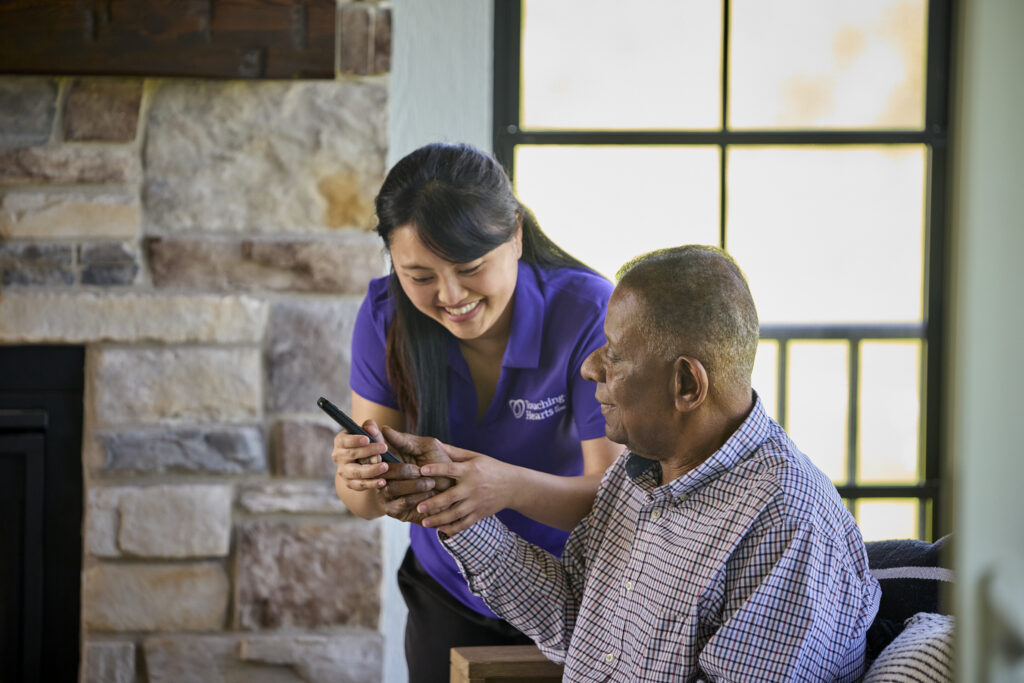

Short-Term Home Care After Surgery or Illness: Support During Recovery at Home in Loveland
Coming home after surgery or a significant illness can bring a mixture of relief and uncertainty. Your parent may be glad to sleep in their own bed again, but everyday tasks that once seemed simple may suddenly require more time, energy, or assistance. For adult children, this can create a difficult question: How can we make sure Mom or Dad has enough help without making them feel like they have lost their independence?
Short-term home care can provide practical support during this transition. Instead of asking family members to manage every meal, load of laundry, household chore, and daily routine, an in-home caregiver can provide assistance according to the client’s individual needs and care plan.
For families in Loveland, temporary support can make the recovery period feel more manageable while allowing an older adult to remain in familiar surroundings. Here’s what short-term home care may look like, what caregivers can help with, and how families can create a supportive recovery routine at home.
What Is Short-Term Home Care?
Short-term home care is temporary, non-medical assistance provided in a person’s home while they work through a period when they need more support than usual.
The need may follow surgery, an illness, an injury, hospitalization, or another temporary change in a person’s ability to manage everyday activities independently. The goal is not necessarily to provide permanent care. Instead, the extra help can bridge the gap between needing substantial family assistance and being comfortable managing more of the day independently again.
Touching Hearts at Home identifies companionship, meal planning and preparation, laundry, light housekeeping, and personal care among the primary functions of a caregiver. Services are provided according to the client’s assessment and individual needs.
That flexibility can be particularly valuable after surgery or illness. Some older adults may need help several times a week, while others may benefit from more frequent visits during the first part of their recovery.
The exact schedule and responsibilities should be established around the client’s needs and the services outlined in the care plan.
Why Recovery at Home Can Be Challenging for Older Adults
Returning home can feel comforting, but recovery can also make ordinary routines unexpectedly difficult.
An older adult who normally prepares breakfast, keeps the kitchen organized, manages laundry, and takes care of personal routines may temporarily have trouble keeping up with those responsibilities. Even when they are motivated to remain independent, they may simply have less energy or confidence than they did before becoming ill.
This is where practical help can make a meaningful difference.
Touching Hearts’ handbook describes non-medical home care as a way to provide families with peace of mind while supporting safety, comfort, and independence. It also emphasizes that clients can receive help in their own homes rather than having to move somewhere else to receive additional assistance.
For a Loveland family, that may mean helping a parent maintain familiar routines at home while family members continue working, managing households, and handling their own responsibilities.
The support is not about taking over everything.
It is about helping with the things that have become difficult so your parent can continue doing the things they are still able to do.
Household Help That Can Make Recovery Easier
After an illness or surgery, keeping up with the house can become one of the first challenges a family notices.
A caregiver can provide light housekeeping that helps the home remain comfortable and organized. Touching Hearts specifically lists tasks such as organizing and tidying, washing and arranging dishes, cleaning counters, sweeping and washing floors, taking out garbage, changing linens, and washing, folding, and putting away laundry.
Keeping Frequently Used Areas Tidy
A caregiver can help keep the areas your parent uses most often organized.
This may include:
- Washing dishes and cleaning up after meals
- Wiping kitchen counters
- Vacuuming and maintaining commonly used areas
- Taking out garbage
- Organizing everyday household items
- Changing linens
- Helping with laundry
The handbook also emphasizes paying attention to the client’s established routines and preferences. Keeping familiar belongings in their usual places can be especially helpful when someone is recovering and may already feel less confident than usual.
Light Housekeeping, Not Deep Cleaning
Families should understand the difference between light housekeeping and professional cleaning.
Touching Hearts describes its housekeeping services as light housekeeping rather than deep cleaning. Caregivers can assist with tasks such as ironing, vacuuming, laundry, dishwashing, dusting, and general household upkeep.
This distinction helps families set realistic expectations about what short-term home care is designed to provide.
Meal Preparation During Recovery
Meals can become another challenge when an older adult is recovering.
Standing in the kitchen, preparing ingredients, cleaning up afterward, or making regular trips to the grocery store may be tiring. Even deciding what to prepare can feel like another task on an already long list.
Touching Hearts includes meal preparation and monitoring diet among caregiver services.
A caregiver can help make mealtimes more manageable by assisting with appropriate meal preparation and cleanup.
Grocery Help Can Reduce Another Burden
Shopping can also be part of everyday support.
Touching Hearts lists general shopping, grocery shopping, running errands, and picking up prescriptions among its outing and errand services.
For a family in Loveland, this can be particularly helpful when adult children cannot easily leave work to make a grocery run.
Families can also involve their parent in planning whenever possible. The handbook encourages caregivers to consider the client’s dietary needs and personal preferences and to include the client in shopping when that is an option.
That approach preserves a sense of participation rather than making the recovering adult feel that decisions are simply being made for them.
Personal Care and Daily Routines
Sometimes the most difficult part of recovery is not cleaning or cooking. It is managing personal routines.
Touching Hearts identifies personal care services that can include assistance with bathing, toileting, eating, dressing, grooming, shaving, and mouth care, as well as assistance with ambulation and transfers.
The level of assistance should be based on the individual client’s needs and established care plan.
Supporting Independence Matters
An important part of caregiving is recognizing what a person can still do for themselves.
The Touching Hearts handbook explains that clients should be encouraged to do as much as they can, with the caregiver providing appropriate assistance while maintaining safety, privacy, comfort, and dignity.
That principle can be especially meaningful during recovery.
Your parent may not need someone to do everything for them. They may simply need someone nearby to provide support when a task becomes difficult.
For example, a caregiver might assist with a routine while allowing the client to complete the portions they can safely manage themselves.
This can help preserve confidence during a temporary period of increased dependence.
Companionship Can Be Part of Recovery Support
Recovery can sometimes feel lonely.
A parent who normally gets out for errands, sees friends, attends activities, or spends time with family may temporarily spend more time at home. Having another person around can make the day feel less isolating.
Companion care is part of the services described in the Touching Hearts handbook. Examples include friendly conversation, pet care, hobbies and crafts, arranging family photos, bringing in and sorting mail, playing games or cards, and sewing or mending assistance.
Sometimes companionship is as simple as sitting together over a cup of coffee or talking about what happened during the day.
For an adult child who cannot be present every afternoon, knowing that someone is spending time with their parent can also bring reassurance.
Home Safety Awareness During Recovery
A home that normally feels comfortable can present different challenges when someone is temporarily weaker or less steady.
Touching Hearts places strong emphasis on home safety. The handbook states that caregivers should think about safety every day and report unsafe conditions or hazards.
During a recovery period, families may want to pay particular attention to the areas their parent uses most frequently.
Common Areas to Review
Depending on the client’s circumstances and care plan, a caregiver may help monitor the home environment for concerns such as clutter in walking areas, difficult-to-navigate spaces, or household items that have become harder for the client to reach.
Bathrooms can require particular attention because wet surfaces may create additional challenges. The handbook discusses the use of available grab bars, non-slip surfaces, and appropriate bathing equipment when assisting vulnerable adults.
In Loveland, families may also need to think about seasonal conditions. Snow and ice outside the home can make getting to appointments or errands more difficult during Colorado’s colder months. Planning ahead for transportation and household support can reduce some of the stress associated with those days.
A caregiver should never be expected to take an unsafe action. Touching Hearts’ safety guidance emphasizes knowing personal limitations and contacting the office when a situation presents a safety concern.
How Short-Term Home Care Can Help Family Caregivers
When a parent comes home after an illness or surgery, family members often want to help with everything.
That instinct comes from love.
But adult children may also have jobs, spouses, children, homes, and other responsibilities. Trying to provide every hour of support alone can quickly become exhausting.
Short-term home care can give family caregivers room to breathe.
Instead of spending every evening doing laundry, preparing meals, cleaning the kitchen, and worrying about whether your parent has enough support, family members can share responsibilities with a professional caregiver.
This does not replace family involvement.
It can make family involvement more sustainable.
The Touching Hearts handbook describes home care as providing families with peace of mind while supporting client safety, comfort, and independence.
Creating a Short-Term Care Routine in Loveland
One of the best ways to make temporary care feel comfortable is to establish a predictable routine.
A recovery schedule might include regular caregiver visits around times when your parent needs the most help.
Consider the Parts of the Day That Feel Hardest
Start by thinking about when your parent struggles most.
Perhaps mornings are difficult because getting dressed and preparing breakfast take longer than they used to.
Maybe afternoons are when fatigue makes household tasks feel overwhelming.
Or evenings may be challenging because your parent needs help getting settled for the night.
The care plan should reflect the individual’s needs and preferences. The Touching Hearts handbook explains that a client assessment specifies the services and frequency of services to be provided.
Make the Routine Familiar
Consistency can make temporary care feel less disruptive.
Keeping commonly used items in familiar locations, following established household preferences, and communicating clearly about daily routines can help your parent remain comfortable.
The objective is not to create an entirely new way of living.
It is to provide enough assistance to make the existing routine easier to manage.
Keep Communication Open
Recovery can change from day to day.
Family members should communicate with the care team when needs change or when something seems different.
Touching Hearts’ caregiver guidance emphasizes factual documentation and communication about changes observed during a visit so that the appropriate people can stay informed.
Good communication can help everyone understand what support is being provided and whether the existing plan continues to fit the client’s needs.
When Short-Term Care May Be a Good Fit
Temporary home care may be worth considering when an older adult is generally comfortable at home but needs additional assistance during a period of recovery.
Families may consider short-term support when:
- Everyday household tasks have temporarily become difficult
- Meal preparation is harder than usual
- Laundry and housekeeping are falling behind
- Personal routines require some additional assistance
- A parent needs companionship while spending more time at home
- Family members cannot be available for every needed visit
- Errands or grocery shopping have become difficult
- The family wants additional support while a parent regains confidence with daily routines
The important question is not simply, “Does Mom need home care?”
A better question may be, “What support would make Mom’s recovery at home more comfortable and manageable right now?”
That shift can make the conversation feel less overwhelming.
Short-term care does not have to mean that your parent is giving up independence. In many situations, it can simply mean receiving help during a season when additional support is needed.
Questions Families in Loveland Should Ask Before Starting Care
Before short-term care begins, families can benefit from talking through practical details.
What does my parent need help with right now?
Make a simple list of the tasks that have become difficult. Separate things your parent can still comfortably do from things that now require assistance.
How often would visits be helpful?
Think about the times of day when support would have the greatest value rather than automatically assuming that your parent needs help all day.
What does my parent want to continue doing independently?
This question is just as important as asking what they cannot do.
Preserving familiar routines and allowing your parent to participate in everyday decisions can support dignity and independence.
What should family members continue handling?
Short-term home care works best when everyone understands their role.
Family members may still handle certain responsibilities while a caregiver focuses on agreed-upon daily support.
What should we do if needs change?
Ask how changes in your parent’s needs should be communicated and who the family should contact with questions or concerns. Touching Hearts’ caregiver guidance emphasizes contacting the office when caregivers have questions or observe client changes that require attention.
A Temporary Helping Hand Can Make a Meaningful Difference
Recovery does not always follow a perfectly predictable schedule.
Some days may feel easier than others. Your parent may be eager to resume their normal routine one day and need more assistance the next.
That is why flexible, individualized support can be valuable.
Short-term home care can provide help with meals, laundry, light housekeeping, errands, companionship, personal care, and everyday routines while allowing your parent to remain in the place they know best.
For families in Loveland, that support can also provide something that is difficult to measure but deeply important: peace of mind.
You do not have to choose between being involved in your parent’s recovery and getting additional help.
Sometimes the most loving choice is recognizing that your family does not have to do everything alone.
Frequently Asked Questions
Here are some common questions families may have when considering temporary home care after surgery or illness.
How long does short-term home care last?
The length of care depends on the client’s individual needs and the services established in the care plan. Short-term support can be arranged around a temporary period when additional help is needed.
Can a caregiver help with meals and housekeeping during recovery?
Yes. Touching Hearts lists meal planning and preparation, laundry, and light housekeeping among caregiver responsibilities. These services can help keep everyday routines manageable while a client is recovering.
Can short-term caregivers help with personal care?
Touching Hearts’ caregiver services include assistance with personal care such as bathing, toileting, dressing, grooming, eating, and other daily routines, according to the client’s established assessment and needs.
Can a caregiver help my parent with grocery shopping or errands?
Yes. The handbook lists grocery shopping, general shopping, running errands, prescription pickup, and transportation to appointments among outing and errand services.
Does needing short-term care mean my parent can no longer live independently?
Not necessarily. Short-term home care is specifically useful when someone needs additional assistance for a period of time. Touching Hearts emphasizes supporting safety, comfort, and independence while allowing clients to receive help in their own homes.
How can our family prepare the home before care begins?
Start by identifying the daily routines and tasks your parent finds difficult. Make sure commonly used areas are organized, discuss household preferences, and communicate clearly about the type of support your parent needs. The client assessment is designed to identify the specific services, client information, and preferences that guide care.
If you’re feeling unsure about your parent’s needs, Touching Hearts offers a free, no-pressure in-home consultation in Loveland. We’re here to support your family every step of the way.