

Sundowning at Home: Gentle Ways to Support a Parent in the Evening for Fort Collins
If your parent seems relatively comfortable during the morning but becomes more confused, restless, or irritable as the afternoon turns into evening, you may wonder what is happening. These changes can be especially difficult when the rest of the household is winding down for the night.
For families caring for a loved one at home in Fort Collins, evenings can become a challenging part of the day. You may find yourself trying to reassure your parent, reduce distractions, keep the household calm, and figure out what might make the transition into nighttime easier.
This pattern is often called sundowning. Touching Hearts caregiver training emphasizes gentle, consistent approaches such as maintaining familiar routines, simplifying evening activities, reducing distractions, providing reassurance, encouraging appropriate daytime activity, and allowing a person to remain involved in what they can still do.
What Is Sundowning?
Touching Hearts’ caregiver handbook describes sundown syndrome as a pattern in which a person with Alzheimer’s disease may function more comfortably in the morning and then experience increasing confusion or behavior changes as the day progresses into evening.
The handbook notes that the exact reason sundowning occurs is not clear, while also emphasizing that fatigue may play a role.
For families, the important point is that the evening may require a different approach from the morning.
A parent who was cooperative earlier in the day may become distracted, confused, or irritable after sunset. That does not necessarily mean your parent is intentionally being difficult.
Their needs and abilities may change as the day goes on.
Recognizing that difference can help you approach the evening with more patience and less frustration.
Why Evenings May Feel Different for Your Parent
The transition from daytime to evening can bring several changes at once.
The home may become darker. Normal household activity may change. Television or radio may be playing in the background. Family members may arrive home from work or school. Your parent may also be tired after a full day.
Touching Hearts guidance recommends taking the time of day into account when planning activities and completing things that absolutely need to get done earlier in the day when possible.
That does not mean every evening has to follow a rigid schedule.
It means families can recognize that your parent may have less ability to handle complicated activities or multiple sources of stimulation later in the day.
Fatigue Can Affect the Evening
The caregiver handbook suggests that fatigue may contribute to sundowning.
That makes pacing important.
If your parent has had a busy day, adding several errands, visitors, or complicated tasks in the late afternoon may create additional frustration.
A quieter transition may be more comfortable.
Too Much Stimulation Can Be Difficult
Touching Hearts guidance specifically recommends minimizing distractions in the evening.
If you need to communicate something important, turn down or turn off the television or radio first. Reducing the number of things happening at once can make it easier for your parent to focus.
After sunset, keeping things simple may be especially helpful.
Keep the Evening Routine Familiar
Structure, routine, and familiarity can provide stability and comfort for a person experiencing changes associated with dementia.
A familiar evening routine can help your parent know what to expect.
Maybe dinner is usually followed by a favorite television program, a cup of tea, looking through family photographs, or preparing for bed.
The specific routine matters less than its familiarity to your parent.
Try to Keep Important Activities Earlier
If your parent becomes more confused in the evening, consider completing tasks that require more attention earlier in the day whenever possible.
For example, if there is an appointment, important household task, or complicated decision to make, morning or early afternoon may be a more comfortable time.
The goal is not to force a particular schedule.
Instead, pay attention to when your parent seems most comfortable and organize the day around those patterns.
Keep Evening Steps Simple
The caregiver handbook recommends keeping daily tasks as simple as possible for people experiencing memory difficulties.
An evening routine does not need to involve many choices.
If getting ready for bed has become confusing, breaking the process into smaller steps may help.
Instead of presenting an entire sequence at once, guide your parent through one familiar step at a time.
Patience matters.
Reduce Evening Distractions
One of the simplest changes a family can make is reducing unnecessary stimulation.
The Touching Hearts handbook recommends minimizing distractions during the evening and simplifying the environment as the sun sets.
That might mean:
- Turning down the television
- Muting unnecessary background noise
- Limiting the number of people talking at once
- Avoiding too many visitors in the evening
- Keeping important conversations short and clear
- Reducing unnecessary activity around your parent
- Moving to a familiar, comfortable room
These changes do not require special equipment or complicated planning.
Sometimes, a quieter environment is enough to make an evening feel more manageable.
Give One Person the Lead
If several family members are talking to your parent at once, the interaction can become overwhelming.
When possible, have one person communicate at a time.
Speak calmly and give your parent enough time to respond.
Remember that communication can become more difficult as dementia progresses, and nonverbal communication may become increasingly important.
Pay attention not only to what your parent says, but also to how they appear to be feeling.
Reassure Your Parent That They Are Safe
When your parent becomes confused or frightened in the evening, reassurance can be more helpful than trying to prove that they are mistaken.
Touching Hearts caregiver guidance emphasizes reassuring a person with dementia that they are not alone and that caregivers are there to help.
A calm voice and familiar presence can provide comfort.
You might say:
“You’re safe. I’m right here with you.”
Or:
“We’re at home, and I’m going to stay with you.”
The goal is not to win an argument.
The goal is to help your parent feel secure.
Familiar Objects Can Be Comforting
The caregiver handbook suggests keeping photographs of loved ones and favorite objects nearby.
A familiar photograph, blanket, chair, book, or other meaningful item can provide a sense of familiarity when the surroundings feel confusing.
These objects can also become natural conversation starters.
Avoid Arguing When Your Parent Is Confused
One of the most important lessons in the Touching Hearts caregiver materials is not to argue or try to reason someone out of a confusing experience.
If your parent insists that something is happening that you do not see, directly challenging them may increase agitation.
Instead, try to understand the feeling behind the concern.
You might acknowledge that your parent seems worried and then redirect attention toward something familiar and reassuring.
Validation Can Be Gentler Than Correction
Your parent may not need you to prove what is true.
They may need to feel heard.
The caregiver handbook recommends validation and reassurance rather than arguing about a person’s experience.
This can be especially important during the evening, when confusion may be more pronounced.
A calm response can help preserve dignity while allowing you to move the conversation toward something more comfortable.
Use Familiar Activities to Redirect Attention
Touching Hearts caregiver guidance recommends engaging a person in appropriate activities and using redirection when difficult behaviors arise.
A familiar activity may help your parent shift attention away from something frightening or frustrating.
Depending on their interests, you might try:
- Listening to favorite music
- Singing along to familiar songs
- Looking through family photographs
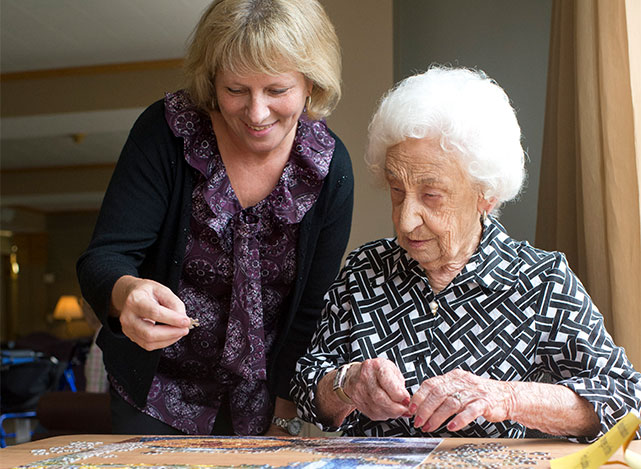
- Working on a simple puzzle
- Folding towels
- Helping set the table
- Watching a familiar movie
- Having a cup of tea or another favorite drink
- Talking about a favorite memory
- Spending quiet time with a familiar pet
The activity does not need to be complicated.
The goal is connection and gentle engagement.
Let Your Parent Help When Possible
The caregiver handbook emphasizes allowing people to do as much as they can for themselves.
Even a small household activity can provide a sense of contribution.
If your parent wants to help set the table or fold something, allowing them to participate may help them feel useful and involved.
The task itself is not the most important part.
The feeling of participation can matter.
Encourage Activity During the Day
Touching Hearts guidance specifically notes that keeping a person active during the day and just before sunset may help offset sundowning behaviors.
That does not mean keeping your parent constantly busy.
Instead, think about meaningful movement and engagement throughout the day.
Depending on your parent’s abilities and care plan, this might include a walk, a hobby, household participation, conversation, or another familiar activity.
The afternoon can be a useful time for gentle engagement before the household becomes quieter.
Build in Rest, Too
Activity does not mean exhaustion.
Your parent may also need opportunities to rest.
The goal is to find a comfortable balance rather than filling every hour with tasks.
Pay attention to what your parent can manage and adjust expectations when needed.
Give Your Parent Space When They Need It
Companionship can be valuable, but constant interaction is not always necessary.
Touching Hearts guidance encourages caregivers to respect a client’s need for solitude.
If your parent wants to retreat to a safe, familiar space, allow that opportunity when appropriate.
You can reconnect later with a favorite drink, familiar activity, or quiet conversation.
This can help your parent feel that they still have control over their environment.
How a Caregiver Can Help During the Evening
For families in Fort Collins, evening support can be particularly useful when a parent becomes more unsettled later in the day.
A caregiver can provide a consistent, familiar presence while helping with appropriate parts of the evening routine.
Depending on the client’s assessment, caregiver responsibilities can include companionship, meal preparation, light housekeeping, personal care, home safety monitoring, and other non-medical support.
A Consistent Presence Can Be Reassuring
Touching Hearts emphasizes positive communication and meaningful connection as important parts of caregiving.
A reliable caregiver can become a familiar person in your parent’s routine.
That familiarity can be valuable when evenings are difficult.
Instead of your parent encountering a different approach every night, a consistent caregiver may understand which activities, conversation topics, and routines are most comfortable.
Caregivers Can Support Familiar Routines
A caregiver can help your parent move through an established evening routine while encouraging them to participate as much as they comfortably can.
That might include preparing dinner, helping tidy the kitchen, participating in a familiar activity, assisting with appropriate personal care, or getting ready for bedtime.
The exact support depends on the client’s assessment and needs.
Fort Collins Evenings May Change With the Seasons
Northern Colorado’s seasons can affect the rhythm of daily life.
During winter, earlier sunsets and colder weather may mean your parent spends more time indoors. Snow or icy conditions can also make outdoor activity less appealing.
Rather than viewing winter evenings as a reason to abandon familiar routines, families can adapt.
Indoor activities such as music, family photographs, simple crafts, conversation, or a favorite television program may provide familiar ways to stay engaged.
During warmer months, an earlier walk or time outside may fit naturally into the afternoon routine when appropriate.
The key is maintaining familiarity while adjusting activities to the season and your parent’s comfort.
What Adult Children Can Do When Evenings Become Difficult
Watching a parent become confused or upset in the evening can be emotionally exhausting.
It is natural to want to fix the situation immediately.
But sometimes the most useful approach is to slow down.
Observe Patterns
Pay attention to what happens before difficult evenings.
Does your parent become more unsettled after a busy day? Are there many people in the home? Is the television loud? Does the evening routine change from one day to another?
Keeping track of patterns may help your family understand which situations seem to make evenings harder.
Simplify Rather Than Add More
When an evening becomes difficult, adding more explanations or activities may not help.
Try reducing stimulation.
Turn off background noise. Move to a familiar room. Offer reassurance. Choose one simple activity.
A calmer environment may be easier for your parent to navigate.
Protect Your Own Patience
Caregiving can take an emotional toll.
Touching Hearts caregiver materials encourage caregivers to recognize their own stress, take breaks when possible, connect with trusted people, and ask for help when they need it.
Adult children need support, too.
If evenings have become especially challenging, it may be worth considering whether another trusted person or professional caregiver can share some of the responsibility.
When to Consider Additional Support at Home
Families sometimes wait until evenings become overwhelming before considering home care.
You do not necessarily have to wait for a crisis.
If your parent is increasingly confused or unsettled later in the day, and family members are struggling to provide consistent evening support, an in-home caregiver may be worth discussing.
A caregiver can provide a familiar presence while assisting with appropriate routines and everyday needs.
The client’s assessment determines the services and frequency of care.
That means support can be considered around the actual needs of your parent rather than assuming every family needs the same schedule.
A Gentle Evening Approach Can Make a Difference
Sundowning can make evenings feel unpredictable, especially when your parent seems like a different person after the sun begins to set.
You do not have to respond by making the evening more complicated.
Start with the basics: familiarity, patience, reassurance, fewer distractions, meaningful connection, and a routine your parent recognizes.
Let your parent participate in what they can. Give them space when they need it. Redirect gently when something becomes frightening or frustrating. And remember that your parent’s difficult moments are not necessarily a reflection of your relationship.
For families in Fort Collins, having dependable support at home can make it easier to approach challenging evenings with patience and compassion.
If you’re feeling unsure about your parent’s needs, Touching Hearts offers a free, no-pressure in-home consultation in Fort Collins. We’re here to support your family every step of the way.
Frequently Asked Questions
These common questions can help families think through supportive approaches when evenings have become more difficult at home.
What is sundowning?
Touching Hearts caregiver training describes sundown syndrome as a pattern in which a person with Alzheimer’s disease may be more capable and cooperative earlier in the day and experience increased confusion or behavior changes as evening approaches.
Why might my parent become more confused in the evening?
The Touching Hearts handbook notes that the exact cause of sundowning is not clear and suggests that fatigue may play a role. The guidance also recommends considering the time of day, reducing distractions, and keeping evening activities simple.
What can I do when my parent becomes upset at night?
Try to remain calm, reduce distractions, provide reassurance, and avoid arguing about your parent’s experience. Familiar music, photographs, favorite objects, or a simple activity may help redirect attention.
Should I keep my parent busy all day?
Touching Hearts guidance recommends keeping a person active during the day and just before sunset to help offset sundowning behaviors. Activity should remain appropriate to the person’s abilities, with opportunities for rest and familiar routines.
Can a caregiver help with evening routines?
Depending on the client’s assessment, a Touching Hearts caregiver can provide non-medical support such as companionship, meal preparation, light housekeeping, personal care, and home safety monitoring. A consistent caregiver may also help maintain familiar routines.
What if evenings are becoming too difficult for our family to manage?
If evening confusion or behavior changes are creating more responsibility than your family can comfortably handle, an in-home care consultation can help you discuss what type and frequency of support may fit your parent’s needs.