Homemaker Services for Seniors: Light Housekeeping, Meals, and Everyday Help for Thornton
As parents get older, everyday household tasks can slowly become more tiring. The dishes may sit a little longer, laundry may feel like a chore, and preparing a fresh meal may take more energy than it once did. For adult children in Thornton, these changes can be difficult to notice because they often happen gradually.
Needing help around the house does not mean your parent has lost their independence. In many cases, a little practical support can make it easier for an older adult to continue living comfortably in the home they know and love.
Homemaker services can provide that extra set of hands. In this guide, we’ll look at what homemaker support can include, how light housekeeping and meal preparation can help seniors, and how everyday assistance can make life easier for families in Thornton and across the Front Range.
What Are Homemaker Services for Seniors?
Homemaker services are a form of non-medical home care focused on practical tasks that help an older adult maintain their household and daily routine.
At Touching Hearts, caregivers may assist with responsibilities such as light housekeeping, laundry, meal planning and preparation, companionship, errands, and other everyday tasks outlined in the client’s care plan. These services are designed to support comfort, safety, and independence at home.
The goal is not to take over a senior’s household or make every decision for them. Instead, the caregiver works alongside the client and helps with tasks that may have become difficult, exhausting, or unsafe to manage alone.
For families in Thornton, this can be especially valuable when an adult child lives nearby but cannot be at the house every day. A caregiver can provide consistent practical support while helping a parent maintain familiar routines.
What Does Light Housekeeping Include?
One of the most common reasons families consider homemaker services is that household maintenance has become harder for their parent.
Touching Hearts provides light housekeeping, rather than professional deep cleaning. The focus is on maintaining a comfortable, organized living environment and helping with routine household tasks.
Depending on the client’s needs and care plan, light housekeeping may include:
- Organizing and tidying living spaces
- Washing and arranging dishes
- Wiping down counters and surfaces
- Sweeping and vacuuming
- Cleaning bathroom surface areas
- Cleaning kitchen areas
- Taking out garbage and recycling
- Changing and washing linens
- Washing, folding, and putting away laundry
- Ironing clothes
- Caring for house plants
- Organizing frequently used household items
These seemingly small tasks can make a meaningful difference.
A clean kitchen can make meal preparation easier. Fresh linens can make the bedroom more comfortable. A tidy walkway can reduce unnecessary clutter in areas where a parent moves throughout the day.
For an older adult who has always taken pride in keeping their home a certain way, this type of assistance can also help preserve familiar routines.
What Light Housekeeping Does Not Mean
It is important for families to understand the difference between homemaker support and a professional cleaning service.
Touching Hearts does not provide deep cleaning. Caregivers are expected to work within appropriate safety limits and should not climb ladders or stools over two feet tall. They also do not perform tasks such as major home repairs, plumbing or electrical maintenance, landscaping, deep carpet cleaning, or moving heavy furniture.
This distinction helps keep the caregiver and client safe while keeping the service focused on everyday support.
How Meal Preparation Can Support Seniors
Preparing meals can become more difficult as an older adult’s energy, mobility, or interest in cooking changes.
Homemaker support can help make mealtimes simpler without taking away the senior’s involvement.
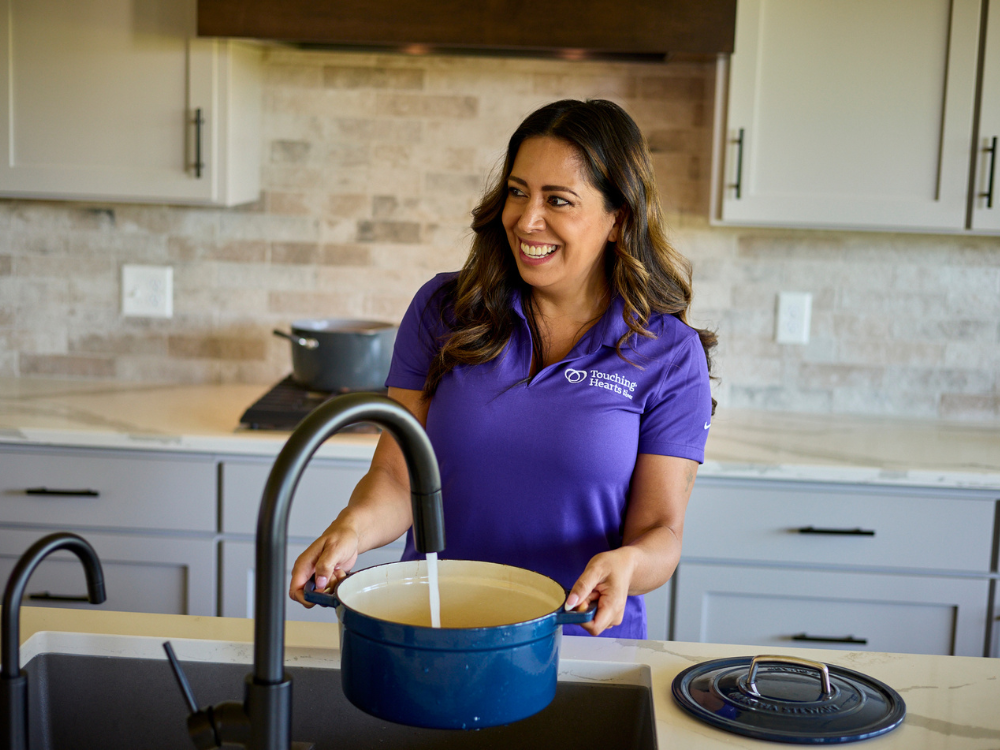
Caregivers can assist with meal planning and preparation based on the client’s preferences and care plan. This may include checking available food, helping prepare meals, cleaning up afterward, and paying attention to the client’s dietary preferences and restrictions.
A caregiver can also involve the senior in the process.
Maybe your parent has a favorite soup recipe they have made for decades. Perhaps they prefer breakfast at a particular time or enjoy choosing what vegetables will be served with dinner. Keeping those preferences in the routine can make meal preparation feel familiar rather than like another service being done for them.
Familiar Meals Can Bring Comfort
Food is about more than nutrition. Meals are often connected to memories, family traditions, and daily routines.
A caregiver can encourage a senior to share favorite recipes or preparation techniques. The client may even teach the caregiver how to prepare a favorite dish.
For families, that can be a simple but meaningful way to preserve independence and connection.
Caregivers also follow practical food-safety habits, such as checking expiration dates, washing fresh produce, labeling and dating leftovers, and being mindful of portion sizes and dietary restrictions.
Laundry and Linens: A Small Task That Can Become a Big Burden
Laundry is easy to overlook when thinking about senior care, but it can require repeated bending, lifting, carrying, and standing.
A caregiver may help with:
- Sorting laundry
- Washing clothing and linens
- Following special washing instructions
- Folding clean clothes
- Putting clothing away
- Changing bed linens
- Ironing clothing when appropriate
For a senior who is beginning to struggle with these tasks, having help with laundry can remove a recurring source of frustration.
It can also help the household stay organized without requiring the parent to give up control of their belongings. The caregiver can follow the parent’s preferences about where clothing, towels, bedding, and other items belong.
Everyday Help Can Make Aging at Home Feel More Manageable
Homemaker services are not limited to cleaning and cooking.
Everyday support may also include companionship, help with errands, mail, household routines, and other non-medical tasks included in the client’s care plan.
For example, a caregiver may help a senior:
- Bring in and sort the mail
- Go grocery shopping
- Run errands
- Pick up a prescription
- Escort them on a walk
- Attend an appointment or community activity
- Care for the client’s pet
- Spend time talking or participating in hobbies
- Organize family photographs
- Play cards or games
- Maintain a familiar household routine
These activities can help a parent remain engaged in everyday life rather than feeling that home care is only about chores.
Homemaker Services Can Also Support Family Caregivers
Adult children often try to handle everything themselves.
You may stop by after work to check the refrigerator, spend Saturday doing laundry, and use Sunday to clean the house. At the same time, you may be managing your own household, career, children, and responsibilities.
Over time, that schedule can become difficult to sustain.
Homemaker support gives family caregivers another source of practical help. Instead of spending every visit cleaning the kitchen or catching up on laundry, you may have more opportunity to simply sit with your parent and enjoy their company.
That shift can be important.
Family caregiving is not only about completing tasks. It is also about maintaining relationships.
When some of the everyday workload is shared with a professional caregiver, family members may have more room to focus on being a daughter, son, spouse, or loved one.
Why Homemaker Services Can Be Helpful for Thornton Seniors
Thornton families understand that Colorado living can bring its own practical challenges.
Winter weather can make outdoor tasks and travel more difficult. Snow and ice can create additional concerns around walkways and entrances. A caregiver may provide minimal snow shoveling on walkways when appropriate to help a client safely enter and exit the home.
During other seasons, everyday household responsibilities can still become tiring for someone who is aging.
Having dependable support can help a senior maintain a familiar environment without requiring an immediate move to a different living arrangement.
For families throughout Thornton and the surrounding Front Range, the ability to receive non-medical help at home can provide reassurance while supporting a parent’s desire to remain in familiar surroundings.
How to Know When Your Parent May Benefit From Homemaker Support
You do not need to wait for a major crisis before considering help.
Some early signs may be practical rather than dramatic.
The House Is Becoming Harder to Maintain
You may notice that dishes are piling up, laundry is accumulating, or commonly used rooms are becoming more cluttered.
This does not necessarily mean your parent cannot live independently. It may simply mean certain household tasks have become harder.
Meals Are Becoming Less Consistent
Perhaps your parent is relying more heavily on simple foods or skipping the cooking routine they once enjoyed.
Meal preparation support may help restore some structure to the day.
Your Parent Is Spending Too Much Energy on Chores
If household responsibilities leave your parent exhausted, having assistance with routine tasks may allow them to use their energy for activities they enjoy.
Family Members Are Struggling to Keep Up
If siblings are constantly coordinating grocery trips, laundry, cleaning, and errands, it may be time to consider additional support.
Your Parent Wants to Stay Home
For many seniors, home represents comfort, familiarity, and independence. Non-medical support can help make everyday life at home more manageable while allowing the family to remain involved.
How Touching Hearts Approaches Homemaker Support
Touching Hearts emphasizes that caregiving is about more than completing a checklist.
Caregivers provide support with companionship, meal planning and preparation, laundry, light housekeeping, and personal care according to the client’s assessment and plan of care.
That means the details matter.
A parent may want the dishes arranged a certain way. They may have a preferred place for their mail. They may want their living room kept exactly as they have always arranged it.
Good homemaker support respects those preferences.
Communication is an important part of the relationship. Caregivers are encouraged to learn each client’s routines, likes, dislikes, and expectations and to communicate with the office when questions or concerns arise.
The result should feel like thoughtful assistance—not someone taking over the home.
Safety Matters During Everyday Household Tasks
Even simple chores can present safety concerns in a senior’s home.
Caregivers are expected to remain aware of hazards and work within safe limits. Household cleaning should focus on appropriate, reachable tasks, while unsafe activities such as climbing high ladders or moving excessively heavy furniture are outside the scope of light housekeeping.
Cleaning products should also be handled carefully. Caregivers should follow product labels and never mix chlorine cleaners or bleach with ammonia.
A well-maintained home can support comfort and safety, but homemaker services are not a substitute for professional home repairs or medical care.
If a caregiver notices a household concern or a change in a client’s condition, the appropriate step is to communicate it to the office and document relevant observations according to the care process.
Choosing the Right Level of Help for Your Parent
Every family situation is different.
One parent may only need a few hours of help with laundry, meals, and housekeeping each week. Another may need more frequent support that includes companionship, errands, personal care, or mobility assistance.
The right schedule depends on the client’s needs, preferences, routines, and care plan.
Starting with practical homemaker support can also give a family an opportunity to see how a parent responds to having help at home.
For some seniors, accepting assistance feels uncomfortable at first. Framing the support around specific tasks can make the conversation easier.
Instead of saying, “You need a caregiver,” you might say, “Would it help to have someone come by and help with laundry and meals so you don’t have to worry about those things?”
That can feel less overwhelming and more respectful of your parent’s independence.
Bringing More Ease Into Everyday Life
Homemaker services may sound simple, but the impact can be significant.
A freshly made bed, a clean kitchen, a load of laundry folded and put away, or a homemade meal waiting at lunchtime can make the day feel more manageable.
For seniors in Thornton, this practical support can help preserve familiar routines and make it easier to continue living at home.
For families, it can provide peace of mind knowing that someone is there to help with the everyday responsibilities that are easy to overlook until they become difficult.
Most importantly, homemaker support should be about helping your parent live comfortably and with dignity—not taking away their independence.
If you’re feeling unsure about your parent’s needs, Touching Hearts offers a free, no-pressure in-home consultation in Thornton. We’re here to support your family every step of the way.
Frequently Asked Questions
Here are some common questions Thornton families have about homemaker services for seniors.
What does a senior homemaker caregiver do?
A homemaker caregiver can provide non-medical assistance such as light housekeeping, laundry, meal planning and preparation, companionship, errands, and other everyday tasks included in the client’s care plan.
Does Touching Hearts provide deep cleaning?
No. Touching Hearts provides light housekeeping rather than professional deep cleaning. Services may include dishes, vacuuming, organizing living spaces, laundry, linens, bathroom surface cleaning, and other routine household tasks.
Can a caregiver prepare meals for my parent?
Yes. Meal planning and preparation are among the services caregivers may provide. Caregivers can work with the client’s preferences and dietary needs while helping prepare meals and clean up afterward.
Can homemaker services include laundry?
Yes. Caregivers may wash, fold, and put away laundry and change or wash linens for the client, according to the client’s care plan.
Can a caregiver help with errands?
Depending on the client’s care plan, caregivers may assist with grocery shopping, general errands, prescription pickup, walks, appointments, and other outings or transportation needs.
Is homemaker care medical care?
No. Homemaker services are part of non-medical home care. They are intended to provide practical assistance, companionship, and everyday support rather than medical treatment or medical management.