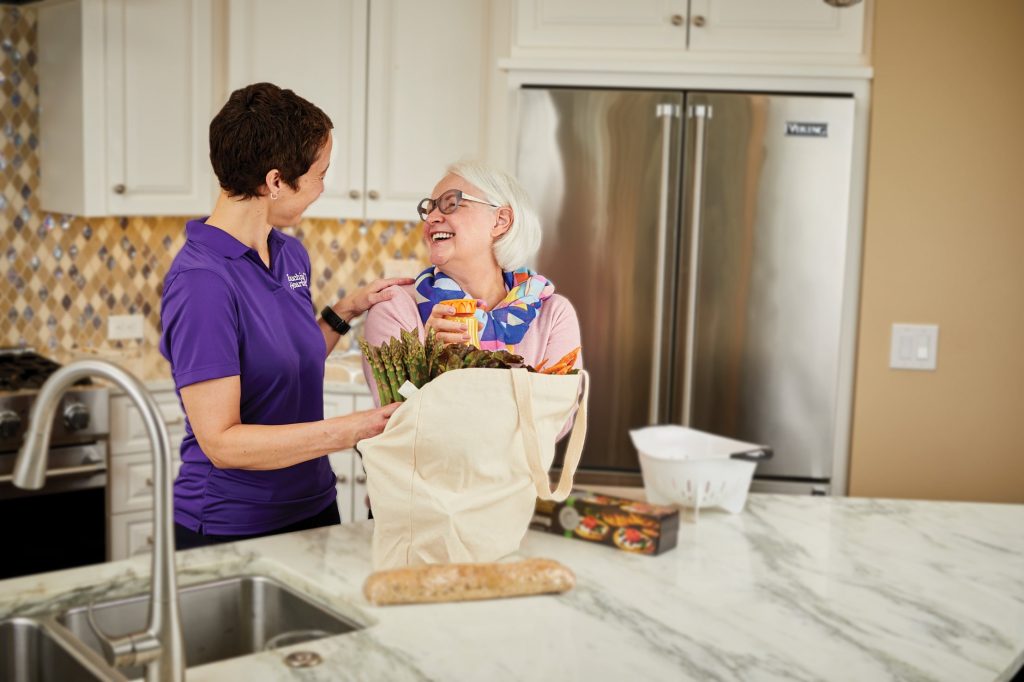
Meal Preparation for Seniors: How In-Home Care Supports Nutrition and Independence in Westminster
Mealtimes can become surprisingly complicated as a parent gets older. A senior who once enjoyed cooking may find grocery shopping tiring, standing in the kitchen difficult, or planning meals for one person simply not worth the effort.
For adult children in Westminster, this can be especially concerning. You may live nearby but cannot always stop in to prepare lunch, check the refrigerator, or make sure your parent has something appealing to eat. Work, family responsibilities, and everyday commitments can make consistent support challenging.
In-home care can help fill that gap. Meal planning and preparation are among the services Touching Hearts caregivers may provide, allowing seniors to remain involved in their meals while receiving practical support that can make eating at home easier, safer, and more enjoyable.
Why Meal Preparation Can Become Difficult for Older Adults
Preparing a meal involves much more than putting food on a plate.
A senior may need to decide what to eat, check what ingredients are available, make a shopping list, travel to the grocery store, carry groceries home, prepare the food, clean the kitchen, and store leftovers properly.
Any one of those steps can become harder with age.
Mobility changes may make standing at the counter uncomfortable. Vision changes can make reading labels more difficult. Memory changes may make it harder to remember what food is available or when something was purchased. A senior who lives alone may also lose motivation to prepare a complete meal when there is no one else to share it with.
That does not necessarily mean your parent needs someone to take over the kitchen.
Often, what they need is a little help.
Touching Hearts emphasizes supporting clients according to their individual assessment and care plan. The caregiver’s role can include meal planning and preparation while also supporting safety, comfort, and independence in the home.
How In-Home Care Can Support Better Mealtime Routines
Meal support can be a practical part of a broader home care routine.
Rather than treating food preparation as a separate chore, a caregiver can incorporate it naturally into the client’s day.
Planning Meals Around Your Parent’s Preferences
Meal planning should begin with the senior.
The Touching Hearts caregiver handbook specifically encourages caregivers to involve clients in meal planning by learning what they like and dislike and incorporating favorite foods to encourage good eating habits.
That means your parent can remain part of the decision-making process.
A caregiver might ask:
- What sounds good for lunch today?
- Would you rather have soup or a sandwich?
- What meals have you enjoyed recently?
- Is there a family recipe you would like to make?
- What foods do you want to have available this week?
These questions may seem simple, but they reinforce an important principle: your parent is still making choices about their own life.
Preparing Familiar Foods
Familiar meals can make eating at home feel more enjoyable.
A caregiver can learn how a client prefers certain foods prepared and encourage the senior to share recipes and cooking techniques. The handbook even suggests allowing clients to teach caregivers how to prepare a favorite dish.
For families in Westminster, this can be especially meaningful when a favorite recipe has been part of family gatherings for decades.
Maybe your parent has always made a particular soup during the colder months. Maybe there is a breakfast recipe passed down through the family. Preparing that food together can provide practical assistance while preserving a sense of familiarity and independence.
Helping With Grocery Shopping
Meal preparation begins before the stove is turned on.
Caregivers may assist with general shopping and grocery shopping as part of the services provided through an appropriate client care plan.
This can be helpful when a parent has stopped driving or finds grocery shopping physically tiring.
Instead of a family member having to make a separate trip every few days, grocery needs can be incorporated into the senior’s regular support routine when appropriate.
Westminster’s location along the Front Range also means weather can affect everyday errands. Snow, ice, and winter conditions can make grocery trips less appealing or more difficult for an older adult. Having planned support can reduce the pressure on families while helping a parent maintain access to food at home.
Food Safety Matters
Preparing food for an older adult requires attention to basic kitchen safety.
The Touching Hearts handbook instructs caregivers to check expiration dates, label and date leftovers, wash hands before and during food preparation, and thoroughly wash fresh fruits and vegetables. Caregivers are also expected to respect dietary restrictions and preferences and be mindful of portion sizes, allergies, and seasoning sensitivities.
These details matter because a meal can only be helpful if it is prepared and stored appropriately.
Checking Food Before Preparation
A caregiver can check expiration dates and look at the condition of food before using it.
Leftovers should be labeled and dated so there is less confusion about when they were prepared. The handbook also provides specific food-storage guidance for refrigerated and frozen foods.
This kind of organization can be particularly useful for a senior who has difficulty remembering when something was purchased or prepared.
Respecting Dietary Restrictions and Allergies
Every client has individual needs and preferences.
The caregiver handbook states that food allergies are included in the client’s assessment in the Wellsky Caregiver Portal.
Caregivers should follow the client’s established care information rather than making assumptions about what the senior should or should not eat.
If your parent has dietary restrictions or food allergies, those details should be communicated as part of the care planning process.
Staying Safe Around the Kitchen
Cooking also involves potential hazards.
Touching Hearts’ guidance includes practical precautions such as using oven mitts, keeping items that can burn away from the range, keeping the cooking area clean, staying in the kitchen while cooking, and turning pot handles inward to help prevent accidental contact with hot cookware.
For an older adult who may have balance or mobility challenges, these precautions can be especially important.
Meal Preparation Can Encourage Independence
It is easy to assume that helping means doing everything for someone.
Good home care does not have to work that way.
A caregiver can support a senior while still allowing the senior to participate. Your parent might choose the meal, gather ingredients, wash vegetables, stir a dish, set the table, or share a family recipe.
The appropriate level of participation depends on the person’s abilities and care plan.
The goal is to make the task easier without unnecessarily taking away your parent’s role in it.
Touching Hearts describes non-medical home care as a way to provide increased safety, comfort, and independence while allowing clients to receive help in their own homes rather than having to move elsewhere for additional support.
That philosophy can apply to something as ordinary as preparing lunch.
Mealtime Can Also Be Social Time
Food is rarely just about food.
For many families, meals are connected with conversation, traditions, celebrations, and memories. When a senior eats alone most days, mealtime can become another quiet part of the day.
A caregiver can provide companionship while assisting with meal preparation.
The caregiver handbook encourages caregivers to offer to sit with clients during meals when appropriate and to be conscientious about hydration.
That presence can make a meal feel less like a task and more like part of a normal daily routine.
A caregiver and senior might talk while lunch is being prepared, sit together during the meal when appropriate, and clean up afterward.
For an adult child who cannot be there every afternoon, knowing that someone is spending that time with a parent can also provide peace of mind.
When Your Parent Stops Cooking
One of the signs that your parent may need additional support is a noticeable change in their eating or cooking routine.
Perhaps the kitchen that was once busy is now rarely used. Maybe your parent has started relying on the same few convenience foods. Perhaps groceries are accumulating because shopping has become difficult.
These changes do not automatically mean there is a serious problem.
They do mean it may be time to ask questions.
Try approaching the conversation without criticism.
Instead of saying, “You’re not eating properly,” consider asking, “What would make meals easier for you?”
That opens the door to understanding what is actually getting in the way.
Maybe shopping is the problem. Maybe meal preparation takes too much energy. Maybe your parent simply does not enjoy cooking for one.
Once you understand the obstacle, you can look for practical support.
How Families in Westminster Can Use Meal Support
In-home meal preparation does not have to mean daily full-service cooking.
The amount of support can be tailored to the client’s needs and care plan.
A caregiver visit might include:
- Reviewing what food is available
- Planning a meal with the client
- Preparing lunch or dinner
- Grocery shopping
- Washing and preparing fresh produce
- Preparing leftovers for appropriate storage
- Cleaning up after meal preparation
- Offering food and beverages as appropriate
- Sitting with the client during a meal when appropriate
Touching Hearts identifies meal preparation, diet monitoring, grocery shopping, light housekeeping, and companionship among services caregivers may provide according to the client’s needs.
This can make meal support part of a larger plan rather than an isolated service.
For example, a caregiver could help with grocery shopping, prepare a meal, wash the dishes, and spend some time visiting with the client. The result is support for both the practical and personal sides of everyday life.
How Adult Children Can Get Started
If you are worried about your parent’s meals, start by observing rather than assuming.
Look at the kitchen. Is there fresh food available? Are there expired items in the refrigerator? Does your parent have ingredients for meals they enjoy? Has cooking become noticeably less frequent?
Then talk with your parent.
Ask what they would like help with.
Some seniors may be comfortable preparing food but need assistance with shopping. Others may enjoy choosing meals but need help with cooking. Another parent may appreciate having someone nearby during meal preparation while remaining actively involved.
Those differences matter.
The best support is the support that fits the person.
Touching Hearts’ client assessment and care planning process is designed to identify the specific services and personal preferences involved in providing care.
That individualized approach helps families think beyond the question of “Does Mom need home care?” and toward the more useful question: “What kind of help would make Mom’s everyday life easier?”
Supporting Nutrition Without Taking Away Choice
Meal preparation is one small part of aging at home, but it can have an outsized effect on daily life.
When a senior has access to familiar foods, assistance with shopping and preparation, and someone to share conversation with, mealtimes can become easier and more enjoyable.
For families in Westminster, in-home support can also reduce some of the pressure that comes with trying to manage every detail from a distance—or trying to fit caregiving responsibilities into an already full schedule.
Most importantly, help with meals does not have to mean giving up independence.
Your parent can continue choosing favorite foods, sharing recipes, participating in preparation, and enjoying meals in the comfort of home. A caregiver can simply provide the extra hands, encouragement, companionship, and practical assistance that make those routines possible.
If your parent is having increasing difficulty shopping, preparing meals, or maintaining regular mealtime routines, it may be worth exploring whether in-home support could help.
If you’re feeling unsure about your parent’s needs, Touching Hearts offers a free, no-pressure in-home consultation in Westminster. We’re here to support your family every step of the way.
Frequently Asked Questions
Here are answers to some common questions families ask about meal preparation and in-home care.
Can a caregiver prepare meals for my parent?
Yes. Meal preparation is one of the services Touching Hearts caregivers may provide, according to the client’s assessment and care plan. Caregivers can also assist with meal planning and diet monitoring.
Can my parent still participate in cooking?
Absolutely. The Touching Hearts handbook encourages caregivers to involve clients in meal planning, learn their preferences, and invite them to share recipes and preparation techniques.
Can caregivers help with grocery shopping?
Grocery shopping and general shopping are among the outings and errands caregivers may assist with when included in the client’s care plan.
How does a caregiver handle food allergies?
Food allergies are included in the client’s assessment through the Wellsky Caregiver Portal, and caregivers should be aware of and respect the client’s dietary restrictions and preferences.
Can a caregiver eat with my parent?
The caregiver handbook states that caregivers may offer to sit with the client during meals and, when appropriate, share the meal. Caregivers are instructed to be attentive to food and beverage needs and appropriate hydration.