

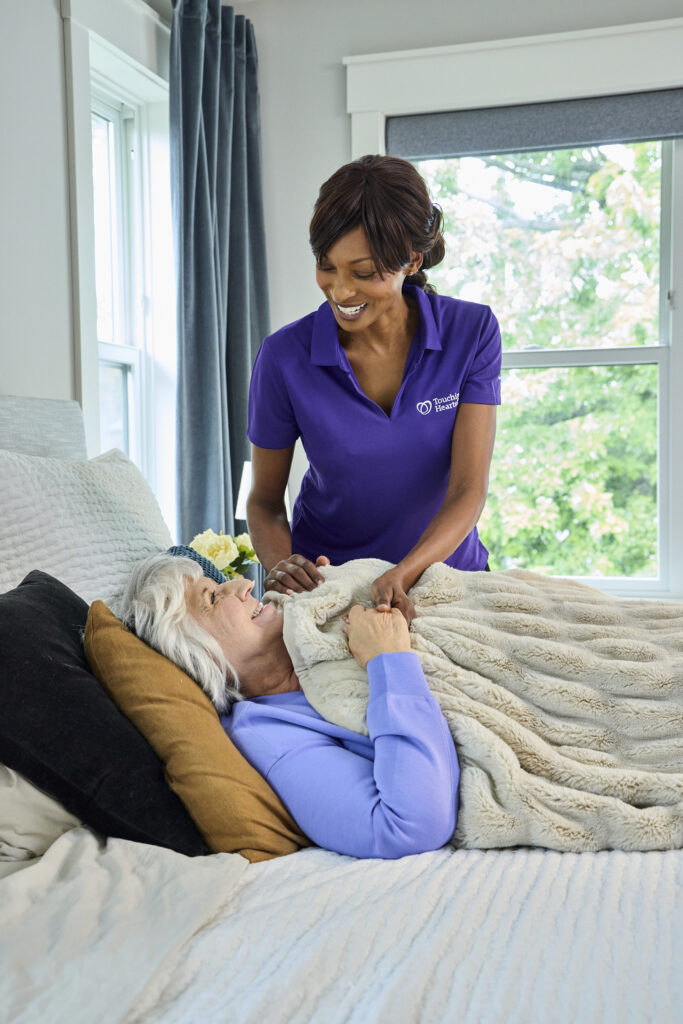
Personal Care at Home in Broomfield: Dignified Support for Daily Routines
As a parent gets older, everyday personal routines can sometimes take more effort than they once did. Getting dressed, bathing, grooming, or moving safely around the home may become tiring, even when your parent still wants to remain as independent as possible.
For adult children in Broomfield, personal care can be one of the most sensitive areas to talk about. Helping a parent with private daily routines requires trust, patience, and respect. It is understandable if your parent feels hesitant about accepting assistance.
Personal care at home can provide support while preserving dignity and independence. With an individualized care plan, a trained caregiver can assist with appropriate daily routines while encouraging your parent to do as much as they comfortably can.
What Is Personal Care at Home?
Personal care means assisting with a person’s body and everyday personal routines when they have difficulty caring for themselves independently. Touching Hearts’ caregiver training identifies personal care as one of the primary areas of non-medical home care.
Depending on the client’s assessment, personal care may include assistance with:
- Bathing
- Toileting
- Dressing
- Grooming
- Shaving
- Mouth care
- Eating
- Ambulation and transfers
The specific services and frequency of assistance are determined by the individual client’s assessment. This is important because no two families necessarily need the same level of support.
One parent may only need occasional help on days when they feel weak or unsteady. Another may need more regular assistance with several parts of the daily routine.
The goal is not to do everything for your parent.
The goal is to provide the help that is needed while preserving as much independence as possible.
Why Dignity Matters During Personal Care
Personal care is different from many other forms of household assistance because it involves someone’s body and private routines.
A caregiver may be helping with tasks your parent has managed independently for decades. That can feel uncomfortable at first.
Touching Hearts’ caregiver training places particular emphasis on safety, privacy, comfort, and dignity during personal care.
That means the caregiver should explain what they are doing, provide privacy, and encourage the client to participate whenever possible.
Let Your Parent Direct Their Care When Possible
Most adults prefer to remain as independent as they can.
When the client’s assessment does not make the required level of assistance clear, the caregiver is instructed to communicate with the client and encourage them to do as much as they can safely manage.
Your parent may be able to wash their face, brush their hair, choose their clothing, or complete part of a bathing routine independently.
Those abilities should be respected.
Helping does not have to mean taking over.
Explain Before You Assist
Communication is especially important during personal care.
Touching Hearts’ training recommends explaining what is being done, speaking clearly, and maintaining face-to-face communication whenever possible.
This can help your parent understand what to expect and retain a sense of control.
A simple explanation before assisting with a routine can make the experience feel more comfortable and respectful.
Bathing Assistance Can Help With Safety and Comfort
Bathing is one of the most common areas where an older adult may need additional support.
A parent may still want to shower independently but have difficulty with certain parts of the routine, such as getting into or out of the tub, reaching their back or lower legs, or managing the bathroom safely.
Depending on the care plan, a caregiver may provide bathing assistance.
Personal Care Does Not Always Mean Full Assistance
Your parent may only need help with certain parts of bathing.
For example, the caregiver may assist with areas that are difficult to reach while allowing your parent to complete the portions they can manage independently.
The Touching Hearts handbook specifically emphasizes preserving independence whenever possible.
If a client is steady and not confused, the caregiver may allow them privacy to complete part of the bath while remaining within earshot and returning as appropriate.
The level of assistance should match the client’s needs.
Privacy Should Remain a Priority
Personal care should be handled discreetly.
Caregivers are trained to use doors, curtains, towels, sheets, or other appropriate coverings to preserve privacy.
That can make a significant difference in how comfortable your parent feels about accepting help.
Bathroom Safety Matters
The caregiver handbook emphasizes several basic safety considerations during bathing.
These include using a non-skid shower or tub surface, providing a bathmat or towel for stepping out, using available safety bars appropriately, and considering a tub bench, transfer bench, or shower chair when one is part of the client’s setup.
Caregivers are also instructed not to have clients use towel bars to support their weight.
The water temperature should be checked before bathing, and the handbook identifies approximately 96–103 degrees Fahrenheit as a comfortable range.
These practices are intended to support a safe and comfortable routine.
Dressing Assistance Can Preserve Independence
Getting dressed can become surprisingly challenging as mobility, strength, flexibility, or coordination changes.
A parent may know exactly what they want to wear but have difficulty putting on certain clothing.
A caregiver can provide assistance according to the care plan while encouraging the client to participate as much as possible.
Let Your Parent Choose
Clothing is an everyday form of personal choice.
If your parent still enjoys choosing their outfit, that choice should remain theirs whenever possible.
A caregiver can help with the physical portions of dressing while allowing the client to decide what they want to wear.
That small decision can help maintain a sense of normalcy and independence.
Allow Extra Time
Personal care should not feel rushed.
Touching Hearts training encourages caregivers to exercise patience and recognize that what a client can do may change from day to day.
Some mornings may go smoothly. On another day, your parent may need more assistance.
Giving the person time to participate can be more respectful than automatically completing the task for them.
Grooming Is About More Than Appearance
Grooming can affect how a person feels about themselves.
Hair care, shaving, oral care, and other routines may be deeply connected to someone’s identity and sense of normalcy.
Touching Hearts’ training materials recognize that grooming can contribute to a client’s sense of dignity and well-being.
Hair Care
Some older adults may have difficulty brushing, styling, or otherwise caring for their hair.
If hair care is included in the plan, a caregiver may provide appropriate assistance while respecting the client’s usual preferences.
A familiar hairstyle or morning grooming routine can help the day begin with a sense of normalcy.
Shaving and Personal Appearance
Shaving assistance may also be included in personal care.
As with other grooming tasks, the caregiver should follow the client’s care plan and preferences.
The purpose is not simply appearance.
Maintaining familiar grooming routines can help your parent continue feeling like themselves.
Oral Care
Mouth care is another part of personal care that may require assistance.
The Touching Hearts handbook includes oral care and denture care within its personal-care training.
A caregiver can assist according to the client’s care plan and abilities.
Toileting Assistance Requires Privacy and Respect
Toileting is another highly personal area of care.
An older adult may need assistance because of mobility limitations, difficulty transferring, or other challenges described in their care plan.
The caregiver’s approach should remain respectful and matter-of-fact.
Keep the Client Covered and Comfortable
The handbook emphasizes providing privacy during personal care.
When toileting or providing related assistance, caregivers should expose only the area necessary for the task and use appropriate draping.
This can help protect dignity during a vulnerable moment.
Encourage Independence
Your parent may be able to complete portions of the toileting routine independently.
Whenever appropriate, the caregiver should encourage those abilities rather than taking over automatically.
Personal care is most supportive when it provides assistance without unnecessarily removing independence.
Skin Care Can Be Part of the Routine
Touching Hearts training emphasizes paying attention to the condition of the client’s skin during personal care.
Caregivers are instructed to report unusual concerns such as redness, wounds, swelling, tenderness, or bruising to the appropriate supervisor.
This does not mean the caregiver is diagnosing a condition.
It means they remain observant and communicate changes according to their responsibilities.
Mobility and Transfers May Be Part of Personal Care
Personal care sometimes involves helping a parent move from one position to another.
Touching Hearts identifies assistance with ambulation and transfers as part of the personal-care services caregivers may provide.
The exact level of assistance depends on the client’s assessment.
Encourage Safe Participation
Your parent may be able to help with a transfer even if they need assistance.
The caregiver should work with the client rather than automatically doing all the physical work.
The handbook emphasizes using proper body mechanics and coordinating movements with the client when assistance is required.
Know the Caregiver’s Limits
There are also clear limits.
Touching Hearts caregivers should not lift more than 25 pounds and are not expected to move heavy objects such as refrigerators, televisions, or heavy boxes.
If a request falls outside the caregiver’s safe responsibilities, the caregiver should report it to the supervisor rather than attempting it.
These boundaries protect both the client and caregiver.
Eating Assistance Can Support Daily Routines
Personal care can also include assistance with eating when that service is part of the client’s assessment.
For some older adults, the challenge may be physical rather than a lack of interest in eating.
A caregiver can provide appropriate assistance while allowing the client to participate as much as possible.
Meal planning and preparation may also be part of the broader care plan.
The important distinction is that caregivers are providing non-medical assistance according to the services established for the client.
A Personal Care Routine Should Be Individualized
There is no universal personal-care schedule that works for every older adult.
Touching Hearts’ handbook explains that each client has individual needs and preferences, and the client assessment establishes the type and frequency of services to be provided.
That means personal care may look different from one Broomfield household to another.
One client may need assistance with bathing several days a week.
Another may need help with dressing and grooming each morning.
Someone else may primarily need standby assistance on days when they feel less steady.
The purpose of an individualized care plan is to match support with the client’s actual needs.
What Families Can Expect From a Dignity-Focused Approach
If your parent is nervous about accepting personal care, understanding the caregiver’s approach may help.
Touching Hearts’ training uses a simple framework called S.W.I.P.E.S., which emphasizes preparing supplies, washing hands, identifying yourself and addressing the client by name, providing privacy, explaining what you are doing, and making sure the area is left in order afterward.
This framework reflects an important principle: personal care should be organized and respectful.
Preparation Helps the Routine Feel Calm
Gathering necessary supplies before beginning can help avoid unnecessary interruptions.
A caregiver should think through what will be needed and keep appropriate items accessible.
That preparation can make the experience feel more comfortable for the client.
Communication Reduces Uncertainty
Explaining what is happening can help your parent remain oriented to the routine.
A caregiver should speak clearly and directly and give the client opportunities to respond.
This can be especially important when a parent has memory challenges or becomes confused during personal care.
Personal Care Can Help a Parent Stay at Home
For many families, one of the most meaningful benefits of non-medical home care is the ability to bring support into the home rather than immediately requiring a move elsewhere.
Touching Hearts describes its non-medical home care services as providing increased safety, comfort, and independence for clients while helping them receive support in their own homes.
Personal care can be part of that support.
A parent who needs help bathing or dressing may still want to remain in the home they know.
With appropriate assistance, some daily routines can continue in familiar surroundings.
Familiar Surroundings Can Matter
Home is more than a physical building.
It may be where your parent knows where everything belongs, recognizes the sounds of the neighborhood, has favorite furniture, keeps family photographs, and follows established routines.
Keeping personal care within that familiar environment can make receiving assistance feel less disruptive.
For a Broomfield family, that may allow your parent to continue enjoying the home and routines that are important to them while receiving additional support.
How to Talk With Your Parent About Personal Care
Personal care can be one of the hardest home-care conversations to start.
Your parent may feel embarrassed, worried about losing independence, or uncomfortable having someone assist with private routines.
Those feelings deserve to be acknowledged.
Focus on Support, Not Loss
Instead of saying, “You can’t take care of yourself anymore,” you might focus on the specific task that has become difficult.
For example:
“Would it help to have someone nearby when you shower so you don’t have to manage everything alone?”
That keeps the conversation centered on support rather than ability.
Ask What Kind of Help Feels Comfortable
Your parent may be willing to accept some assistance but not other types.
Ask what feels comfortable.
Maybe they want help getting dressed but prefer to handle grooming independently.
Maybe they want someone nearby during a shower but want to wash themselves.
Understanding those preferences can help create a more respectful starting point.
Give the Conversation Time
Your parent does not have to agree immediately.
Sometimes people need time to become comfortable with the idea of professional help.
A gradual conversation can be more productive than presenting personal care as a decision that must be made immediately.
Broomfield Families May Need to Plan Around Colorado Weather
Colorado weather can affect daily routines, particularly during winter.
Snow and ice may make getting outside more difficult, while cold temperatures can make a morning routine feel slower.
For a parent who already needs assistance with bathing, dressing, or mobility, seasonal conditions can add another consideration.
A caregiver can provide support with appropriate personal-care routines in the home, helping your parent maintain familiar daily habits even when outdoor conditions are less comfortable.
Families should also remember that caregivers are not a substitute for major property maintenance or professional snow removal.
The focus remains on the client’s care plan and everyday needs.
Signs Your Parent May Need Personal Care Support
It can be difficult to know when ordinary aging has reached the point where additional assistance would be useful.
Look for changes in everyday routines rather than focusing on a single incident.
You might notice that your parent:
- Takes much longer to get dressed
- Avoids bathing or showering
- Has difficulty getting safely in or out of the tub
- Needs help reaching certain areas while bathing
- Struggles with grooming
- Has difficulty managing clothing fasteners
- Needs more assistance getting to or from the bathroom
- Has begun asking family members for help with private routines
- Seems less steady during everyday movement
- Has good days when they manage independently and other days when they need more support
These changes do not automatically mean your parent needs extensive home care.
They may simply indicate that certain daily routines have become more difficult.
A personalized assessment can help identify what type of assistance may fit.
What Makes Personal Care Feel Respectful?
The quality of personal care is not measured only by whether the task gets completed.
How the task is completed matters, too.
A respectful caregiver understands that they are entering someone’s private space and assisting with deeply personal routines.
Privacy
Your parent should receive appropriate privacy throughout personal care.
Patience
Your parent may need more time to complete tasks than they once did.
Communication
The caregiver should explain what they are doing and listen to the client.
Independence
The caregiver should encourage your parent to do what they can safely manage.
Comfort
The environment, water temperature, clothing, positioning, and pace should be considered during care.
Dignity
Your parent should continue to be treated as an adult with preferences, choices, and personal boundaries.
These principles can help personal care feel like supportive assistance rather than something being done to your parent.
A Gentle Approach Can Make Accepting Help Easier
Personal care is often where families feel the emotional weight of aging most clearly.
It can be hard to watch a parent need assistance with a routine they have managed independently for most of their life.
But accepting help does not mean your parent has stopped being independent.
Sometimes independence means having the right support to continue living according to your own routines and preferences.
For families in Broomfield, in-home personal care can provide assistance with bathing, dressing, grooming, toileting, eating, mouth care, mobility, and other daily routines while keeping safety, privacy, comfort, and dignity at the center.
The most important starting point may be a simple conversation: What does your parent still want to do independently, and where would a little help make the day easier?
If you’re feeling unsure about your parent’s needs, Touching Hearts offers a free, no-pressure in-home consultation in Broomfield. We’re here to support your family every step of the way.
Frequently Asked Questions
These common questions can help Broomfield families understand what personal care at home may involve.
What personal care services can an in-home caregiver provide?
Depending on the client’s assessment, Touching Hearts caregivers may assist with ambulation and transfers, bathing, toileting, eating, dressing, grooming, shaving, and mouth care.
Will a caregiver do everything for my parent?
Not necessarily. Touching Hearts training emphasizes encouraging clients to do as much as they can safely manage. The goal is to provide the assistance outlined in the client’s care plan while preserving independence whenever possible.
Can my parent have privacy during bathing assistance?
Yes. Privacy is an important part of personal care. Caregivers are trained to use appropriate doors, curtains, towels, sheets, and other coverings and to allow the client to complete as much of the routine independently as appropriate.
What if my parent only needs help on certain days?
Personal care can be individualized. The handbook notes that some clients need assistance only on days when they feel weak or unsteady or need standby support during more difficult days. The client’s assessment determines the services and frequency.
Is personal care medical care?
Personal care provided by Touching Hearts is part of non-medical home care. Caregivers assist with daily routines according to the client’s assessment and are not providing medical treatment or diagnosis.
How can I help my parent feel comfortable accepting personal care?
Start by discussing the specific routine that has become difficult rather than presenting help as a loss of independence. Ask what assistance your parent would feel comfortable accepting and give them opportunities to remain involved in decisions and tasks they can still manage.