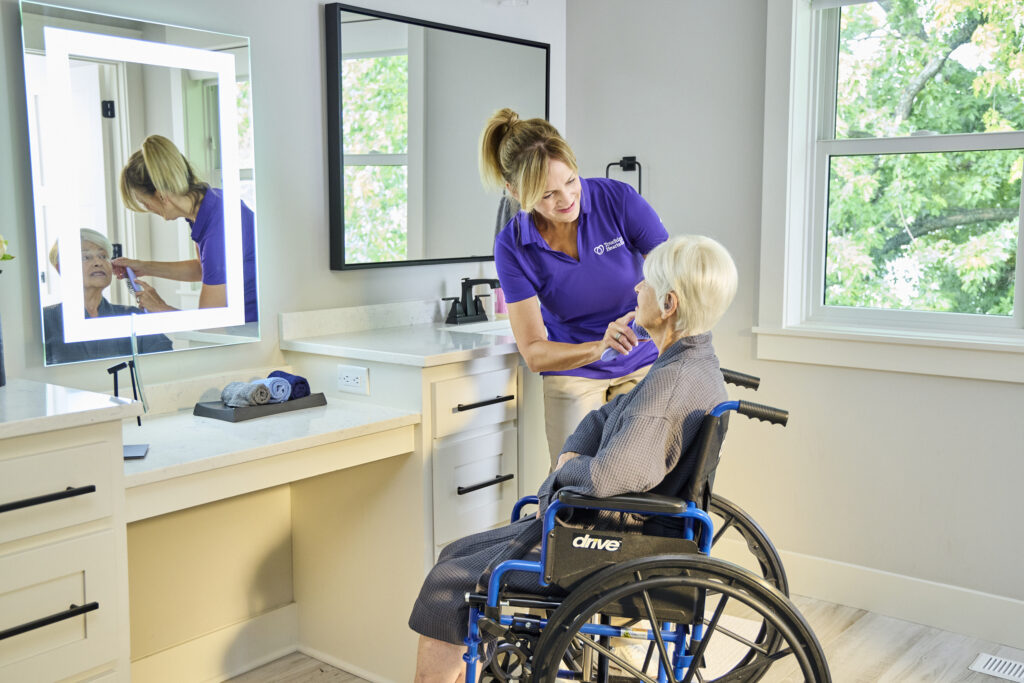
Personal Care at Home in Longmont: Dignified Support for Daily Routines
For many families in Longmont, there comes a point when an aging parent still wants to live at home but needs a little more help getting through the day. A shower may take longer. Getting dressed may become tiring. Moving safely from one room to another may require an extra hand. These changes can be difficult for both parents and their adult children to navigate.
Needing personal care does not mean your parent has lost their independence. In many cases, the right support simply allows an older adult to continue doing the things they can do for themselves while receiving help with the tasks that have become harder. That distinction matters because dignity and choice should remain part of everyday care.
Personal care at home can include assistance with bathing, toileting, dressing, grooming, eating, mobility, and other daily routines. In Longmont, where families may be balancing work, distance, changing weather, and their parent’s desire to remain in a familiar home, dependable support can make everyday life feel more manageable.
What Is Personal Care at Home?
Personal care means helping an individual with care of their person or body when physical limitations, frailty, disability, or other challenges make certain routines difficult to manage independently.
Touching Hearts describes personal care as part of its non-medical home care services. Caregivers may assist with activities such as ambulation and transfers, bathing, toileting, eating, dressing, grooming, shaving, and mouth care.
The goal is not to take over every task. Instead, the caregiver works according to the client’s individual needs and preferences. The client assessment establishes the type and frequency of services provided, helping make care more personalized rather than treating every older adult the same way.
For a Longmont family, this might mean a caregiver visits for a few hours in the morning to help a parent start the day safely. Another family may need evening assistance with bathing, changing into comfortable clothing, and getting settled for the night.
The schedule can be built around what the person actually needs.
What Personal Care Services Can Include
Personal care looks different from one household to another. Some older adults need hands-on assistance with several routines, while others only need occasional support on days when they feel weak or unsteady.
Bathing Assistance
Bathing can become one of the more challenging household routines as mobility changes. Getting into or out of a tub or shower may require balance, strength, and confidence.
When bathing assistance is included in the client’s care plan, a caregiver can provide appropriate support while helping the client remain as independent as possible. Touching Hearts’ training materials emphasize safety, privacy, comfort, and dignity throughout personal care.
A caregiver may help prepare supplies, provide assistance with the routine, and make sure the client is comfortable afterward. The goal is to provide enough help without unnecessarily taking away the person’s ability to participate.
Toileting Support
Toileting is another deeply personal routine where respectful assistance matters.
A caregiver may help a client safely reach the bathroom, provide appropriate assistance, and help with clothing or hygiene when included in the care plan. Privacy should be maintained throughout the process.
This kind of support can be especially valuable for someone who is capable of participating but becomes unsteady, tired, or anxious when completing the routine alone.
Dressing and Undressing
Getting dressed can involve more physical effort than families sometimes realize. Buttons, zippers, socks, shoes, and reaching overhead can become difficult when mobility or strength changes.
Personal care can provide assistance while still allowing your parent to make choices about what they want to wear.
That can be an important part of preserving independence. Your parent remains the person making decisions about their appearance and daily routine, while the caregiver helps with the portions of the task that have become difficult.
Grooming and Mouth Care
Grooming is about more than appearance. Feeling clean, comfortable, and well-groomed can contribute to a person’s sense of well-being.
Touching Hearts’ caregiver responsibilities include grooming, shaving, and mouth care when those services are part of the client’s care plan.
Support may include helping with hair, oral care, or other grooming routines. The handbook also emphasizes paying attention to the client’s comfort and maintaining dignity during personal care.
Assistance With Eating
Some older adults may need help during meals because physical limitations make eating more difficult.
When eating assistance is included in the care plan, the caregiver can provide appropriate support while encouraging the client to participate as much as possible.
This approach can help meals remain a normal part of the day rather than becoming another source of frustration for your parent.
Mobility and Transfers
Moving safely from a bed to a chair, standing up, or walking through the home can become challenging as an older adult’s strength or balance changes.
Caregivers may assist with ambulation and transfers when those tasks are included in the client’s assessment.
For families, this support can provide reassurance that a parent does not have to struggle through every transition alone.
Why Dignity Matters During Personal Care
Personal care involves some of the most private moments of a person’s day. That is why the manner in which help is provided matters just as much as the task itself.
A parent who once handled every part of their morning independently may feel uncomfortable when someone begins helping with bathing or dressing. Adult children may also feel unsure about how to introduce this kind of support without making their parent feel incapable.
A respectful approach starts with recognizing that your parent is still an adult with preferences, opinions, routines, and boundaries.
Touching Hearts’ training materials encourage caregivers to let the client direct care whenever possible and to encourage the client to do as much as they can independently. Care should consistently protect safety, privacy, comfort, and dignity.
Let Your Parent Participate
If your parent can wash part of their hair, choose their clothing, brush their teeth, or walk a short distance safely, they should be encouraged to participate according to their abilities and care plan.
Support should fill the gap rather than automatically replace the person’s abilities.
Explain What Is Happening
Personal care should not feel rushed or mysterious. A caregiver can explain what they are doing, communicate clearly, and maintain respectful interaction throughout the routine.
Touching Hearts uses the S.W.I.P.E.S. approach in its caregiver training, which includes identifying yourself, providing privacy, explaining what you are doing, and checking the area when care is complete.
Protect Privacy
Doors, curtains, screens, towels, and other appropriate measures can help preserve privacy during personal care.
Even when assistance is necessary, your parent’s sense of personal space remains important.
How Personal Care Can Support Aging in Place in Longmont
Longmont offers a familiar setting for many older adults who want to remain close to their home, neighbors, routines, and community.
For an aging parent, staying home can mean continuing to enjoy familiar surroundings rather than immediately considering a move simply because certain daily activities have become harder.
Touching Hearts identifies one benefit of non-medical home care as allowing clients to bring help into their homes instead of having to move somewhere else to receive additional assistance. The organization also emphasizes increased safety, comfort, independence, and peace of mind for families.
Personal care may therefore become one part of a larger plan for aging at home.
For example, a Longmont parent might be able to manage their meals, hobbies, and favorite household activities but need assistance with bathing and dressing. Another person may need morning support with mobility and grooming but remain independent for much of the afternoon.
The right level of help can be shaped around those differences.
Personal Care in Every Season
Colorado weather can make everyday routines more complicated at certain times of year.
During a Longmont winter, snow and ice can create additional concerns around getting safely to and from a vehicle or navigating outdoor areas. A parent who already feels unsteady may be more hesitant about leaving the house when sidewalks are slick or temperatures are low.
Inside the home, winter routines can also mean heavier clothing, additional layers, and more effort getting ready to go outside.
Personal care does not eliminate these seasonal challenges, but dependable in-home support can help a parent approach daily routines with greater confidence.
In warmer months, families may have different concerns. Longer days can create opportunities for walks, errands, or time outside, while personal care can help an older adult get ready and remain comfortable during everyday activities.
The important point is that care should fit the person’s routine rather than forcing the person into an entirely new lifestyle.
How Families Can Tell When Personal Care May Be Helpful
It is not always obvious when an aging parent needs personal care.
Often, the first signs are small.
You may notice that your parent takes much longer to get ready in the morning. They may stop showering as regularly, wear the same clothing repeatedly, avoid certain activities, or mention that bathing has become difficult.
Other signs may include:
- Your parent is increasingly hesitant about getting in or out of the shower.
- Dressing takes significantly longer than it used to.
- Your parent needs occasional assistance standing or walking.
- Grooming routines are becoming inconsistent.
- Toileting has become difficult to manage independently.
- Your parent seems more tired after ordinary daily routines.
- You find yourself visiting more frequently just to help with basic personal tasks.
- Your parent is still capable of many activities but needs assistance with a few specific routines.
These signs do not automatically mean that your parent needs extensive care. They may simply indicate that it is time to have a conversation about what kind of support would make daily life easier.
Personal Care Does Not Have to Mean Giving Up Independence
One of the biggest concerns families hear from older adults is, “I don’t want someone taking care of me.”
That feeling is understandable.
For many parents, independence means more than being able to complete every task without assistance. It can mean having a say in how the day unfolds, remaining in their own home, choosing their clothes, maintaining familiar routines, and deciding when and how they want help.
A caregiver can become an extra set of hands rather than someone who takes control.
Touching Hearts’ training specifically emphasizes encouraging clients to do as much as they can and allowing them to direct care whenever possible.
That philosophy can make a meaningful difference.
Instead of saying, “You can’t do this anymore,” families can approach support by saying, “Let’s make this easier.”
That small change in perspective can help a parent feel supported rather than defined by what they can no longer do.
Choosing a Personal Care Schedule That Fits Your Parent
There is no single schedule that works for every family.
Some parents may benefit from a short morning visit. Others may need help with an evening routine. Some may need support several days each week, while others may only need assistance during certain periods.
The client assessment helps establish the type and frequency of services provided based on individual needs and preferences.
When considering a schedule, think about when your parent has the most difficulty.
Ask:
- Which personal care tasks are hardest right now?
- What can your parent still do independently?
- When during the day does your parent seem most tired or unsteady?
- Would morning, afternoon, or evening assistance be most useful?
- Are there particular days when family members cannot be available?
- Could a small amount of regular help prevent a larger caregiving burden later?
Starting with the areas where support is most needed can make the transition feel more comfortable.
What Families Can Expect From Non-Medical Home Care
Personal care at home is non-medical support. Touching Hearts’ caregiver handbook describes services such as companionship, meal planning and preparation, light housekeeping, personal care, home safety monitoring, medication reminders, and errands among caregiver responsibilities, depending on the client’s assessment.
This distinction is important for families.
A caregiver is there to provide the services authorized through the client’s care plan and to communicate concerns through the appropriate channels. The handbook emphasizes that caregivers should report changes they observe and maintain accurate, objective documentation.
For an adult child coordinating care from another part of the Front Range, that communication can provide valuable peace of mind.
You do not have to be physically present for every daily routine to know that someone is paying attention.
Making Personal Care Feel Natural for Your Parent
The transition to personal care often goes more smoothly when the family focuses on support rather than limitations.
Instead of introducing a caregiver as someone who will “take care of everything,” explain that the caregiver is there to make certain parts of the day easier.
Give your parent choices whenever possible.
Ask what time they prefer to shower. Let them choose their clothes. Respect familiar routines. Encourage the activities they can safely continue doing themselves.
And remember that trust takes time.
A caregiver entering someone’s home is entering a very personal space. Touching Hearts’ handbook emphasizes that caregivers are guests in the client’s home and should respect the client’s property, privacy, and security.
That respect is part of what makes personal care feel like support rather than a loss of control.
Frequently Asked Questions
Every family’s situation is different, but these common questions can help when considering personal care at home in Longmont.
What does personal care at home include?
Depending on the client’s individual assessment, personal care may include assistance with bathing, toileting, eating, dressing, grooming, shaving, mouth care, ambulation, and transfers.
Can a caregiver help my parent without taking away their independence?
Yes. The Touching Hearts caregiver training emphasizes encouraging clients to do as much as they can and allowing the client to direct care whenever possible. The goal is to support safety, privacy, comfort, and dignity while preserving independence.
Does personal care have to be provided every day?
Not necessarily. The type and frequency of services are based on the individual client’s needs and preferences and are established through the client assessment.
Is personal care the same as medical care?
No. Personal care provided through Touching Hearts is part of non-medical home care. Caregivers provide services according to the client’s assessment and communicate observed concerns through the appropriate office channels.
How can I talk to my parent about accepting personal care?
Start with empathy rather than focusing on what your parent can no longer do. Explain that the goal is to make difficult routines easier while allowing them to remain involved in their own care and daily decisions.
If you’re feeling unsure about your parent’s needs, Touching Hearts offers a free, no-pressure in-home consultation in Longmont. We’re here to support your family every step of the way.