The discharge papers are signed. The nurse has gone through everything. Your dad is in the wheelchair by the door, looking a little pale but relieved to be going home.
And then you pull into the driveway, and it hits you: now what?
The hospital had nurses and call buttons and medication carts. Home has none of that. And while home is where he wants to be — where most people want to be — the transition from hospital to home is one of the most vulnerable stretches in a senior’s health journey.
Nearly one in five Medicare patients is rehospitalized within 30 days of discharge. And the majority of those readmissions are preventable. What happens in the first few days and weeks at home makes an enormous difference.
Why the First 72 Hours Matter Most
The highest-risk window after hospital discharge is the first three days. Medications are new or changed. Physical strength is reduced. The care team from the hospital is no longer in the picture. And family members, who have been under stress, are trying to figure out the right balance between helping and hovering.
During this window, small complications can escalate quickly if there’s no one watching carefully.
- New medications may cause dizziness, nausea, or confusion
- Wounds need to be monitored for signs of infection
- Nutrition and hydration are often poor in the first days home
- Fatigue can cause falls in someone whose strength hasn’t returned yet
- Follow-up appointments can be missed without support
Having someone present and attentive during this period — not just available to call, but physically present — is one of the most important ways to reduce readmission risk.
What a Safe Recovery at Home Looks Like
Getting the Medications Right
Hospital discharges often come with new prescriptions, adjusted dosages, or both. It’s a lot to manage, especially for someone who is tired, possibly still in pain, and trying to adjust.
A care partner who helps with medication reminders — making sure the right medication is taken at the right time, and flagging anything that seems off — plays a quiet but critically important role in recovery.
Rest, Food, and Fluids
Recovery requires fuel. But many seniors come home from the hospital with reduced appetite, difficulty preparing food, and a tendency to skip meals because eating doesn’t feel worth the effort.
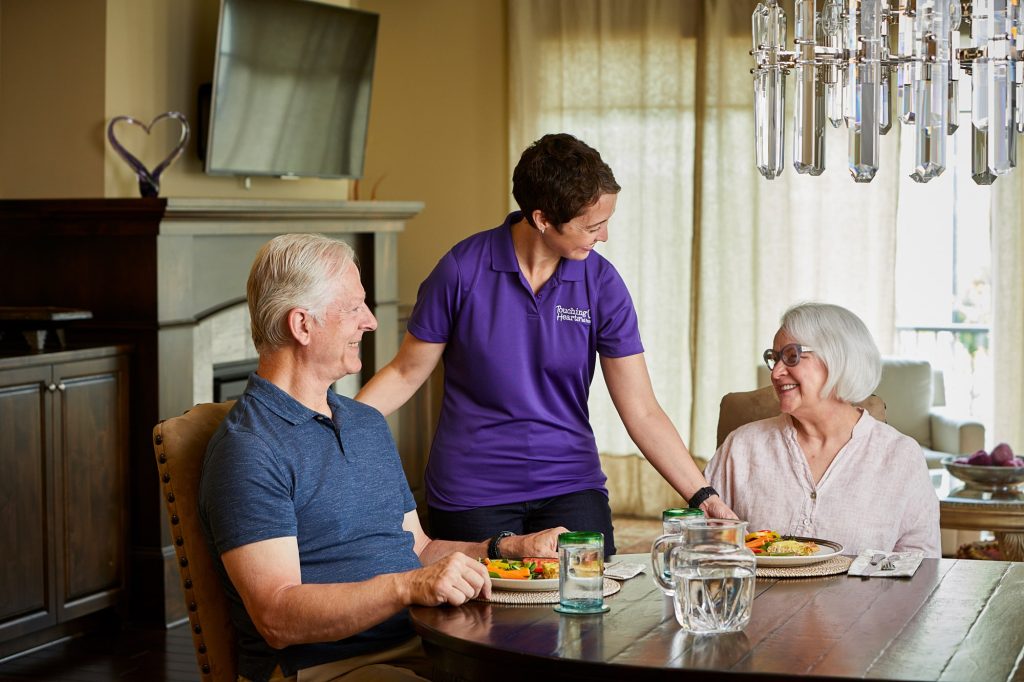
Home care in Fort Bend County that includes meal preparation isn’t a luxury after a hospital stay — it’s medical common sense. The body needs consistent nutrition to heal. A care partner who prepares simple, nourishing meals and gently encourages hydration is supporting recovery in a direct and meaningful way.
Physical Support During a Vulnerable Time
Hospitals leave people weaker than they arrive — even when the treatment goes well. Muscle strength drops quickly with bed rest. Balance is often affected. Pain or stiffness can alter how someone walks and moves.
For seniors returning home to Sugar Land’s common tile floors, staircases, and large homes, this period of reduced physical function is when falls are most likely to happen.
A care partner who assists with mobility — helping someone get up from bed safely, accompanying them to the bathroom, being a steady presence as they regain strength — can make the difference between a smooth recovery and another emergency room visit.
Coordinating With Local Healthcare Providers
Fort Bend County and Sugar Land are well-served by healthcare facilities, including Houston Methodist Sugar Land Hospital and a network of specialists and primary care physicians throughout the area.
One of the practical challenges after discharge is keeping all those appointments — especially when someone is tired, sore, and perhaps not driving. Transportation to follow-up care is one of the most important pieces of post-hospital support, and it’s something in-home care in Fort Bend handles well.
A care partner who drives your loved one to their follow-up appointment, waits with them, and helps them remember what the doctor said afterward is providing enormous value. Not just to the patient — but to the family members who can’t always be there.
Watching for Warning Signs
After a hospital stay, certain changes in condition warrant a call to the doctor — or a trip back to the ER. Things to watch for:
- Increasing confusion or unusual behavior
- Shortness of breath or chest pain
- Signs of infection at a wound or surgical site (increasing redness, warmth, discharge)
- Fever above 100.4°F
- A fall, or increasing difficulty walking
- Missed medications or refusal to eat or drink
A care partner who is present daily, who knows the patient’s baseline, and who is trained to recognize warning signs is a genuinely important safety net.
How Touching Hearts Supports Recovery at Home
At Touching Hearts at Home of Fort Bend and Sugar Land, we work with families to put care in place quickly after a hospital discharge — sometimes within 24–48 hours.
Our care partners provide the consistent, attentive presence that makes recovery possible at home. They don’t replace medical care — but they bridge the gap between the hospital and the doctor’s office, between what was prescribed and what’s actually happening at home.
We know that for most seniors, being home — in their own bed, in their own kitchen, surrounded by their own things — is what actually makes them feel better. Our job is to make sure home is safe enough to make that happen.
If you’re preparing for a family member’s discharge from a hospital in Sugar Land or Fort Bend County, reach out. Let’s talk through what kind of support might help make this transition as smooth as possible.
Frequently Asked Questions
Why are seniors at risk after leaving the hospital?
Hospital stays weaken the body physically, disrupt normal routines, and often result in medication changes. Without proper support at home, these factors can lead to falls, missed medications, inadequate nutrition, and ultimately readmission.
How soon can in-home care start after a hospital discharge in Fort Bend?
Touching Hearts at Home of Fort Bend can often arrange care within 24–48 hours of a discharge request. Planning ahead — even before discharge — allows for the smoothest transition.
Does in-home care help prevent hospital readmission?
Yes. Studies consistently show that professional in-home support after discharge significantly reduces readmission rates by addressing the primary causes: medication errors, falls, missed follow-up care, and inadequate nutrition.
What’s the difference between home health and in-home personal care after surgery?
Home health involves licensed clinical services (nursing, PT, OT) typically ordered by a physician. Personal care — provided by services like Touching Hearts — covers daily assistance, meals, companionship, and transportation. Both can work together.
Can in-home care cover overnight care after a hospital stay?
Yes, for cases where overnight supervision is needed, Touching Hearts can discuss extended or overnight care arrangements. Reach out to explore what options are available for your situation.