She had lived in her Telfair home for over twenty years. She knew every inch of it.
But one Tuesday morning, reaching for a coffee mug she’d grabbed a thousand times before, she missed the counter, lost her footing on the tile floor, and went down.
The fall itself lasted a second. The recovery lasted months.
Stories like this one happen every day in homes across Fort Bend County — and not because someone was careless. Falls don’t usually happen because of carelessness. They happen because of small, familiar things that gradually become risks we stop noticing.
The good news? Most falls are preventable. And it starts with knowing what to look for.
Why Falls Are So Serious — and So Common
Falls are the leading cause of injury among adults over 65 in the United States. In Texas, they send thousands of seniors to the emergency room every year. And beyond the physical injury, a fall can shake someone’s confidence, limit their independence, and dramatically change their daily life.
What makes falls particularly tricky is that the risks often live inside the home — in places that feel completely familiar. Let’s walk through the five most common fall risks we see in Fort Bend homes, and what you can do about each one.
Fall Risk #1: Slippery Hard Floors
Sugar Land and Fort Bend homes often feature tile, hardwood, or polished stone flooring — beautiful, but unforgiving when it comes to slipping. Tile is especially common in bathrooms, kitchens, and entryways, which happen to be the rooms where falls most frequently occur.
Add a little water from a recent shower, a splash from the kitchen sink, or rain tracked in from outside, and the risk multiplies quickly.
What to do:
- Place non-slip mats in the bathroom, kitchen, and entryway — and make sure they lay completely flat
- Use textured tub mats inside the bathtub or shower
- Consider non-slip socks or slippers rather than walking on smooth floors in bare feet
- Install grab bars near the toilet and shower — not towel bars, which are not designed to hold weight
Fall Risk #2: Loose Rugs and Cluttered Pathways
Area rugs add warmth and color to a home. But edges that curl up, rugs that slide, or runners that bunch in the middle are common fall hazards — especially in low lighting or for someone whose gait or balance has changed.
Clutter is equally problematic. A power cord stretched across a hallway, a stack of books on the floor, or shoes left near the door can all become trip hazards that feel harmless until they aren’t.
What to do:
- Secure rugs with non-slip backing or double-sided tape, or remove them entirely in high-traffic areas
- Keep walkways clear — especially hallways, stairs, and the path from bedroom to bathroom
- Coil or secure cords against walls, away from walking paths
- Make a habit of scanning each room for items that have migrated to the floor
Fall Risk #3: Poor Lighting
This one is often overlooked because most of us don’t think about lighting until the power goes out. But for an older adult getting up in the middle of the night or navigating a hallway at dawn, dim or absent lighting is a genuine danger.
The nighttime trip to the bathroom is one of the most common times serious falls occur. In the dark, a threshold, a step down, or even the edge of a bath mat becomes invisible.
What to do:
- Install night lights in hallways, bedrooms, and bathrooms — motion-activated ones work especially well
- Make sure stair lighting is bright and that switches are accessible from both the top and bottom
- Keep a flashlight or lamp within arm’s reach of the bed
- Replace dim bulbs throughout the home with brighter LED options
Fall Risk #4: Pets
This one is genuinely hard for families to hear — because pets bring so much joy, companionship, and comfort to older adults living alone. But small dogs and cats are also one of the most common causes of falls in senior households.
A dog that rushes to greet at the door. A cat that curls up on the top step. A leash that gets tangled underfoot. These are real, everyday risks that are easy to underestimate.
What to do:
- Be mindful of where pets rest — particularly on stairs and in main walkways
- Consider a pet gate to keep animals out of certain areas during high-risk moments like getting dressed or moving through the home in the dark
- Keep feeding areas and pet toys in consistent, out-of-the-way spots
No one is saying give up the dog. Just be intentional about where and how pets move through the home.
Fall Risk #5: Bathroom and Transition Hazards
The bathroom is the single most dangerous room in the house for older adults. The combination of wet surfaces, step-in tubs, small spaces, and the need to balance while undressing or standing up from the toilet makes it a fall hot spot.
Transitions — that slight height difference between a rug and a tile floor, or the small step between a bathroom and the bedroom — also catch people off guard, especially when balance has changed.
What to do:
- Install a shower chair or bench to reduce the need to stand for long periods
- Use a handheld showerhead for more flexibility and control
- Add a raised toilet seat if getting up and down is difficult
- Consider a walk-in shower remodel if bathtub entry is consistently challenging
- Level out transitions with threshold ramps where possible
How In-Home Care Supports Fall Prevention
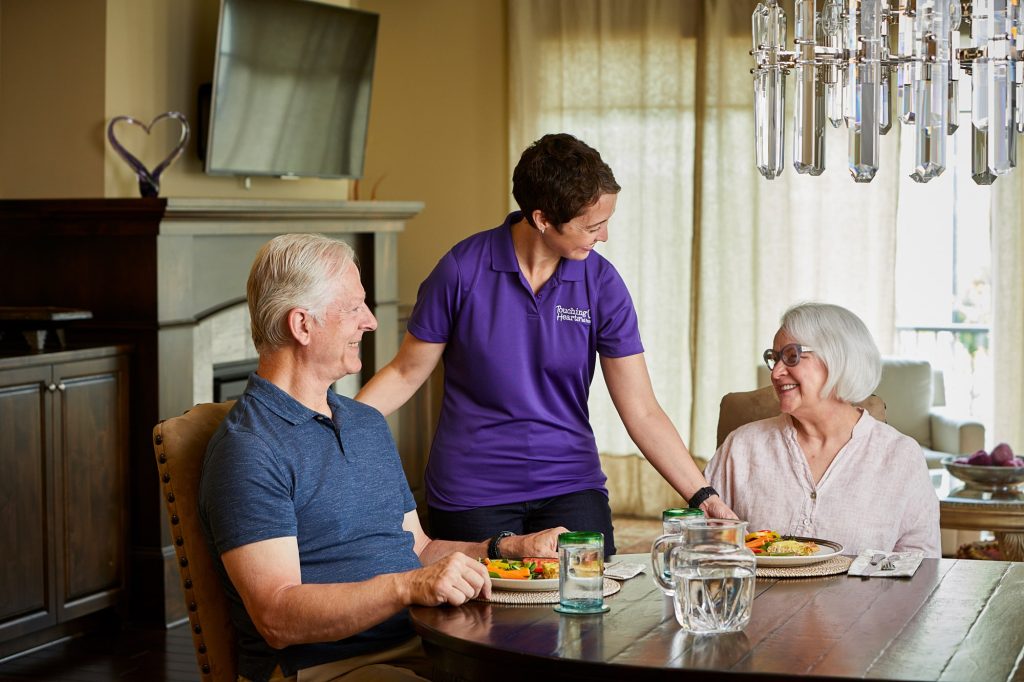
Even the safest home can’t replace having someone nearby. A big part of what in-home care in Fort Bend offers families is simply reliable, attentive presence.
A care partner who visits regularly will notice things family members might miss during a quick weekend visit. They’ll spot the rug that’s starting to curl. They’ll be there during the moments that carry the most risk — getting up in the morning, bathing, moving from room to room.
Home care services in Fort Bend TX aren’t just for seniors who’ve already fallen. They’re for families who want to make sure a fall never happens in the first place.
At Touching Hearts at Home of Fort Bend and Sugar Land, preventing accidents is something our care partners think about every single day — with attention and watchfulness that only comes from genuinely knowing and caring about the person they’re supporting.
A Conversation Worth Having
If you’ve been meaning to do a safety walk-through of your loved one’s home but haven’t gotten around to it, this is your nudge. It doesn’t have to be complicated. Start with one room.
And if you’re not sure where to start — or if you’re wondering whether professional support might help keep your loved one safer at home — we’re always happy to talk. No pressure. Just a conversation about what’s going on and what options might make sense for your family.
Because senior care in Fort Bend County isn’t just about what happens when something goes wrong. It’s about everything you do to keep something from going wrong in the first place.
Frequently Asked Questions
What are the most common causes of falls in older adults?
Slippery floors, loose rugs, poor lighting, cluttered walkways, and pets are among the most common causes. Muscle weakness, balance changes, and medications can also increase risk.
How can I help a parent who refuses to make safety changes?
Frame changes as upgrades, not limitations. Involve them in the decisions. Sometimes hearing it from a care professional rather than a family member makes a difference too.
Does in-home care help prevent falls?
Yes, significantly. A consistent caregiver provides attentive presence during the highest-risk moments and can notice environmental hazards before they become a problem.
Is companion care in Sugar Land available for just a few hours a week?
Absolutely. Care plans are fully flexible — some families start with just a few hours a week and adjust over time as needs change.
When should I be concerned about falls in a parent?
Any fall — even a minor one — deserves attention. If falls are becoming frequent, or if you notice your loved one moving more cautiously or avoiding activities, it’s time to have a thoughtful conversation about safety and support.