Meal Preparation for Seniors: How In-Home Care Supports Nutrition and Independence in Loveland
For many older adults, a home-cooked meal is about much more than satisfying hunger. It can bring comfort, preserve familiar routines, and create an opportunity to enjoy favorite foods. But as parents age, shopping for groceries, standing at the stove, chopping ingredients, or cleaning up afterward can become more difficult. Families may begin to wonder whether their loved one is eating enough or relying too often on snacks and convenience foods.
If you have noticed that your parent’s refrigerator is nearly empty, fresh ingredients are going unused, or meals seem to be getting skipped, you are not alone. These changes can happen gradually, and it is not always easy to know when a little extra help in the kitchen would make a meaningful difference.
For families in Loveland and across Northern Colorado, in-home care can help older adults enjoy meals that reflect their tastes and routines while supporting independence at home. With practical assistance, thoughtful planning, and a little companionship, meal preparation can become a more manageable and enjoyable part of the day.
Why Meal Preparation Can Become More Difficult With Age
Preparing a meal involves many small tasks. An older adult may need to plan a menu, check what is available, open packages, wash vegetables, use kitchen appliances, carry dishes, and clean the kitchen afterward. When several of these tasks become tiring or challenging, making a balanced meal may feel like too much work.
That does not mean your parent has lost the ability to make choices about food or should give up favorite kitchen activities. Often, the most helpful approach is to identify which parts of meal preparation have become difficult and provide support with those specific tasks.
Changes in energy and mobility
Standing for long periods, reaching into cabinets, lifting pots, or moving hot dishes can be tiring. An older adult may still enjoy choosing recipes or stirring ingredients but appreciate help with heavier or more demanding steps.
A caregiver can assist with appropriate meal preparation tasks, help keep commonly used items within easy reach, and tidy the work area so that cooking feels more manageable.
Grocery shopping and carrying food home
Shopping involves more than choosing ingredients. It may require driving, walking through a large store, comparing products, carrying bags, and putting everything away. For someone who no longer drives or tires easily, keeping fresh food available can become a challenge.
Depending on the agreed care plan, an in-home caregiver may help with grocery shopping, errands, or organizing groceries once they are home. Having ingredients available makes it easier for your parent to enjoy familiar meals instead of feeling limited to whatever is easiest to open.
Forgetting meals or losing interest in cooking
Sometimes, the difficulty is not physical. A parent who lives alone may find cooking for one person unappealing, forget to eat at regular times, or feel discouraged by the effort of preparing a meal and cleaning up afterward.
A friendly caregiver can provide structure, conversation, and practical help around mealtimes. Sharing the experience of preparing food may make eating feel less like another chore and more like a pleasant part of the day.
Keeping up with kitchen tasks
A sink full of dishes, cluttered counters, or ingredients that have not been put away can make the next meal harder to prepare. Light housekeeping related to the client’s needs, such as washing dishes and wiping counters, can help keep the kitchen welcoming and usable.
The goal is not to take over your parent’s home. It is to make everyday routines easier while respecting their preferences and the way they like things done.
How In-Home Care Supports Nutrition and Independence
Meal preparation is one way non-medical in-home care can help older adults maintain daily routines. A caregiver can provide hands-on assistance while encouraging the older adult to remain involved in decisions and activities wherever possible.
For families considering senior home care in Loveland, support can be tailored to the tasks that are most difficult, whether that means preparing lunch a few times a week, helping with dinner, or organizing ingredients for several upcoming meals.
1. Planning meals around personal preferences
A useful meal plan begins with the person who will be eating. Your parent may have favorite soups, family recipes, seasonal dishes, or simple breakfasts they have enjoyed for decades. Taking these preferences into account can make meals more appealing and help preserve a sense of familiarity.
A caregiver can work with your parent to identify meals they enjoy, make a grocery list, and plan practical options for the days ahead. The plan might include an easy breakfast, a fresh lunch, and a dinner that can be prepared without too many steps.
It is also important to respect food allergies, dietary restrictions, cultural preferences, and instructions provided by healthcare professionals. If your parent has a prescribed diet or specific nutrition needs, family members should share the relevant guidance with the care team so meal planning can remain consistent with those instructions.
2. Preparing familiar, satisfying meals
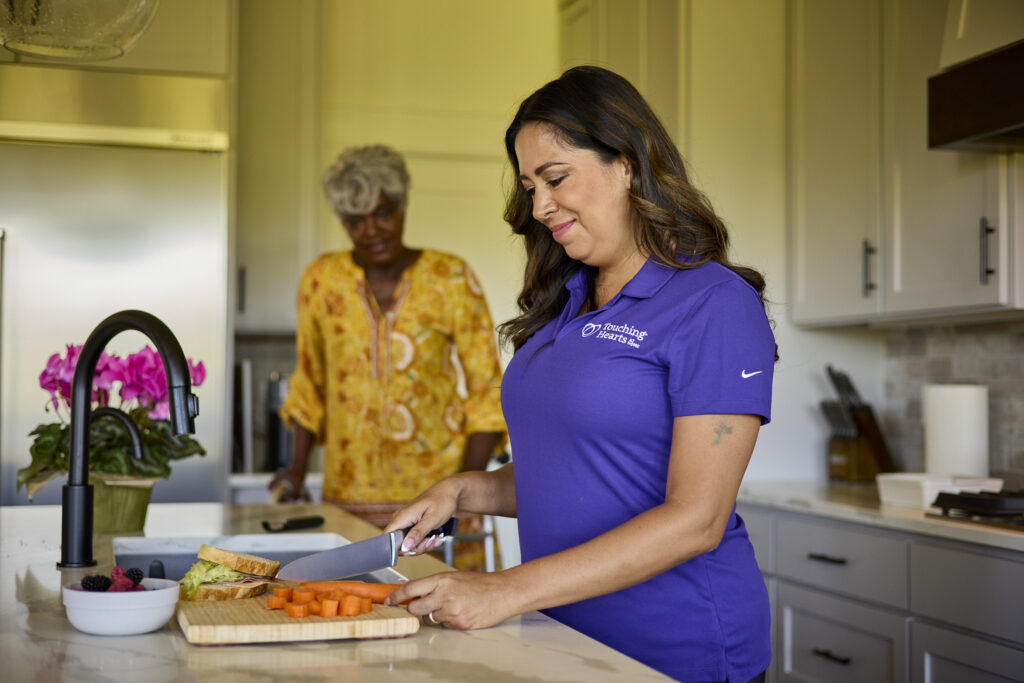
A caregiver can help prepare meals using ingredients your parent enjoys and can comfortably eat. Depending on the agreed service plan, this may include washing produce, measuring ingredients, assembling sandwiches, preparing soup, cooking a simple entrée, or arranging a meal on a plate.
Familiar foods can be especially meaningful. A favorite recipe may remind your parent of family gatherings or provide comfort on a quiet afternoon. Inviting them to share a recipe or explain how they like a dish prepared also gives them an opportunity to contribute their knowledge and preferences.
The intention is not to impose a new menu. It is to make it easier for your parent to enjoy appropriate meals without having to manage every step alone.
3. Making the kitchen easier to use
A comfortable kitchen can support independence. Caregivers may help organize commonly used ingredients, keep preparation areas tidy, wash dishes, and return kitchen items to their usual places.
Small adjustments can make daily routines feel less overwhelming. For example, setting out the ingredients for a planned meal or clearing the counter before cooking can reduce the number of tasks your parent needs to manage at once.
Any changes should reflect your parent’s preferences. Keeping familiar items in their usual locations can be particularly helpful for someone who values routine or feels unsettled when belongings are moved.
4. Encouraging regular mealtimes
When someone lives alone, it can be easy for the day to pass without a proper meal. A planned caregiver visit around lunchtime or dinner can help create a predictable routine.
During a visit, a caregiver may help prepare food, make sure the meal is accessible, and offer friendly company. Depending on the care plan and the individual’s needs, the caregiver may also encourage fluids as appropriate and communicate relevant concerns to the family or office.
Regular mealtimes are not a substitute for professional nutrition guidance, but they can help families notice patterns and make everyday eating routines easier to maintain.
5. Offering companionship during meals
Eating alone can be less enjoyable for some older adults. Conversation during meal preparation or at the table may help make mealtime feel more social and engaging.
A caregiver might talk with your parent about a favorite recipe, listen to stories about family traditions, or simply enjoy a relaxed conversation while lunch is served. These moments can bring warmth to an ordinary part of the day.
Companionship also gives families another opportunity to understand how their loved one is doing. If a caregiver notices a meaningful change in eating habits, appetite, or the ability to manage meals, that observation can be shared with the appropriate family contact.
Signs Your Parent May Need Help With Meals
Changes in eating habits can be subtle. A parent may insist everything is fine while quietly struggling with shopping, cooking, or cleaning up. Rather than focusing on one missed meal, look for patterns and ask gentle questions about what would make daily life easier.
Food is spoiling before it gets eaten
If fresh produce is repeatedly thrown away, leftovers are accumulating, or groceries remain untouched, your parent may be buying food they cannot easily prepare or losing motivation to cook.
Ask which foods they would actually enjoy eating and whether help with shopping or preparing smaller portions might be useful.
Meals are becoming repetitive or less substantial
Your parent may rely on crackers, toast, packaged snacks, or other easy options because cooking a full meal feels exhausting. Convenient foods can have a place in everyday eating, but a limited routine may be a reason to explore additional support.
A caregiver can help prepare a greater variety of meals based on your parent’s preferences and any dietary guidance they have received.
The kitchen feels harder to manage
Look for signs that food preparation has become frustrating: unopened ingredients, dirty dishes, difficulty reaching supplies, or reluctance to use kitchen appliances.
These observations are not proof that your parent cannot cook safely. They are invitations to talk about which tasks feel comfortable and where assistance could help.
Your parent mentions low energy or difficulty shopping
A parent may say the grocery store is too tiring, lifting food containers is difficult, or cooking leaves them worn out. Listen to these comments without assuming they need someone to take over every task.
If eating habits change noticeably or your parent experiences unexplained weight changes, persistent appetite loss, or difficulty swallowing, encourage them to speak with a healthcare professional. A caregiver can support daily routines, but medical or nutritional concerns need appropriate professional attention.
Family members are worried about what’s being eaten
Adult children often discover meal-related concerns during visits or phone calls. Perhaps a parent cannot remember the last time they cooked, or a sibling notices that dinner is routinely skipped.
Instead of placing the burden on one family member to check every meal, consider whether a consistent schedule of in-home support could provide practical help and clearer communication about everyday routines.
Practical Ways to Make Meal Preparation Easier at Home
Support does not always require elaborate menus or major changes. Often, a few thoughtful habits can help an older adult feel more comfortable in the kitchen and make mealtimes less stressful.
Keep favorite foods easy to find
Ask your parent which ingredients they use most often. Keeping familiar, frequently used items in accessible places can make simple meals easier to assemble. Avoid reorganizing the kitchen without their input, since familiar arrangements may be important to their confidence.
Plan a short list of dependable meals
A small collection of preferred meals can make planning less overwhelming. Your parent might choose several breakfasts, lunches, and dinners they enjoy, then rotate through them during the week.
For example, the list might include oatmeal and fruit for breakfast, soup and a sandwich for lunch, and a favorite casserole or simple cooked entrée for dinner. These are examples rather than a prescribed diet; choices should reflect personal preferences and any professional dietary instructions.
Prepare practical portions
Some older adults find large recipes difficult to manage when cooking for one. Preparing suitable portions can help reduce waste and make it easier to enjoy a meal without starting from scratch each time.
Food should be stored promptly and safely, with leftovers labeled and dated. Follow current food-safety guidance for refrigeration, storage, and reheating, and discard food when its safety is uncertain.
Make hydration part of the routine
Drinks can be easy to overlook when someone is busy or does not feel thirsty. Families can ask whether their parent keeps a preferred beverage nearby and whether reminders would be helpful.
Fluid needs can vary, particularly when a healthcare professional has recommended limits. Caregivers and family members should follow the individual’s care instructions rather than assuming everyone should drink the same amount.
Invite your parent to participate
Your parent might enjoy choosing the menu, washing vegetables, setting the table, or seasoning a dish. Even when someone needs help with much of the preparation, they can often continue making choices and participating in familiar activities.
Ask what they would like to do rather than assuming what they can no longer manage. Preserving these opportunities can help mealtime support feel collaborative instead of restrictive.
Meal Preparation Support in Loveland and Northern Colorado
Local routines can influence how families organize food shopping and meal preparation. In Loveland, errands may involve driving between home, grocery stores, appointments, and other daily destinations. When a parent no longer drives comfortably or finds shopping tiring, coordinating groceries and meals can become a challenge for the entire family.
Northern Colorado weather can also affect routines. Snow, ice, and cold temperatures may make it harder for some older adults to get to the store during winter. Planning ahead for pantry staples and easy-to-prepare meals can help families feel more prepared when travel is inconvenient.
For families who live elsewhere or balance work and caregiving, regular in-home visits can offer practical support without requiring a relative to be present for every meal. Depending on the care plan, a caregiver may help with grocery shopping, meal planning, meal preparation, light kitchen cleanup, and companionship.
The right schedule depends on your parent’s preferences and circumstances. Some older adults may benefit from a few hours of help each week, while others may need assistance around several mealtimes. The goal is to find a routine that supports your parent while respecting their independence.
What Families Should Discuss Before Starting Meal Support
A conversation about food can be a comfortable starting point for discussing in-home care. Rather than framing the conversation around what your parent can no longer do, focus on the parts of daily life they would like to make easier.
Before arranging support, consider discussing the following:
-
Food preferences: Which meals, snacks, and family recipes does your parent enjoy?
-
Dietary instructions: Are there food allergies, dietary restrictions, or healthcare-provider recommendations that should guide meal planning?
-
Shopping needs: Does your parent need help making a grocery list, shopping, carrying groceries, or putting them away?
-
Kitchen routines: Which tasks do they prefer to handle themselves, and which ones would they welcome help with?
-
Visit timing: Would help be most useful in the morning, around lunch, or before dinner?
-
Communication: How should the caregiver share relevant observations about meals or changes in routine with the family?
It can also help to ask your parent what a successful visit would look like. They may want assistance preparing a favorite dinner but prefer to make breakfast independently. Another person may value help with shopping most of all.
A clear plan gives everyone a better understanding of what support will include and helps ensure that care remains focused on the older adult’s priorities.
How Touching Hearts at Home Helps Seniors Maintain Daily Routines
Meal preparation is one part of the everyday support that can help an older adult continue living at home. Touching Hearts at Home provides non-medical in-home care that may include meal planning and preparation, light housekeeping, companionship, personal care, and assistance with errands, depending on the individual’s needs and agreed service plan.
This support can help families address practical challenges while preserving familiar routines. A caregiver can work with your parent on everyday tasks, listen to their preferences, and offer assistance in a respectful, encouraging way.
Non-medical caregivers do not replace dietitians, physicians, or other healthcare professionals. If your parent has complex nutrition needs, swallowing difficulties, or a medically prescribed diet, involve the appropriate healthcare provider and communicate relevant instructions to the care team.
The most helpful plan is one that considers the whole person: their food preferences, daily habits, comfort, and desire to remain involved in decisions. With the right support, meal preparation can become less stressful for everyone and more enjoyable for your parent.
Frequently Asked Questions
These common questions can help families decide whether meal preparation support would be useful for an older loved one.
Can an in-home caregiver prepare meals for seniors?
Yes. Depending on the agreed service plan, a non-medical caregiver can help with meal planning and preparation, such as washing ingredients, assembling simple dishes, cooking familiar meals, and cleaning up the client’s kitchen afterward. Support should reflect the older adult’s preferences and any relevant dietary instructions.
How can meal preparation help an older adult stay independent?
Meal preparation support can reduce the effort involved in shopping, cooking, and cleanup while allowing an older adult to remain involved in choosing foods and planning meals. The caregiver can assist with challenging tasks without automatically taking over the activities the person still enjoys doing.
What if my parent does not like the meals a caregiver prepares?
Food preferences should be part of the conversation from the beginning. Invite your parent to share favorite recipes, preferred ingredients, cultural or family traditions, and foods they dislike. Meal plans can then be adjusted to reflect their tastes while respecting any dietary guidance from healthcare professionals.
Can caregivers help with grocery shopping in Loveland?
Depending on the agreed services and care plan, caregivers may assist with grocery shopping and related errands. Families should discuss transportation arrangements, shopping preferences, and the specific tasks needed when planning care.
How often should a senior receive help with meal preparation?
There is no single schedule that works for everyone. Some older adults may need help with grocery shopping or a few meals each week, while others may benefit from assistance around lunch and dinner on multiple days. Consider how often meals are being skipped, which tasks are difficult, and what level of support your parent welcomes.
What should I do if my parent is eating much less than usual?
Approach the conversation with care and avoid making assumptions about the cause. Changes in appetite or eating habits can have many explanations. Encourage your parent to discuss persistent changes, unexplained weight loss, or difficulty swallowing with a healthcare professional. In-home care may help with everyday meal routines, but it is not a substitute for medical assessment.
If you’re feeling unsure about your parent’s needs, Touching Hearts offers a free, no-pressure in-home consultation in Loveland. We’re here to support your family every step of the way.