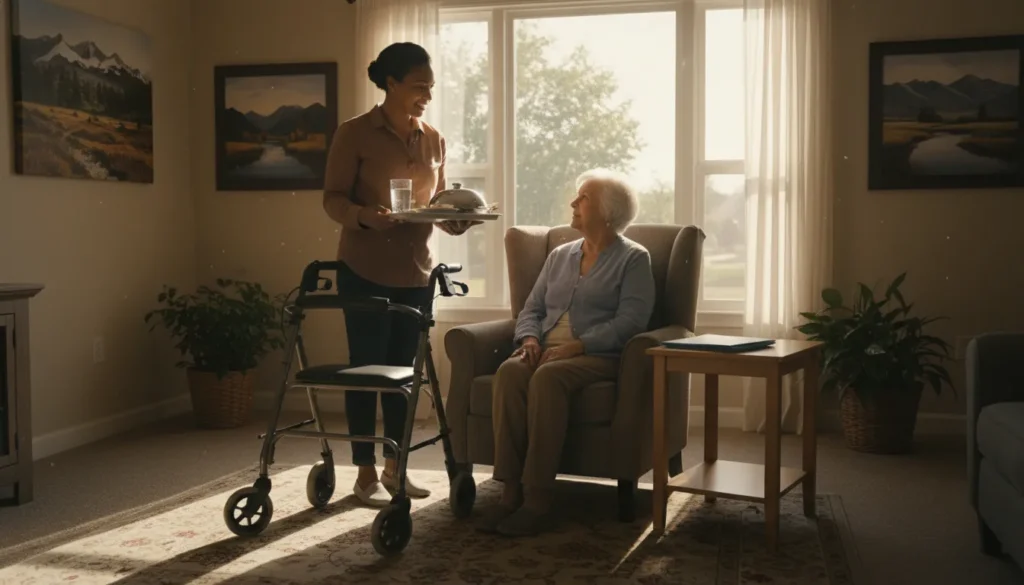
A safe hospital discharge depends on what happens after an Aurora senior crosses the front door.
Home care after hospital discharge Aurora CO helps seniors return to familiar routines with non-medical support matched to their daily needs. After a hospital stay, a caregiver can assist with bathing, dressing, meals, mobility, light housekeeping, companionship, errands, and medication reminders. This help does not replace medical instructions or skilled nursing; it helps a senior conserve energy and follow the discharge routine at home. Families can arrange support around recovery needs, from early settling-in assistance to continued help with meals, hygiene, safe movement, and follow-up visits. Research identifies home health care as a hospital strategy for recovery and reduced readmission risk; non-medical support can complement the discharge plan (source). For Aurora families, that means practical, watchful support while a loved one rebuilds strength in a comfortable setting.
Families need to know which daily tasks call for support. They also need help that fits the discharge plan and respects independence. The first step is clear:
Home care after hospital discharge Aurora CO: what families can expect
For families in Aurora, a hospital discharge begins a new stage of recovery at home. Home care after hospital discharge Aurora CO means daily support that helps a senior settle in safely. It does not replace the hospital discharge plan, a doctor, a nurse, or therapy.
The goal is practical help during the move from hospital routines to home routines. Research on home care describes support for daily living tasks that helps older adults remain independent at home. Families can read this overview through the National Library of Medicine.
Non-medical support at home
Non-medical home care helps with daily routines that may feel harder after a hospital stay. Support may include personal assistance, companionship, meal help, light housekeeping, and a calm presence during the day. Touching Hearts at Home Aurora outlines these types of help on its home care services page.
This care can give adult children added help while a parent regains a safe routine. A caregiver may help with dressing, movement through the home, meal setup, or household tasks. The caregiver does not change medicines, assess a symptom, or replace clinical care.
Clinical care and discharge directions
Medical home health, nursing, rehabilitation, and provider follow-up address clinical needs ordered for recovery. Non-medical care works alongside those services by supporting the daily routine around them. A care plan should follow written discharge directions, including activity limits, follow-up visits, diet instructions, and any approved reminders.
Families should contact the medical team about new symptoms, wound questions, medication questions, or changes in the discharge plan. For urgent concerns, follow the hospital’s urgent or emergency directions. A home caregiver can note concerns and share them with the family, but clinical decisions stay with health professionals.
Planning for the first days home
Before discharge, families can note who will be home, what daily tasks need help, and which visits are already scheduled. They can also check the route from bed to bathroom, preferred meals, and who receives updates. This keeps the first days focused and clear.
Needs may change as the senior becomes steadier or has follow-up care. Families considering ongoing support can use a checklist for hospital to home care to prepare for the transition. The plan should be updated with the senior’s needs and the discharge team’s instructions in mind.
Why the first days at home require a practical plan
A discharge plan should work after the ride home, not just at the hospital door. Families seeking home care after hospital discharge in Aurora, CO often need a simple way to organize daily help. Research on community-based home care describes support with daily tasks for older adults who need help staying independent. That published review supports planning for daily life at home.
A home ready for the week ahead
The plan starts with the discharge papers. Keep instructions, follow-up details, contact numbers, and the current medication list in one easy-to-find folder. A family member can note questions for the care team. This keeps information together without asking a companion caregiver to make medical choices.
The home also needs a practical walk-through. Clear loose cords and clutter from main paths. Place daily items within easy reach. Check that the senior can move from a chair to the bathroom without clutter in the way. The checklist for hospital to home care can guide these setup tasks.
Food and routine matter, too. Stock familiar foods that fit the discharge instructions already given by the clinical team. Plan easy meals, water within reach, rest times, and help with light household tasks. A steady schedule can make the home feel less demanding during recovery.
Daily support and clear communication
A broad discharge plan looks beyond the first 48 hours. It maps who will visit, who will prepare food, and who will handle rides or errands. It also gives family caregivers a shared plan for each day. That plan helps prevent a growing list of urgent chores.
- Gather papers and names. Store instructions, appointments, and useful phone numbers in one place that family can find.
- Prepare key rooms. Remove trip hazards, improve lighting, and set needed items near the places used most often.
- Set a gentle daily routine. Schedule meals, rest, personal help, and household support around the senior’s usual habits.
- Observe and write things down. Note new trouble with daily tasks, changes in mood, or concerns named by the senior.
- Report concerns to the right person. Families should share changes with the medical team, or seek urgent help when directed.
Non-medical home care can help with meals, light housekeeping, companionship, and day-to-day observation. It does not replace clinical care or discharge orders. In Aurora, Parker, and nearby communities, this support can help families follow a usable plan. Medical questions stay with licensed providers.
How can non-medical caregivers help during recovery?
After a hospital stay, a non-medical caregiver helps make daily life at home more manageable. This support does not replace nursing, therapy, or directions from the discharge team. For families seeking home care after hospital discharge in Aurora, CO, the focus is practical help and steady presence.
A National Library of Medicine article describes home care as support with daily living tasks. This help is for older adults who need assistance to stay independent. It offers hands-on support for the day’s routine while clinical questions stay with medical providers. Research on daily living support at home gives families useful context for planning.
Help with personal routines
Recovery can make ordinary tasks harder for a time. A caregiver can assist with bathing, dressing, grooming, and toileting when those tasks are part of the care plan. Touching Hearts at Home Aurora describes this type of help through its personal care services for older adults.
Support may include dressing and grooming before the day begins. It can also include meal setup and keeping needed items within reach.
Light housekeeping can support the routine. Examples include tidying walkways and washing dishes.
These tasks help keep the home usable and comfortable. They can also reduce the daily load on a spouse or adult child. The family can then spend time listening, visiting, and following the discharge plan.
Safe movement and daily comfort
A caregiver can stay nearby during movement through the home, based on the agreed care plan. Help may include steady support when getting up, walking to a chair, or settling in for a meal. A caregiver may also keep common paths clear of clutter and place routine items close at hand.
Companionship matters during a long day at home. A familiar conversation, a shared activity, or quiet company can make the routine feel less isolating. Caregivers can also note concerns and share them with the family, so the family can contact the right clinical professional when needed.
Reminders that follow the plan
A non-medical caregiver may provide medication reminders only as directed by the client, family, or care plan. This means prompting the person at the planned time. It does not mean changing a dose, choosing a medicine, or giving medical advice.
Families can plan this kind of support before the return home or as new daily needs appear. For more detail on the transition period, read about transitional care services in Aurora and discuss the needed routine with the care team.
Meals, rides and home routines that reduce family strain
Everyday help after the trip home
A hospital discharge can leave a family balancing meals, laundry, errands and the next planned visit. These tasks are not medical care. They are practical needs that still take time and energy. For seniors needing daily help, home care can support daily living tasks while they remain at home.
Families looking for home care after hospital discharge in Aurora, CO may not need one person to handle every task alone. A caregiver can take on agreed household supports while family members focus on time together, work or care planning.
Meal support and scheduled rides
After a hospital stay, shopping and cooking can add pressure to an already full family schedule. With meal preparation support, a caregiver can help plan simple meals, prepare food and tidy the kitchen afterward. Families can share food needs and preferences before visits begin.
Follow-up visits raise practical questions: who will drive, wait and help with the return home? A scheduled caregiver can provide transportation support for planned visits or errands, based on the care plan. This does not replace medical guidance or emergency transport.
Common needs and support
The most common gaps after discharge are practical. Families can match each need to a clear task:
| Need |
Help at home |
| Meals |
Prepare food and clean up. |
| Visit |
Plan a ride. |
| Home |
Help with light tasks. |
Meal support leaves fewer cooking tasks to coordinate. Planned rides can ease family schedules. Light household help can keep daily tasks manageable.
A routine families can divide clearly
A simple weekly plan can show which meals, rides and light tasks need help. It can also state what family members still wish to do. Clear roles reduce repeated phone calls and last-minute schedule changes.
Care needs may shift from one week to the next. Families can note upcoming visits, meal preferences and routine tasks before each visit. That record clarifies what support is planned. It also keeps non-medical care distinct from nursing care.
How does caregiver communication support families?
Shared updates after discharge
After a hospital stay, families often manage new routines, follow-up visits, meals, rest, and safety concerns at once. Caregiver updates help everyone keep the same priorities in view. Research on older adults living alone describes home care as support for daily tasks that helps people remain independent. That role is noted in a National Institutes of Health indexed study.
For families seeking home care after hospital discharge in Aurora, CO, communication can start with a simple shared plan. It may list the person’s preferred routine, daily help needed, appointment details, and whom to call with concerns. The family’s checklist for hospital to home care can make these talks clearer before support begins.
Updates should be useful, not overwhelming. A local family member may want a brief report after each visit. A son or daughter coordinating from another state may need a set update schedule and a clear contact for urgent concerns. Consistent notes can help distant relatives ask focused questions and make plans with the person receiving care.
Observation, reporting, and clear roles
Caregivers spend time in the home, so they may notice changes in appetite, movement, mood, hygiene, or the usual routine. They can document what they see and report it to the family or care team. This creates a clear record for relatives who cannot be present each day.
Clear communication also means clear limits. Non-medical caregivers do not diagnose symptoms, change medications, or replace the instructions from a physician or discharge team. Instead, they report concerns so the family can seek clinical direction when needed.
Touching Hearts at Home Aurora provides non-medical companion care and personal assistance, with care plans overseen by a Registered Nurse. Families can review available care services in Aurora while deciding which daily supports match the discharge plan.
- Agree on the senior’s main goals, such as safe movement, meals, rest, and companionship.
- Choose who receives routine updates and who should be called when a change is noticed.
- Keep medical questions and medication decisions with the licensed clinical team.
When should an Aurora family arrange support?
Signs to plan before discharge
Start planning before discharge when an older adult lives alone, walks less steadily, or will return to an empty home. A discharge day can seem manageable until meals, laundry, bathing, or a ride to follow-up care becomes hard to arrange.
This is not a sign that a family has failed. It is a practical way to close gaps in daily life while recovery continues. Research on older adults notes that home care can support daily living tasks. That support can help people stay independent at home.
Families can ask the hospital team what daily activities may be hard at home. They can then list who will be present for meals, safe movement, errands, and rides. If those answers are unclear, it may be time to arrange non-medical help before the return home.
Family schedules and distance
A nearby daughter or son may want to help, but work shifts and child care still shape what is possible. The same is true when family lives across town, in Parker, or out of state. Reliable help matters when no one can check in at the needed times.
Look for gaps across a full week, not just the ride home. Who can make a meal after a tiring appointment? Who is available if getting dressed takes longer than expected? A simple checklist for hospital to home care can help families write down needs and assign tasks.
Distance can also make small changes harder to see. If a loved one sounds tired on the phone, a planned visit may provide useful daily support. It can also give family a clear way to share concerns with the care team.
Practical next steps at home
Home care after hospital discharge in Aurora, CO may make sense when daily tasks are not covered. A family may need help with companionship, personal support, or light household tasks. Begin with the times that feel least covered, such as mornings, meal times, or appointment days.
- Confirm discharge instructions, follow-up visits, and any movement limits with the clinical care team.
- Walk through the home and note meal, ride, bathing, dressing, and mobility support needs.
- Match family availability to those needs, then identify the remaining gaps.
- Discuss schedules and non-medical support through the Aurora contact page.
Non-medical care does not replace a doctor, nurse, therapist, or discharge plan. Contact the clinical team with medical questions or new symptoms. Call emergency services at once for an emergency or an immediate safety threat.
Frequently Asked Questions
What does non-medical home care after hospital discharge in Aurora cover?
Non-medical home care can help a senior settle back into daily routines after leaving the hospital. According to Touching Hearts at Home Aurora, support can include meal preparation, light housekeeping, and medication reminders. Seniors may also need help with bathing, dressing, mobility, companionship, or errands. These services support daily living, while licensed medical providers handle medical treatment and clinical discharge instructions.
How are medication reminders different from medical medication management after discharge?
Medication reminders help a senior follow instructions already provided by a prescribing clinician, such as recognizing a scheduled medication time. Medical medication management involves clinical decisions, including changing doses, assessing side effects, reviewing interactions, or giving medical advice. Families should direct medication questions, missed doses, unexpected reactions, or concerning symptoms to the prescribing clinician or hospital discharge team.
When should families arrange home care for a senior returning from the hospital?
Families can begin arranging non-medical support before discharge, when the senior’s instructions and expected needs are becoming clear. Touching Hearts at Home Aurora identifies coordination with discharge planners as part of planning a smooth transition home. Families can discuss assistance with personal care, meals, housekeeping, companionship, transportation, and scheduling before arrival. Any ordered clinical services should be coordinated separately with the discharge team.
Can home care transportation help with follow-up visits after hospital discharge?
Yes. Non-medical home care may help with transportation to follow-up appointments after a senior returns home, when included in the care arrangement. Confirm appointment times, mobility needs, transfer assistance, and whether an escort should remain during the visit. Transportation support does not replace medical care. Questions about recovery progress, new symptoms, or urgent concerns should go to the appropriate medical provider.
How do caregivers keep families informed during recovery at home?
With the senior’s permission and a clear communication plan, caregivers can share routine updates with designated family members. Updates may include completed daily tasks, schedule changes, and observations that the agreed care team should know. Touching Hearts at Home Aurora notes that families can be informed about progress and included in care decisions. Families should decide who receives updates and which concerns require prompt reporting.
Ready to plan support after a hospital discharge?
A transition home without enough daily support can leave families juggling meals, routines, transportation, companionship, and safety concerns during a demanding week. Starting before discharge gives your family more time to share priorities, arrange practical help, and prepare for the first days back at home. Planning now means you can decide how companionship and personal assistance could fit your loved one’s normal routine after the hospital stay.
Ready to bring a clearer care plan into the return home? You do not need to sort out every detail alone. Contact our Aurora care team to discuss supportive care after hospital discharge, ask questions about available non-medical help, and request next steps for your family.