Dementia-Aware Care at Home: What Families Should Know in Dayton & Springfield
Caring for someone living with dementia is an act of deep love — one that requires patience, understanding, and the ability to move at the pace of the person experiencing the changes. For families in Dayton, Springfield, and the surrounding Miami Valley communities, dementia care at home often begins with small shifts: repeating questions, uncertainty with time or place, changes in conversation patterns, or difficulty completing tasks that were once routine.
These changes can feel unexpected and emotional. They may arrive slowly or all at once. Families often describe this stage as trying to “keep everything feeling familiar,” even when daily life is beginning to feel less predictable. The desire is simple: to preserve dignity, honor history, and help the person with dementia feel secure and supported in the place that feels most like home.
And home does matter. The Journal of Gerontological Nursing notes that familiar environments can help individuals with dementia maintain orientation, emotional regulation, and a sense of identity, especially when routines remain consistent. This is particularly relevant in communities like ours, where connection to neighborhood, church, and community life often runs deep.
Understanding That Dementia Changes How the World Feels
Dementia affects memory and thinking, but it also affects how a person experiences space, time, tone, and emotional energy. What may seem like forgetfulness on the outside may feel like disorientation or vulnerability on the inside. A person with dementia may not remember the details of a day, but they remember how the day felt — whether it felt calm, supported, and safe, or rushed, overwhelming, and confusing.
This is why the quality of interaction is more important than the correctness of information.
Rather than correcting or insisting, dementia-aware care emphasizes reassurance, softened communication, and presence.
The National Institute on Aging has found that gentle redirection and calm companionship reduce anxiety and distress far more effectively than repeated reminders or factual correction.
It is less about helping someone “remember,” and more about helping them feel held.
Familiar Routines Help Maintain Identity
Routines are emotional anchors for individuals living with dementia. Simple, everyday habits can provide a sense of continuity of self.
For example:
- Sitting in the same chair for morning coffee
- Listening to favorite music in the afternoon
- Folding towels side-by-side in the kitchen
- Taking a familiar drive through Springfield or Huber Heights
- Watching birds in the backyard or at Buck Creek
- Attending church services or listening to recorded sermons
- Stopping at favorite spots like Young’s Dairy, Frisch’s, or the Heritage Center Museum
These routines are not “activities”—they are expressions of identity.
When caregivers join these routines — rather than replace or reorganize them — the person with dementia can continue to experience their life, not just be managed within it.
Presence, Tone, and Pace Are the Core of Dementia-Aware Care
The emotional environment matters more than the physical one. A calm, unhurried presence helps regulate the nervous system, creating a sense of predictability and safety. Dementia-aware care means:
- Moving at the person’s pace, not the schedule’s pace
- Keeping tone soft and sentences simple
- Offering choices, not directives
- Allowing silence to be part of communication
- Letting emotion be as important as the words spoken
Companionship becomes a form of grounding.
Presence becomes orientation.
Kindness becomes memory.
Families often share that when the environment becomes calmer, the person with dementia becomes calmer. When the caregiver softens their voice, the person softens in return. When routines repeat, the day feels familiar.
This is not a coincidence.
It is nervous system attunement — one human reflecting safety to another.
How Touching Hearts at Home Supports Dementia-Aware Care in the Miami Valley
Touching Hearts at Home caregivers are trained in relationship-based dementia support — meaning care focuses on connection, trust, and emotional stability rather than task-checking. We observe patterns, pacing, preferred rhythms, and triggers, and adapt care so the environment supports wellbeing rather than challenges it.
Care may include:
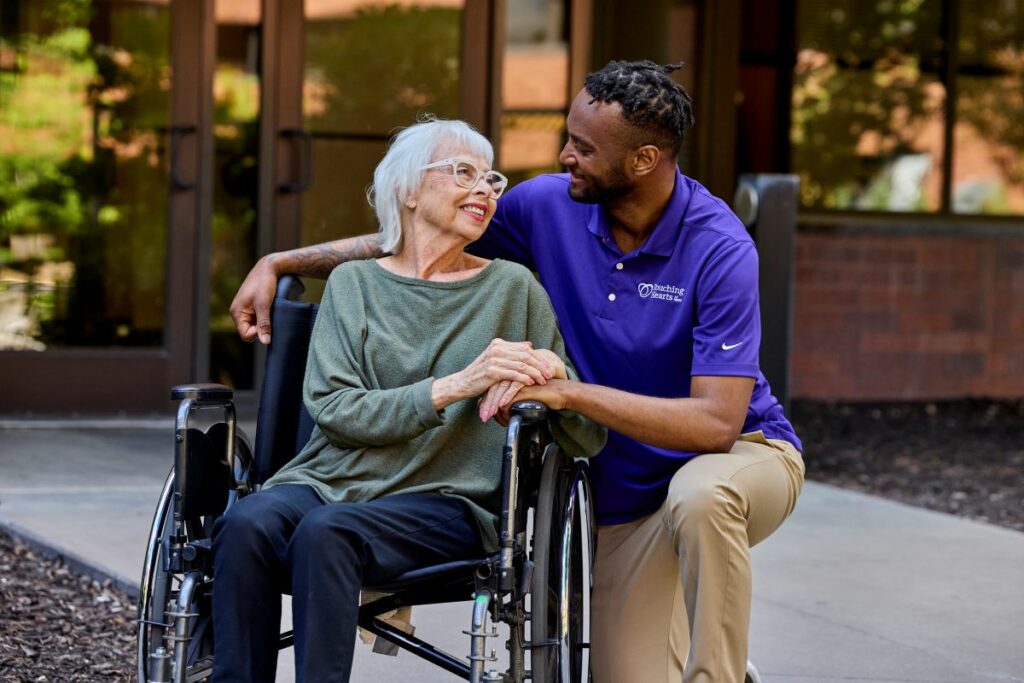
- Gentle conversation and guided engagement
- Home environment familiarity and safety awareness
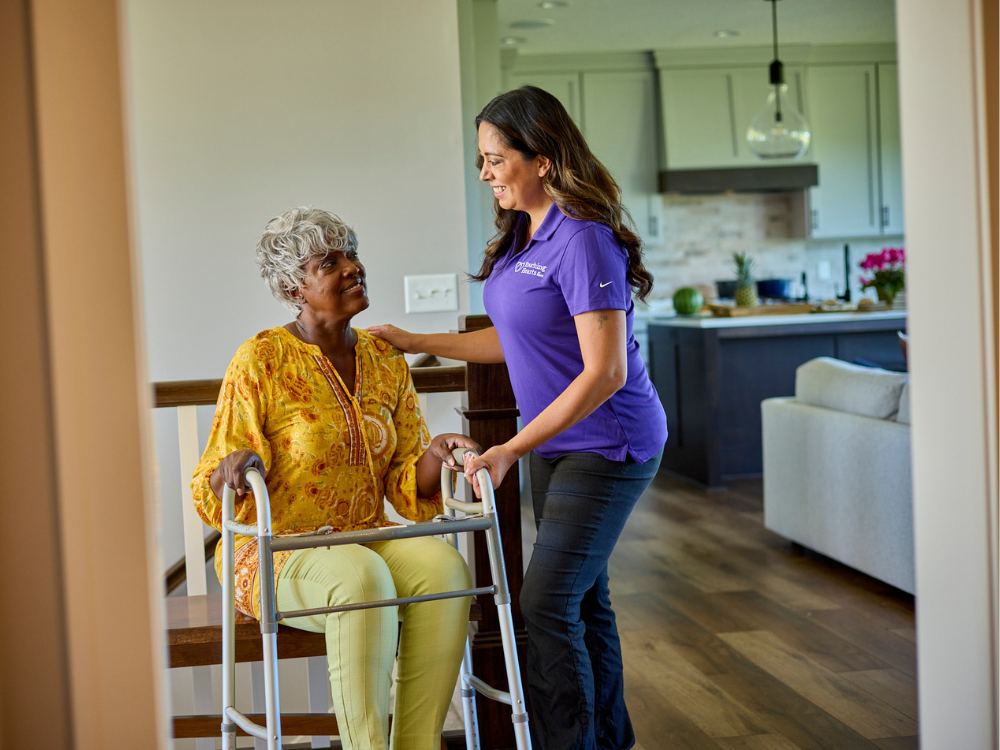
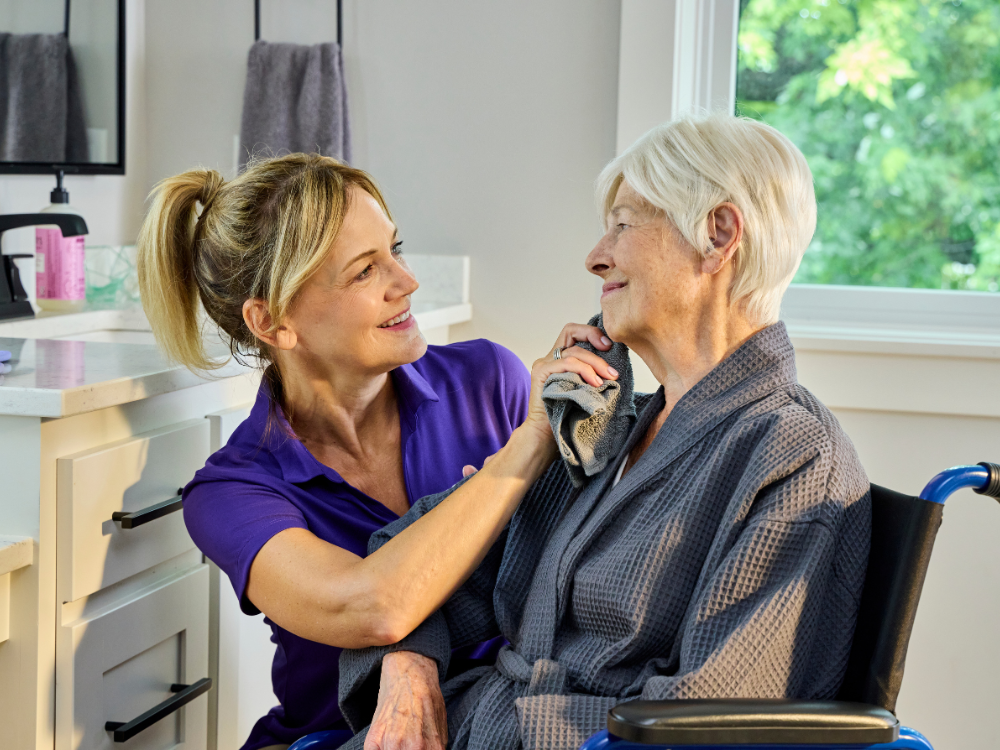
- Assistance with bathing, dressing, meal preparation, and companionship
- Redirection, reassurance, and sensory-based calming approaches
- Support with routines that feel familiar and comforting
This allows the person living with dementia to remain at home — the environment where identity is strongest — while also allowing families to breathe again, knowing care is steady, respectful, and loving.
You Do Not Have to Navigate This Alone
Caring for someone with dementia can be as meaningful as it is exhausting. It is okay to need help. It is okay to want guidance. And it is okay to want to remain a daughter, son, spouse, or grandchild — not just a caregiver.
Touching Hearts at Home Dayton/Springfield supports families at every stage of dementia care — offering presence, consistency, and care that honors the person at the center of it all.
If you are beginning to explore dementia support at home, we welcome conversation. No urgency. No pressure. Just warmth and understanding.
Touching Hearts at Home — Dayton & Springfield, Ohio
Where memory care begins with human care.