
03.06.2026
The Power of Aging Gracefully
Aging well isn’t about pretending you’re not getting older; it’s about accepting it with grace, ease, and a feeling of…

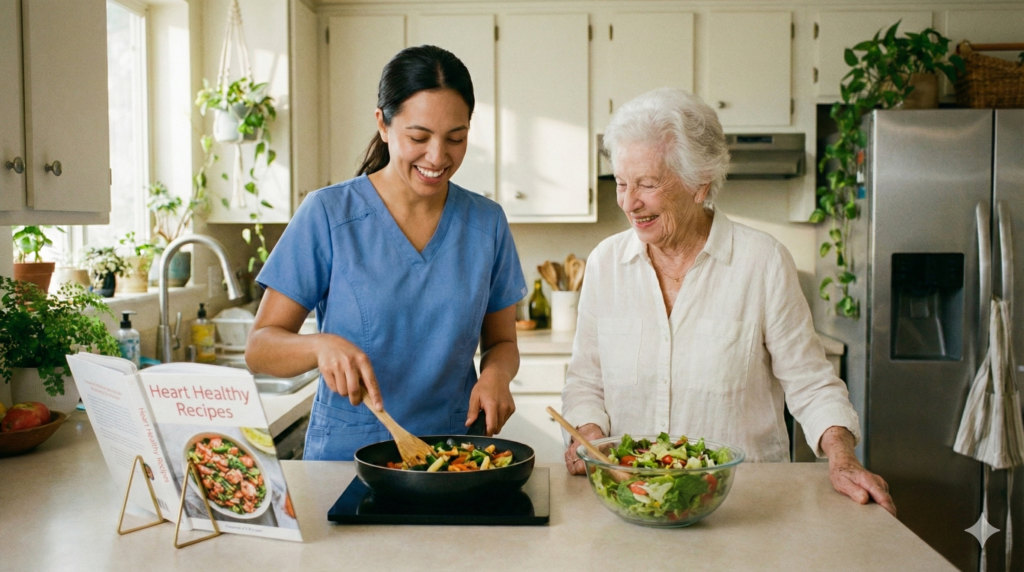
Adults start to lose muscle mass after age 30, and the loss speeds up after age 60. As mentioned, this process impacts balance, making mobility more challenging, which in turn affects seniors’ abilities to complete daily tasks. Studies have shown, however, that eating well can slow this decline. Elder care providers understand this issue and have the training and knowledge to ensure seniors get the right foods, as well as much-needed support and companionship along the way.
To get the same muscle-building response as they did in their younger years, seniors need to increase the amount of protein they eat per meal. Caregivers help with this by recommending high-quality protein sources, such as beans, legumes, lean meats, fish, eggs, dairy products, and more. They also make sure that protein intake is spread throughout the day. This timing is strategic because it helps the body make the most muscle protein, which means that each meal helps in maintaining strength.
There’s more to it than simply adding protein, and elder care professionals understand this. For instance, meal plans should also include whole grains for long-lasting energy, colorful fruits and vegetables that are high in antioxidants that lower inflammation, and healthy fats that are good for overall health.
Additionally, when creating meal plans, caregivers also think about practical things like whether the senior has trouble chewing, struggles with their appetite, and how medications might interact with each other. For seniors who don’t want to eat as much, caregivers might suggest smoothies that are high in protein or smaller, more frequent meals.
Meal plans should also include vitamin D and calcium, which not only support the muscles but are also beneficial for bone health. Elder care providers might also consider adding foods high in omega-3 fatty acids, like salmon and walnuts, which help reduce inflammation in muscles. B vitamins, especially B12, are important as well, as a deficiency can result in weak muscles.
Hydration is another priority because insufficient water intake impairs muscle function. With these things in mind, caregivers will encourage seniors to drink enough fluids every day and eat foods that are high in water.
One of the best things about having the support of elder care providers, beyond their understanding of proper meal planning, is that they also offer cooking assistance, grocery shopping support, and valuable tips for breaking larger cooking tasks into smaller steps so they are easier for seniors. They also introduce seniors to new recipes that are both nutritious and appealing, understanding that bland, repetitive meals lead to poor intake.
Elder care providers give seniors the tools they need to take charge of their muscle health by helping them plan meals and giving them ongoing support. As a result, seniors get the foods they need to be and feel stronger every day.
Sources:
https://www.aarp.org/health/healthy-living/foods-to-preserve-muscle-mass/
https://pmc.ncbi.nlm.nih.gov/articles/PMC4924200/
https://www.ncoa.org/article/how-much-protein-do-older-adults-need/
https://www.health.harvard.edu/staying-healthy/muscle-loss-and-protein-needs-in-older-adults
If you or an aging loved one are considering elder care in Greenwich Village, NY, please contact the caring staff at Touching Hearts at Home – Manhattan, Brooklyn, Westchester, Queens, Rockland today. 646-480-6266
Aging well isn’t about pretending you’re not getting older; it’s about accepting it with grace, ease, and a feeling of…

Companion Care at Home in Westchester County NY supports seniors through connection, conversation, and heart-centered relationships.

Home Care in New York City NY: Valentine’s Day is almost here – here are some great ideas for your…