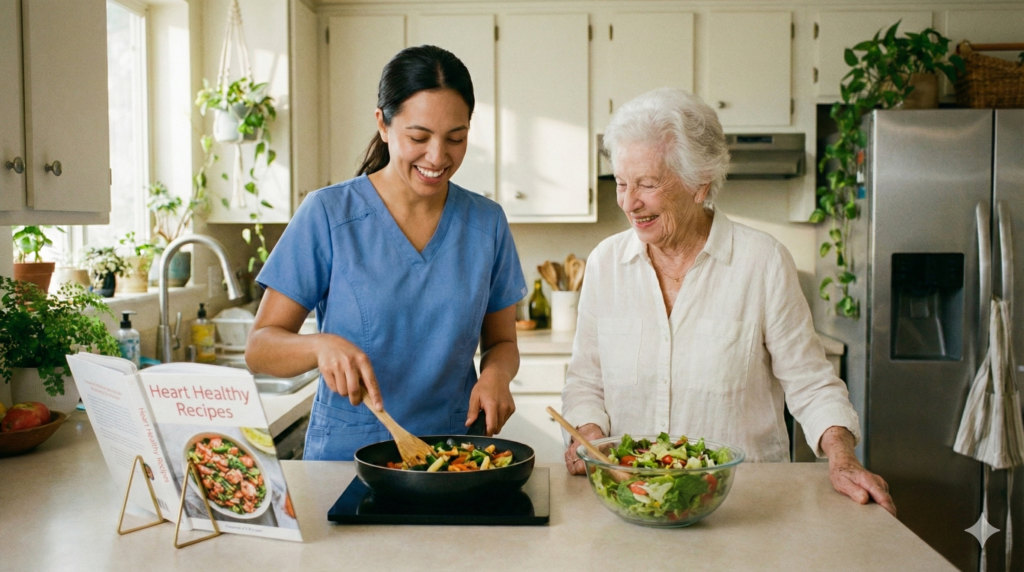
Eating healthy is important at every stage of life, and it is especially vital as a person ages. Because your loved one may eat less due to a smaller appetite, what they eat becomes more important than ever. If your loved one has health concerns or chronic conditions, focusing on a diet packed with nutritious foods is one of the best steps toward maintaining independence, energy, and overall well-being. In some cases, having personal care at home support can make all the difference in ensuring that seniors eat well and stay healthy.
According to the National Resource Center on Nutrition and Aging, nearly one in two older adults is at risk of malnutrition. Poor nutrition can increase the likelihood of hospitalization, weaken the immune system, and contribute to conditions such as osteoporosis, heart disease, and diabetes. Good nutrition, on the other hand, helps older adults maintain strength, recover from illness more quickly, and enjoy an active lifestyle.
Four Reasons Your Loved One Might Have Bad Eating Habits
1. It’s a habit!
A habit is defined as something repeatedly done over and over, often without much thought. Your loved one may not think much about what they’re buying at the store (or purchasing from a fast food location). They just know they’ve always bought it, they like it, and it works for them. However, what used to be fine 20–30 years ago may not be the healthiest choice today.
2. Cost.
Food costs money, and many seniors live on fixed incomes. Often it seems like healthy food costs more. Learning to budget while still enjoying healthy options is essential. In fact, a 2022 USDA report showed that families can save up to 25% by cooking at home instead of buying processed or prepackaged foods. With a little planning, healthy meals can actually be more affordable.
3. Work.
Healthy food often requires more preparation than something like a frozen pizza. Seniors who struggle with mobility, fatigue, or arthritis may not have the energy to spend time chopping vegetables or cooking meals from scratch. This can lead to relying on ready-made, less-nutritious foods.
4. Taste.
Unfortunately, many people believe healthy food just doesn’t taste as good as the unhealthy options. For seniors, changes in taste buds or medications can also make food seem bland. However, experimenting with herbs, spices, and cooking methods can bring flavor back to healthy meals.
The Risks of Poor Nutrition for Seniors
Not eating well has serious consequences. The National Institute on Aging reports that malnourished seniors are more likely to experience falls, delayed wound healing, and hospital readmissions. Additionally:
- Osteoporosis affects about 10 million Americans over 50, with poor calcium and vitamin D intake as major contributors.
- Heart disease, the leading cause of death among older adults, can often be prevented or managed with a heart-healthy diet.
- Seniors with poor nutrition are at higher risk for cognitive decline, with studies showing that diets rich in vegetables, whole grains, and omega-3 fatty acids may help protect memory.
Six Tips for Healthier Eating
1. Start small.
A complete overhaul of a pantry can be overwhelming. Begin with small, achievable changes. Encourage your loved one to replace sugary soda with water, or swap a morning pastry for oatmeal and fresh fruit. Over time, small shifts add up to big results.
2. Learn how to read food labels.
Eating healthy starts at the grocery store. Help your loved one understand food labels and identify hidden sugars, sodium, and unhealthy fats. For example, the American Heart Association recommends no more than 1,500 mg of sodium daily for older adults, yet many processed foods contain nearly that amount in a single serving.
3. Shop in season.
Seasonal fruits and vegetables not only taste better, but they are often more affordable. For example, strawberries in peak season can cost half as much as when they are out of season—and they’re far more flavorful.
4. Shop at farmer’s markets if possible.
Buying locally grown produce supports the community, stretches the budget, and ensures fresher food. Studies show that local produce may retain more nutrients because it spends less time in transit.
5. Talk to doctors about personalized recommendations.
Each senior’s health needs are unique. Doctors or nutritionists can recommend specific foods to support conditions such as diabetes, high blood pressure, or digestive concerns. For example, seniors with hypertension may benefit from the DASH diet, which emphasizes vegetables, whole grains, and lean protein.
6. Consider personal care at home support.
If shopping and cooking feel overwhelming, a personal care at home provider can step in. These caregivers can help plan meals, shop for healthy groceries, and prepare meals that align with dietary needs. This type of support not only improves nutrition but also reduces stress for both the senior and their family.
Final Thoughts
Nutrition plays a vital role in aging well. With nearly 1 in 4 older adults reporting they skip meals due to cost or lack of interest, making healthy eating easier and more enjoyable is essential. By addressing habits, cost, convenience, and taste, seniors can learn to embrace better food choices. Whether through small daily changes, medical guidance, or the help of a personal care at home provider, good nutrition is one of the best investments in long-term health and independence.
If you or an aging loved one are considering personal care at home in Upper East Side, NY, please contact the caring staff at Touching Hearts at Home – Manhattan, Brooklyn, Westchester, Queens, Rockland today. 646-480-6266