
7 Signs Your Aging Parent May Need Home Care
Knowing when an aging parent needs some extra help isn’t always easy. Most families don’t wake up one morning and decide, “Mom needs home care.” It usually happens gradually. You notice a few things that weren’t happening before. Maybe Dad has looked more unsteady on his feet lately OR maybe he even had a minor fall. A usually spotless home has some new clutter, dust or dishes piling up. Medication doses are still in the pill planner from previous days. Or you realize you’re checking in several times a day because you’re worried about what might happen when you’re not there. None of these things automatically mean your parent needs full-time care. But some additional support COULD make life easier and safer.
Here are a few things to watch for.
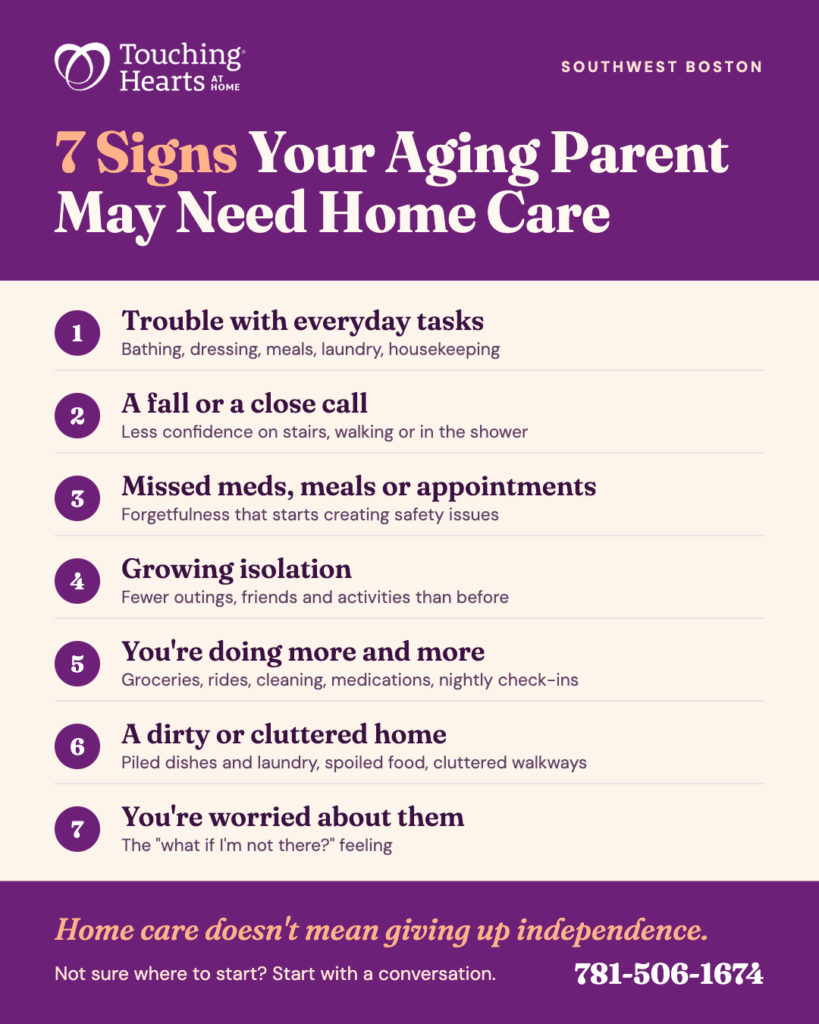
Trouble Completing Everyday Tasks
Things like bathing, getting dressed, preparing meals, doing laundry or keeping the house clean can become more difficult with age. Sometimes the change is obvious. Sometimes it’s as simple as noticing that your parent has stopped doing things they used to do without thinking twice. A few hours of help each week can make a big difference.
They Have Had a Fall or a Close Call
A fall can be a major turning point for an older adult. Even if there isn’t a serious injury, it can make someone less confident about walking, using the stairs or getting into the shower. A caregiver can provide assistance with mobility, personal care and everyday activities while giving the family some additional peace of mind.
Missing Medication Doses, Meals or Appointments
Everyone forgets things from time to time. The concern is when forgetfulness starts creating safety issues. Missed medications, forgotten meals, spoiled food or repeatedly missed appointments are worth paying attention to. Home care can help with routines, meal preparation, transportation and medication reminders.
They Are Becoming Isolated
Maybe your parent used to go out regularly, see friends or participate in activities but doesn’t anymore. Sometimes that’s because driving has become difficult. Sometimes it’s because getting around is harder. And sometimes they simply don’t feel comfortable going places alone. Companionship is an important part of home care. Having someone around to talk with, take a walk with or go to an appointment with can make a real difference.
You’re Doing More For Them
This is one families often don’t recognize. You’re picking up groceries. Driving to appointments. Cleaning the house. Managing medications. Checking in every night. You may not think of yourself as a caregiver, but you are. If helping your parent is starting to interfere with your work, your own family or your ability to get a break, it may be time to bring in some additional support.
The House is Dirty or Cluttered
A normally well-kept home becoming cluttered or neglected can be another sign. Dirty dishes, piles of laundry, spoiled food or cluttered walkways may indicate that some everyday tasks have become too difficult. A caregiver can help with light housekeeping, laundry, meals and other household tasks.
You’re Are Worried About Them.
Sometimes this is the biggest sign. You find yourself thinking: “What if Mom falls when I’m at work?” “What happens if Dad gets sick and I’m not there?” “How am I going to keep doing this?” If you’re asking yourself those questions, it’s probably worth having a conversation about what kind of help might make sense.
Home care doesn’t mean giving up independence. It doesn’t mean you are giving up on them either. In many cases, the right amount of care actually helps someone remain independent at home longer. Maybe they need a caregiver for a few hours a week. Maybe they eventually need help every day. The level of care can change as their needs change.
If you’re not sure what your parent needs, start with a conversation with them. At Touching Hearts at Home of Southwest Boston, we talk with families every day who aren’t sure where to start. Sometimes they need care right away. Sometimes they just need to understand their options. Either way, we’re happy to have the conversation.
Justin McDermott
Owner, Touching Hearts at Home
Justin has nearly 10 years of senior care experience. He has worked in home care in many capacities; as a caregiver, within HR and Recruiting, Sales and Client Care Management. “He knows a thing or two because he’s seen a thing or two!”