
Home Care vs. Assisted Living: Which Is Right for Your Parent?
One of the harder decisions families face as a parent gets older is figuring out where they should live and how much help they actually need. For some people, home care is the right answer. For others, assisted living makes more sense. And sometimes the answer changes over time. There isn’t a one-size-fits-all answer. It really comes down to your parent’s needs, their safety, their finances and, perhaps most importantly, what they want.
What does home care look like?
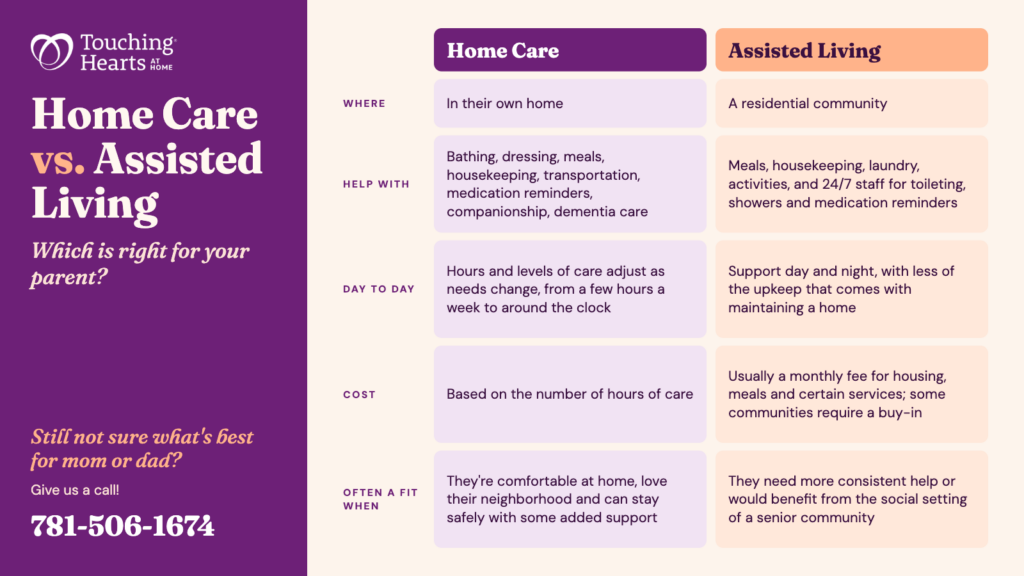
Home care allows an older adult to remain in their own home while getting help with the things that have become more difficult.
That might include:
- Bathing and personal care
- Dressing and grooming
- Meals
- Housekeeping and laundry
- Transportation
- Errands
- Medication reminders
- Mobility
- Companionship
- Dementia care
One of the biggest advantages is flexibility. Someone might need a caregiver for four hours a day, a few days a week. Someone else may eventually need care around the clock. Hours and Levels of care can be adjusted as needs change.
What does Assisted Living Look Like?
Assisted living provides a residential setting where older adults have access to meals, housekeeping, laundry, activities and 24/7 staff assistance for toileting, showers, medication reminders. For someone who is becoming isolated, wants more social interaction or needs regular support throughout the day and night, an assisted living community may be worth considering.
It also removes some of the responsibilities that come with maintaining a home.
Which option makes the most sense for your parent?
If your parent is still comfortable at home, enjoys their neighborhood and is social and can safely remain there with some additional support, home care may allow them to continue living the life they’re accustomed to.
If they need more consistent assistance or would benefit from the social setting a senior living community provides, assisted living may be worth exploring.
What does your parent want?
This can get lost when families start focusing on safety and logistics. Home is more than a house to most people. It’s their routines, their neighbors, their favorite chair, their kitchen and decades of memories.
At the same time, some older adults are excited about the idea of moving somewhere with more people around and fewer responsibilities. Their opinion should be part of the conversation whenever possible.
Having said that, what makes sense for the family as a whole? Are there family or friends close by willing and able to help? Which family member will take on the brunt of the care needed? Can they realistically take on that role? These are important questions to consider AND every situation is unique.
What about cost?
Home care is based on the number of hours of care someone receives. Assisted living is generally a monthly cost that may include housing, meals and certain services. Some communities base the monthly cost on levels of care. Some communities required a “buy-in” which means more up front.
That makes it important to look at the entire picture rather than simply comparing an hourly rate with a monthly rate. Someone who needs a few hours of help each week has very different options than someone who needs 24-hour supervision.
It’s not always permanent
A decision you make today doesn’t necessarily have to be the decision you make forever. Your parent may be perfectly comfortable with a few hours of home care today and need more support a year from now. Or you may try home care and eventually decide that another setting makes more sense. The important thing is to have the conversation before you’re dealing with a crisis.
If you’re trying to figure out whether home care might be right for your parent, give us a call!
At Touching Hearts at Home, we spend a lot of time helping families understand their options for aging at home. Sometimes that means starting care. Maybe it means talking through the situation and figuring out what comes next. Either way, that’s a good place to start.
Justin McDermott
Owner, Touching Hearts at Home
Justin has nearly 10 years of senior care experience. He has worked in home care in many capacities; as a caregiver, within HR and Recruiting, Sales and Client Care Management. “He knows a thing or two because he’s seen a thing or two!”