Blog > Blog » Meal Preparation for Seniors Aurora CO: At-Home Help
Meal Preparation for Seniors Aurora CO: At-Home Help
A skipped lunch can become a pattern when shopping, cooking, and cleanup feel too demanding. In Aurora, steady meal help can make the table welcoming again.
Touching Hearts at Home Aurora provides meal preparation for seniors Aurora CO as non-medical. In-home help with planning meals, building grocery lists, cooking simple foods, and cleaning up afterward. A caregiver can offer reminders at mealtime and prepare familiar options that fit preferences and family-provided dietary directions, such as lower-sodium choices or softer textures. That practical support reduces the strain of standing, chopping, carrying groceries, or facing a kitchen full of dishes alone after a tiring day. It also gives an older adult company at the table, so a meal becomes a shared daily moment, rather than another task to manage alone. The National Institute on Aging notes that proper nutrients and the right portions can support healthy aging.
Families often want to know where helpful support ends and personal choice remains firmly in the senior’s hands. Meal preparation for seniors Aurora CO: what support includes answers that practical question, from grocery planning through companionship at the table. Here’s how.
Meal preparation for seniors Aurora CO: what support includes
Everyday meal support at home
Meal preparation for seniors Aurora CO means non-medical help with the daily work around food. It is not a clinical diet plan or nursing visit. Instead, a caregiver can help a senior choose familiar meals and gather what is needed. They can also prepare simple dishes and make the table comfortable.
Food needs can shift with age, appetite, activity, and health needs. The National Institute on Aging says the right food and amount can support healthy aging. For a family, that makes steady meal routines worth discussing before a visit begins.
Help before, during, and after a meal
This blog describes the practical steps families may see at home. It does not simply list service choices. Families seeking visit details can review Aurora’s professional meal preparation services. A meal visit may reflect food preferences, home routines, and instructions already shared by the family.
Talk through meal ideas and make a grocery list for needed foods.
Help organize ingredients and prepare simple, familiar meals.
Offer a friendly reminder when it is time to sit down and eat.
Share conversation during the meal, when the senior would like company.
Clear dishes and handle light cleanup after food is prepared or served.
The focus is useful support, not taking control of personal choices. A senior may want help washing produce and setting out lunch. They can still choose each food item. Another person may prefer a prepared supper and help returning the kitchen to order.
Meals that respect changing needs
Meal support begins with listening. Some older adults have a smaller appetite or find certain foods harder to enjoy. A National Academies review notes appetite changes, taste or smell changes, oral health issues, and mobility limits. Families can read the review through the National Library of Medicine.
A caregiver can follow the meal preferences and food guidance the family has shared. A prescribed diet, allergy, swallowing concern, or sudden eating change calls for clinical advice. Mealtime help can still keep the routine calm, social, and easier to manage at home.
Why everyday meals can become harder with age
Touching Hearts at Home Aurora helps families address the daily steps that can make meals tiring, including planning, safe preparation, and light cleanup. Practical, respectful support can help a senior keep familiar foods and routines at home.
More steps, less energy
A simple meal is rarely just cooking. It can mean choosing a menu, making a list, driving to a store, carrying bags, chopping food, and washing dishes. For an older adult with less stamina or limited movement, those small tasks can add up. A meal that once felt routine may now require planning and help.
Kitchen work also asks a person to stand, reach, lift pans, and move between the sink, counter, and stove. Mobility limits can make each step slower or tiring. In Aurora, families exploring meal preparation for seniors may start with the part that is hardest: shopping, prep, cooking, or cleanup.
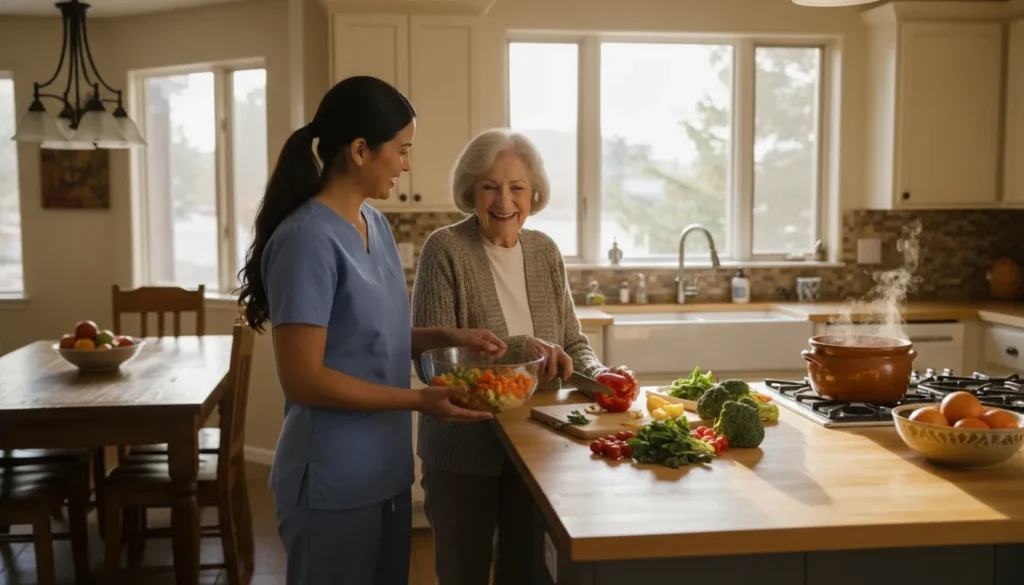
Organizing ingredients together supports familiar meal routines at home.
Appetite, taste, and chewing comfort
The National Academies nutrition review hosted by NCBI notes several food barriers for older adults. These include low appetite, taste or smell changes, eating problems, dentures, and other oral health concerns. A favorite meal may seem less appealing, or a crisp food may no longer be comfortable to chew.
These shifts can make cooking for one feel like a great deal of work for little reward. Softer foods, smaller portions, or familiar flavors may be easier to welcome at the table. Keeping options simple can also make it easier to choose a meal when energy or appetite is low.
Shopping and food guidance
Meal choices can become more complex when a person is following guidance from a health professional or family care plan. A shopping trip may involve reading labels, finding suitable ingredients, and bringing everything home. Fatigue can then leave little energy for preparing the meal itself.
Planning a few simple meals before shopping can limit extra decisions.
Keeping easy-to-prepare foods on hand can help on low-energy days.
Sharing shopping, preparation, or cleanup can preserve choice at mealtime.
Non-medical support does not replace advice from a health professional. It can help carry out day-to-day meal routines in a person’s home. Families can review professional meal preparation services when shopping, cooking, or cleanup has become a recurring burden.
From grocery planning to cleanup: a comfortable routine
Touching Hearts at Home Aurora can support a comfortable meal routine that begins with the senior’s preferences and ends with a tidy kitchen. Each step focuses on choice, familiarity, and practical help at home.
A familiar starting point
A good meal visit begins with listening, not with a recipe. The caregiver learns favorite foods, meal times, textures, allergies, and family instructions. If a care plan lists food limits, the caregiver follows those directions when planning and cooking.
Needs can shift over time. The National Institute on Aging notes that getting proper nutrients and the right amount of food can support healthy aging. That is why meal planning should respect appetite, comfort, and current instructions.
A simple visit routine
For meal preparation for seniors in Aurora, CO, a clear routine can make each visit calm and useful. Families can view this support as a practical sequence:
Review preferences and instructions. The caregiver checks what the senior enjoys and what the family has requested. They also note foods that are hard to chew or no longer appealing.
Plan the next meals. Together, they choose simple meals that fit the senior’s schedule and tastes. The plan may cover one meal or food to store for later.
Make a grocery list. The caregiver checks what is on hand, then lists missing ingredients. This can limit repeat purchases and help keep planned meals on track.
Help obtain ingredients. Depending on the visit plan, support may include shopping help or putting groceries away. Items used soon can be placed where they are easy to find.
Prepare a simple meal. The caregiver washes, chops, heats, or cooks foods as planned. Portions and textures can be kept comfortable. Written family directions remain central.
Support mealtime. A caregiver may serve the plate, offer gentle prompts, or share conversation while the senior eats. This keeps the meal unhurried and personal.
Clean up and make notes. After the meal, the caregiver clears dishes and tidies food-preparation areas. Notes about likes, dislikes, or leftovers can guide the next visit.
A kitchen left ready for later
Meal help does not have to end when cooking stops. The caregiver may put food away, wipe the work area, and wash used dishes. Families exploring related help can review Aurora light housekeeping support.
This routine keeps choices with the senior while adding practical help at each step. It is also part of Touching Hearts at Home Aurora’s professional meal preparation services. Families can discuss support around daily habits and visit needs.
How can caregivers respect dietary needs and care boundaries?
Touching Hearts at Home Aurora understands that meal preparation for seniors Aurora CO should reflect the person’s routines, tastes, allergies, and stated food limits. A caregiver can follow household directions and help prepare meals that are already familiar. Caregivers also stay within a clear role: they support daily meals, but do not make clinical diet choices.
Shared directions for meals
Families can start with written notes about foods to use, foods to avoid, textures, portions, and favorite recipes. A caregiver can use those notes while making lists, shopping with the senior, cooking, and cleaning up. These tasks are part of professional meal preparation services at home.
If a clinician has given food instructions, the family can share the current written directions with the care team. The caregiver can then follow those directions during meal planning. They may also read package labels with the senior and compare ingredients to the shared list.
Support versus clinical decisions
Food needs may change with age, activity, health conditions, or medicines. The National Institute on Aging guidance on food amounts and quality explains that proper nutrients and suitable amounts support healthy aging. Questions about a prescribed diet belong with the clinician who knows the senior’s health history.
Care topic.
Caregiver help.
Clinician-directed decision.
Meal routine.
Prepare familiar meals on schedule.
Set therapeutic eating plan.
Written diet directions.
Follow shared instructions.
Prescribe or revise restrictions.
Food labels.
Help read ingredients and serving details.
Decide what is medically safe.
Changes noticed.
Share observations with family.
Assess symptoms or treatment needs.
This boundary protects the senior’s choices while keeping health decisions with qualified professionals. A caregiver can notice an untouched meal, a new food concern, or difficulty following directions. They can share that observation with the family rather than diagnose a cause or change the plan. Clear notes also help prevent confusion between visits and support steady daily routines.
Choice and dignity at home
Respect also means asking before changing a recipe or removing a preferred food. Seniors may want familiar cultural dishes, a certain breakfast, or company during dinner. Caregivers can offer help without taking over the person’s voice or home routine.
Meal support may be paired with personal care assistance when daily tasks make mealtimes harder. Families can keep one clear set of meal notes at home. That shared plan helps the senior, family, and caregiver stay consistent while clinical questions return to the care provider.
Why does companionship at mealtime matter?
Touching Hearts at Home Aurora recognizes that a meal is more than food on a plate. For an older adult who often eats alone, sharing the table can make an ordinary part of the day feel more personal.
A shared meal and friendly conversation
A caregiver can sit with a senior, offer conversation, and respect the person’s pace. This presence does not change the meal into a task. It helps keep the experience familiar, social, and centered on the person.
Some seniors want to talk during lunch. Others may prefer quiet company, music, or a short chat after the dishes are put away. Companionship should reflect the person’s habits, comfort, and wishes.
Food preferences may shift over time. Changes in taste and smell, oral health, and mobility can affect how older adults eat. A review of nutrition in older adults describes these common concerns. Listening at the table can help families learn which foods are comfortable and appealing now.
Gentle support without taking over
Companionship can include a simple routine: setting the table, warming a chosen meal, and sitting nearby while the senior eats. A caregiver may offer a reminder or ask whether another option sounds better. The goal is support, not pressure.
This approach protects dignity. A senior can still choose the menu, the portion, and where to eat. Families can also receive practical feedback, such as a loved one preferring softer foods or enjoying breakfast more than dinner.
A familiar mealtime routine can make the day feel steadier.
Friendly conversation can make eating alone feel less isolating.
Noticing preferences can guide future grocery lists and meals.
Independence at home in Aurora
For families seeking meal preparation for seniors in Aurora, CO, companionship fits naturally alongside meal planning and light cleanup. Touching Hearts at Home Aurora provides professional meal preparation services as non-medical support in the home. The senior remains part of each choice and each routine.
If meals have become harder or lonelier for a loved one, a conversation can help clarify what support may fit. Families may contact Touching Hearts at Home Aurora to ask about a free in-home consultation and mealtime companionship.
What should Aurora families look for in meal preparation help?
Touching Hearts at Home Aurora encourages families choosing meal preparation for seniors Aurora CO to start with the person’s daily habits, not a preset menu. Ask what foods feel familiar, when meals happen, and how much help is welcome. A good fit protects choice while making daily meals easier to manage.
A respectful fit at home
Start with a conversation about taste, culture, kitchen routines, allergies, and household instructions. The helper should listen, use the senior’s preferred level of involvement, and respect recipes or shopping habits. Review Touching Hearts at Home Aurora’s professional meal preparation services as you compare the kind of support your family wants.
It also helps to name what the senior wants to keep doing. One person may want help chopping while still seasoning the meal. Another may prefer a prepared lunch and company while eating. These details give families a clear standard for respectful support.
Food preferences can change with age, and chewing or mobility concerns may shape meal choices. A review on nutrition in older adults notes changes in appetite, taste, oral health, and mobility. Ask how a helper will follow written instructions when needs change.
Reliable routines and clear updates
A family should be able to explain what needs to happen at each visit. Consider grocery lists, recipe steps, light cleanup, preferred portion sizes, and where items belong. Ask who receives updates if an ingredient is missing or a planned meal no longer works.
Will visits fit the senior’s usual breakfast, lunch, or dinner routine?
Can the household leave clear notes for allergies, food preferences, and cleanup?
How will schedule changes or concerns be shared with family?
Will the same instructions be followed across visits?
Consistency is not only about arriving on time. It also means using the correct pantry items and putting dishes away as requested. It can include noting groceries needed for the next meal. A notebook or family contact plan can make each visit easier to follow.
Support that fits the wider plan
Meal help may be one part of staying comfortable at home. Families may also need friendly company, errands, or help after a change in routine. Ask how meal visits can work with other non-medical support, while keeping the senior’s choices at the center.
If food choices follow instructions from a clinician or family plan, keep those directions easy to see. Ask whether a helper can follow written directions and report questions, without making medical choices.
Before deciding, list tasks that would ease the week and routines that matter most. Then visit the Aurora location page to ask about meal support, scheduling, and a respectful match at home.
Frequently Asked Questions
Touching Hearts at Home Aurora answers common questions about practical, non-medical meal support for seniors and families in Aurora. These answers explain everyday help while keeping clinical nutrition guidance with qualified professionals.
What does in-home meal preparation for seniors in Aurora include?
In-home meal preparation for seniors in Aurora may begin with choosing simple meals and making grocery lists. Support can also include organizing ingredients, preparing food, giving mealtime reminders, sharing conversation, and completing light cleanup. Touching Hearts at Home outlines meal planning and daily assistance as part of non-medical home care. A plan can reflect food preferences, routines, and family instructions.
How can a caregiver help with grocery planning and meal prep?
A caregiver can review favorite meals, create a practical grocery list, check available food, and help arrange ingredients. They may prepare easy meals for later use and leave the kitchen tidy after preparation. For older adults, meals should focus on nourishing choices rather than only filling calories. The National Institute on Aging notes that proper nutrients and suitable amounts of food support healthy aging.
How do caregivers ensure meal preparation meets seniors’ dietary needs?
Caregivers can follow written family guidance, note allergies and preferences, read labels, plan familiar meals, and adjust portions or texture when requested. If a physician or registered dietitian provided dietary instructions, those directions should guide menu planning. This matters because chronic conditions and medications can affect nutrition needs, as discussed in the National Academies nutrition review for older adults.
What are the benefits of companionship during mealtime for seniors?
Mealtime companionship adds a social routine to breakfast, lunch, or dinner. A caregiver can sit with a senior, offer friendly conversation, notice whether a prepared meal is accessible, and provide reminders within the care plan. For seniors who spend long periods alone, a shared meal can make eating feel less isolated. Meals can bring connection.
Ready to Make Mealtimes Easier at Home in Aurora?
When meal planning, cooking, reminders, and cleanup fall behind, an older adult’s daily routine can become more stressful for everyone involved. Family members may spend each week solving the same meal concerns while trying to manage other responsibilities and time together. Starting now creates time to talk through needs, preferences, schedules, and the kind of support that fits your home and routine.
Ready to make mealtimes easier at home? Schedule an in-home consultation to discuss meal preparation help in Aurora. Your family can share questions, describe current routines, and consider next steps without waiting for another difficult mealtime. Begin the conversation today so you can plan support with care and confidence.