
Supplemental Care in Assisted Living, Memory Care & Nursing Home Communities: Why Families Choose Additional Support in Dayton & Springfield
Choosing the right care setting for an older adult is an important decision. Many families in Dayton, Springfield, and throughout the Miami Valley turn to Assisted Living, Memory Care, or Nursing Home communities to ensure their loved one has access to daily support, safety oversight, meaningful socialization, and reliable care. These communities offer invaluable structure and stability — yet even in the most supportive environments, some families find that an additional layer of personalized, one-on-one support can make daily life more comfortable, meaningful, and familiar for their loved one.
This added support is often referred to as supplemental care — and it plays a thoughtful role in ensuring continuity, connection, and quality of life.
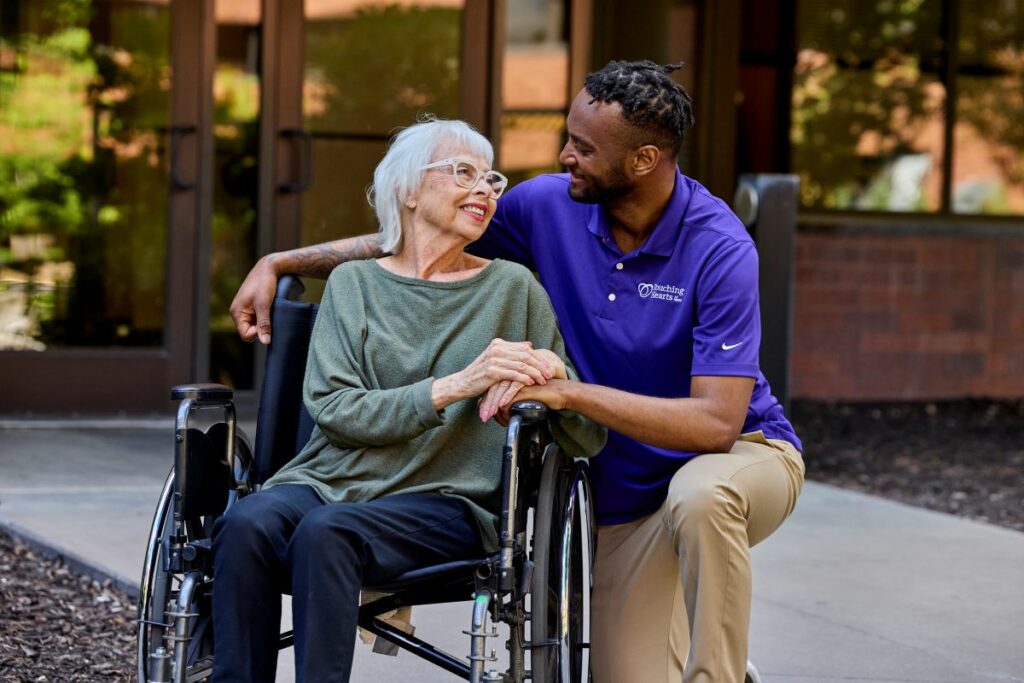
At Touching Hearts at Home, we provide supplemental caregiving services that work alongside — not instead of — community care staff. Our caregivers focus on individualized engagement, emotional support, companionship, and a familiar, consistent presence. The goal is never to replace the excellent work that care communities provide — but to complete the circle of care in a way that is deeply personal.
Why Families Consider Supplemental Care
Every older adult’s needs, routines, interests, and personal history are different. Care communities provide essential support, but staffing levels, shift changes, and differing resident needs can sometimes make it difficult to offer the kind of 1:1 continuity that a single, dedicated caregiver can provide.
Families may choose supplemental support for reasons such as:
- The desire for more companionship, conversation, and meaningful engagement
- Increased fall prevention oversight during mobility or personal care routines
- Support during dining, activities, transitions, and daily routine changes
- Help maintaining familiar routines, hobbies, or spiritual practices
- Additional comfort and reassurance during times of confusion or disorientation
- Peace of mind for family members who live out of the area or visit less frequently
Supplemental support helps ensure that older adults receive consistent, familiar, relationship-based care, while community staff continue to manage daily care tasks and health-related responsibilities.
The Value of Consistency & Familiarity
For many older adults — especially those living with cognitive change or memory loss — consistent relationships make a meaningful difference in daily comfort and confidence. Familiarity supports orientation, reduces overwhelm, and provides reassurance.
Supplemental caregivers offer:
- Predictability: The same familiar person visiting regularly
- Shared patience: Time to move at the older adult’s natural pace
- Personal connection: Someone who knows preferences, dislikes, routines, and communication styles
This continuity helps reduce confusion and anxiety and supports a positive emotional environment, which is especially important in Memory Care communities.
Social Engagement Matters for Well-Being
Loneliness and social withdrawal are significant risks for older adults.
- According to the CDC, social isolation increases the risk of dementia by nearly 50%.
- And older adults experiencing loneliness have a higher likelihood of hospitalization and emergency visits.
(Source: Centers for Disease Control and Prevention, 2023)
Supplemental caregivers provide intentional social connection, including:
- Conversation and emotional companionship
- Music, art, or sensory-based activities
- Gentle movement or walks (when appropriate and allowed)
- Reading aloud, reminiscing, or organizing memory albums
- Accompaniment to community events or on-site programs
These interactions are just as essential to health as physical care — they support identity, self-expression, and joy.
Supporting Activities of Daily Living (Without Replacing Community Staff)
Care communities handle personal and clinical care needs, but routines can still feel rushed or vary depending on staff scheduling. Supplemental caregivers provide gentle, unhurried support, such as:
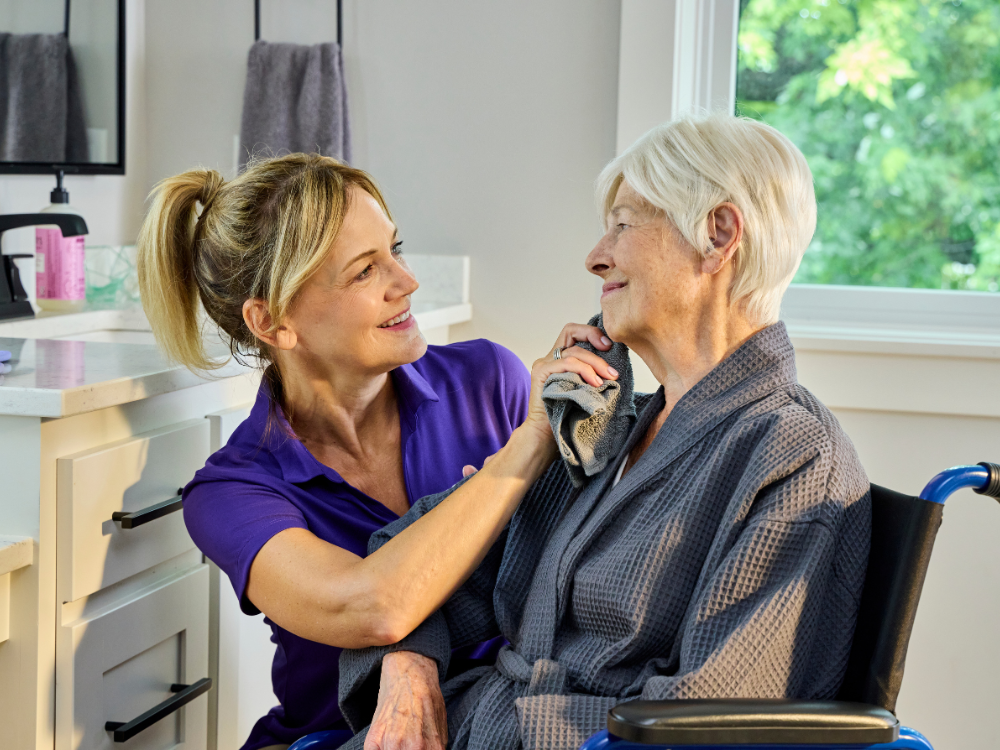
- Standby assistance during bathing or dressing
- Transfer assistance or mobility encouragement
- Dining support to help maintain nutrition and dignity
- Hygiene assistance at a comfortable pace
- Meal companionship to encourage engagement and appetite
This added time and presence can make daily routines feel far more comfortable, safe, and respectful.
Supporting Family Members Matters, Too
It is common for adult children and loved ones to carry emotional stress when navigating care transitions. Many families describe the experience of being “always on alert” — even when they trust the care community.
Supplemental support gives families:
- Confidence that their loved one is not alone during busy times of day
- Reassurance that someone knows their loved one personally
- Space to simply visit as family, not manage tasks
- An ongoing communication bridge when routines change or support needs shift
This is not just about care — it is about preserving relationships.
How Touching Hearts at Home Works Alongside Care Communities
Our approach is collaborative. We communicate with community staff and coordinate care in a way that respects their leadership, workflow, and care protocols.
We support without disrupting:
- Daily schedules
- Medication routines
- Dining and group activity schedules
- Therapy plans
- Safety protocols
Our caregivers are trained to add comfort, connection, and consistency — not complexity.
When Supplemental Care Makes the Most Difference
Families often find supplemental care most beneficial:
- During transitions (such as moving from home into a community)
- During evenings or weekends, when staffing patterns change
- After hospitalization or rehabilitation
- For individuals living with cognitive change or dementia
- When family visits are limited by distance or schedule
This support can be provided for a few hours a week, or daily, depending on needs.
Continuous Presence & Extended Support
Some families prefer daily schedules or longer visit durations, such as:
- Morning routines
- Evening calming and bedtime routines
- Mealtime support
- Weekend or holiday companionship
- Overnight reassurance support
Others choose a long-term rhythm, such as:
- 2–4 hour visits several days per week
- Daily lunchtime visits
- Sunday or evening support
- Consistent, same-caregiver visits
There is no single model — care is customized and flexible.
Supplemental Care Is About Enhancing Quality of Life
Whether an older adult enjoys music, puzzles, gardening, baseball games, church songs, or simply quiet company — supplemental support makes space for the things that feel meaningful.
Because quality of life is personal.
And personal support honors that.
Let’s Talk About What Would Feel Helpful for Your Family
If your loved one lives in:
- An Assisted Living community
- A Memory Care community
- A Nursing Home community
— and you believe they would benefit from more consistency, connection, or comfort, we’re here to help.
Our caregivers provide support that is thoughtful, personal, and grounded in respect.
Get in touch to schedule a conversation — no pressure, no obligations, just support.
We’re here, and we’re ready to help.
Touching Hearts at Home — Dayton & Springfield
Supporting older adults and their families throughout the Miami Valley.