Post-Discharge & Post-Rehab Recovery Support at Home in Dayton & Springfield
Returning home after a hospital stay, surgery, illness, or rehabilitation can be a moment of relief — but also a moment of vulnerability. The familiarity of home feels comforting, yet the body and mind may not feel quite steady yet. Strength may be limited. Energy may come and go. Medications or therapy routines may feel new or overwhelming. Families want to help, but may not know exactly what support is needed, how often, or for how long.
In Montgomery and Clark Counties, we hear this again and again from families:
“We were so thankful to be back home — but we didn’t realize how much support would be needed in those first few weeks.”
This is because healing does not end at discharge.
In many ways, healing begins at home.
A study published by the National Institutes of Health found that nearly one in five older adults is readmitted to the hospital within 30 days, and the majority of these readmissions are not due to medical complications — but rather to difficulties managing recovery at home. These are issues like missed medication timing, difficulty moving safely through the home, dehydration, fatigue, and understandable anxiety about doing too much or too little.
Home is the right place to recover.
But home needs support.
Healing Requires Calm, Predictable Rhythm
When someone returns home after surgery, illness, or rehab, the body is already doing the hard work of healing. Recovery is a process that requires pacing — finding a balance between rest and movement, independence and assistance, confidence and caution.
This pacing looks different for every person. For someone in Springfield returning after a hip replacement, it may mean moving slowly through hallways and using careful transfer support at the bedside. For someone in Dayton after a cardiac procedure, it may mean short walks, hydration reminders, and meal support that protects energy and heart health. For someone recovering from pneumonia or COVID-19 in Huber Heights or Tipp City, it may mean monitoring breathing, preventing exhaustion, and helping maintain routine gently.
Recovery is not just physical — it is emotional. Returning home can highlight a sense of vulnerability. A person may worry about falling, overexerting, or being alone at the wrong moment. The Journal of Geriatric Nursing notes that emotional reassurance is one of the strongest contributors to successful recovery at home.
Presence matters.
Steadiness matters.
Gentleness matters.
The Heart of Post-Hospital Support: Moving With the Person
Touching Hearts at Home caregivers are trained to help recovery unfold safely and calmly. The goal is not to push — it is to walk alongside the person healing. This includes:
- Helping with bathing, dressing, and safe bathroom use without rushing
- Preparing nourishing meals that support strength and hydration
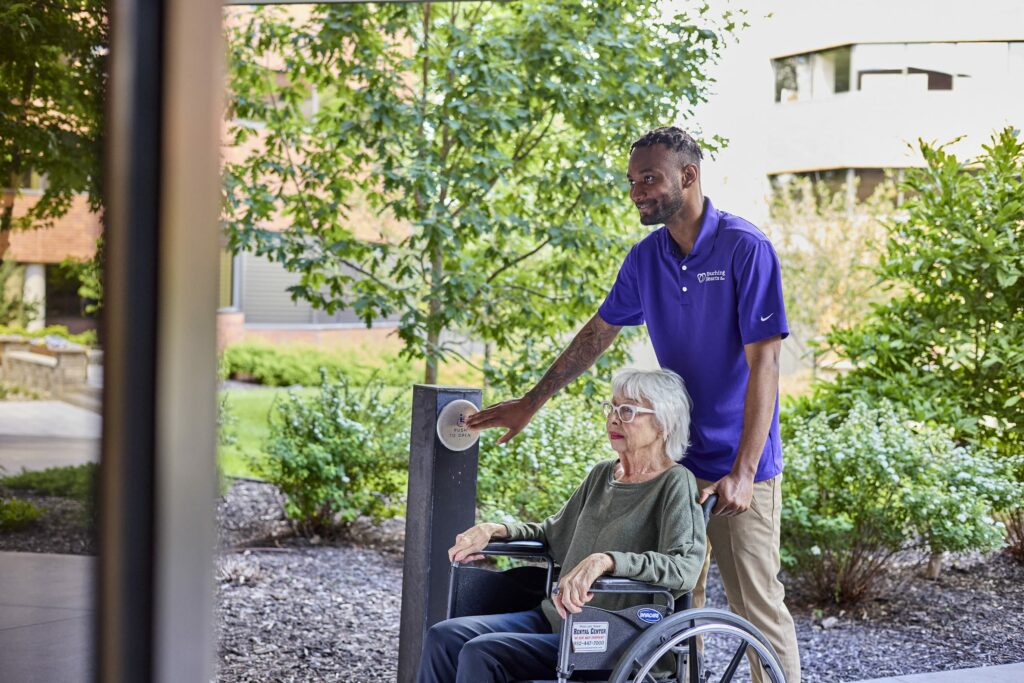
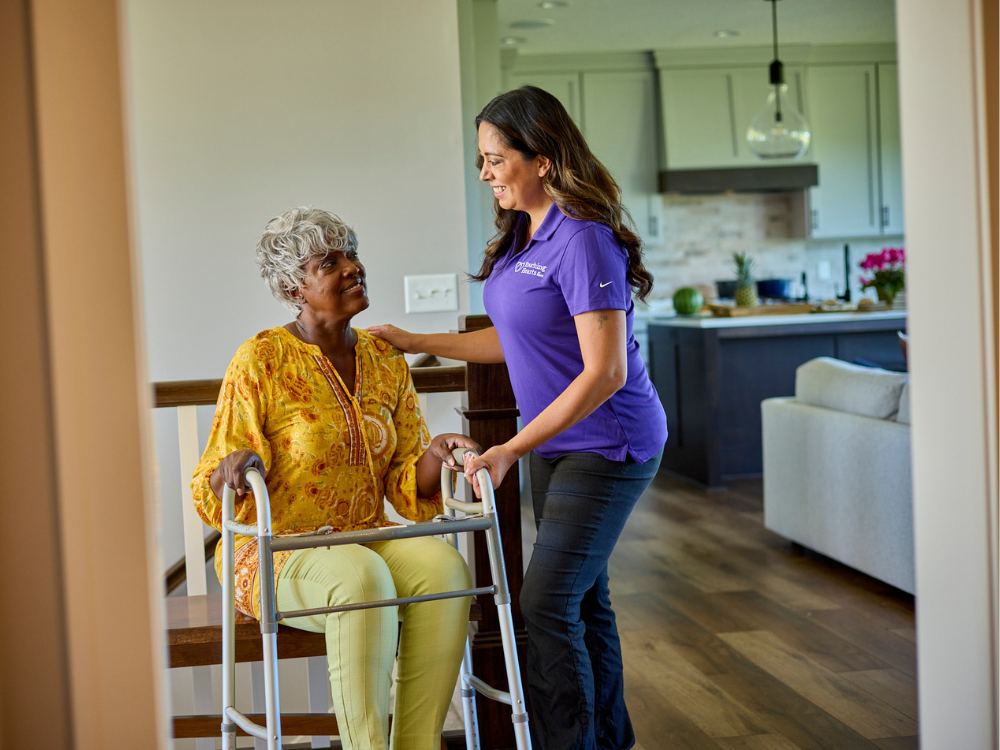
- Supporting mobility, transfers, and short walks to prevent muscle loss
- Providing medication reminders that prevent missed or double doses
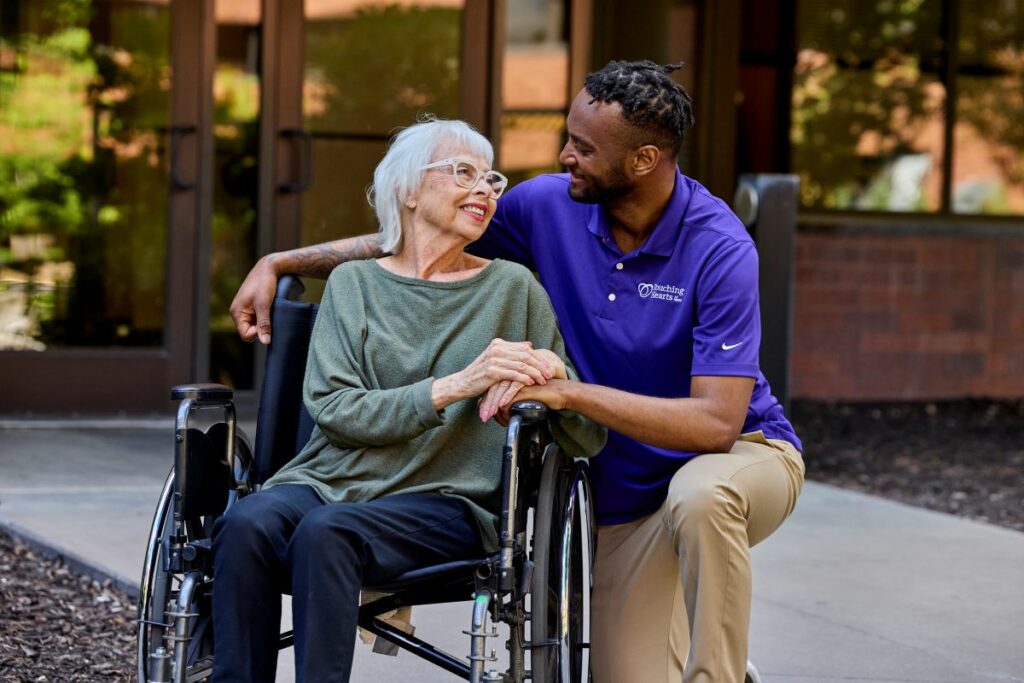
- Sitting nearby during rest periods so the person never feels alone
- Offering conversation and companionship to help reduce stress and worry
The tone of the care matters as much as the tasks. Care is unhurried. Respectful.
We match the pace of the person healing — not the schedule on the clock.
The National Council on Aging emphasizes that recovery outcomes improve when home support feels emotionally safe and relational, not just task-based. This is why we lead with presence first.
Support for Families, Too — Because Recovery Affects Everyone
Family members often describe the weeks following discharge as a blur:
monitoring medications, trying to prepare meals, worrying about fall risks, answering calls from care providers, rearranging schedules, and hoping they are doing the right thing. Caregiving in this stage can be physically demanding and emotionally heavy.
Many adult children say:
“I wanted to be the one to help — I just didn’t realize how hard it would be to do everything alone.”
Allowing support in does not replace family involvement.
It makes it sustainable.
Caregivers can focus on:
- Being present emotionally
- Sharing conversation
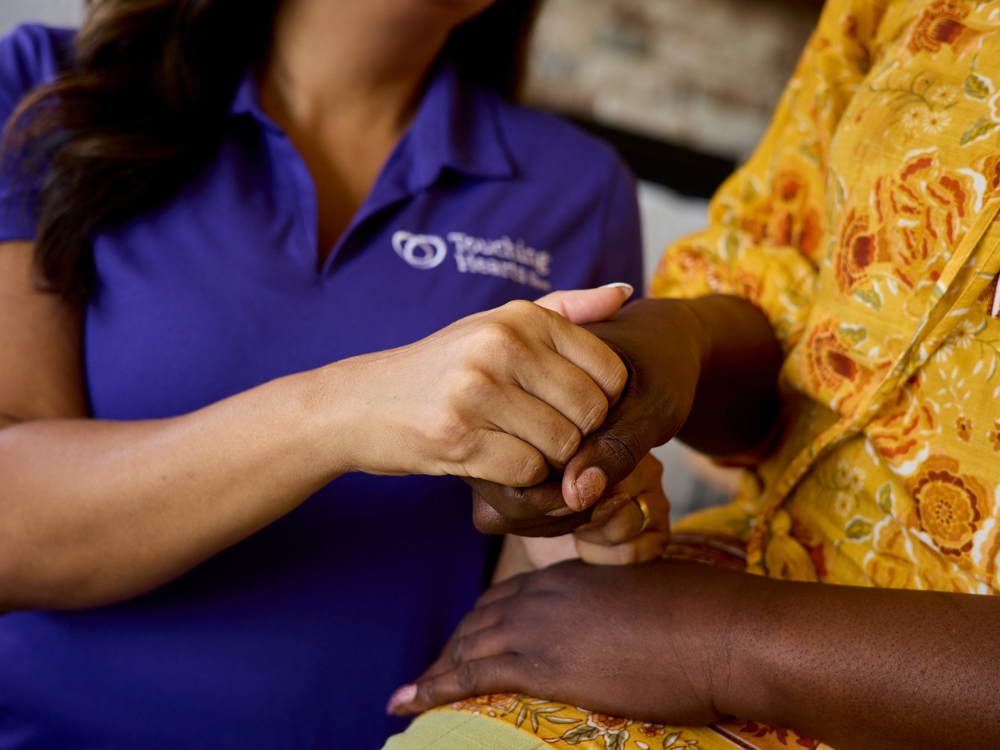
- Holding hands
- Remembering stories
- Laughing together again
Instead of constantly worrying about what comes next.
Local Care That Feels Personal — Because It Is
Touching Hearts at Home of Dayton & Springfield is not a franchise run from afar. We are part of the Miami Valley community — with caregivers who live in the same neighborhoods, attend the same churches, and understand the culture of support and neighborliness that defines this region.
Whether recovery is happening in Centerville, Yellow Springs, Urbana, Oakwood, or anywhere across Clark and Montgomery Counties, we bring care that feels familiar — not clinical.
We learn the person’s rhythms.
We learn their preferences.
We learn how to move with them in a way that feels natural.
Recovery should feel supported, not supervised.
Healing at Home Is Possible — and Meaningful
To recover at home is to heal in the place where life is already known — where stories live in the walls, where belonging has taken shape over time. It is a gift to preserve that connection.
Touching Hearts at Home Dayton/Springfield is here to support that experience — safely, thoughtfully, and with dignity at the center of every moment.
If you are preparing for a discharge or navigating recovery now, we welcome you into a conversation — calm, compassionate, and without pressure.
Touching Hearts at Home — Dayton & Springfield, Ohio
Recovery feels different when you are not walking it alone.