Blog > Blog » Dehydration in Seniors: Warning Signs and Prevention at Home
Dehydration in Seniors: Warning Signs and Prevention at Home
A dry mouth or sudden confusion in an older adult is often the first sign of dehydration. These subtle changes can signal a serious health risk that many families overlook until a crisis occurs.
Dehydration in seniors is a common and chronic health issue that occurs when an older person does not drink enough water to stay healthy and safe. This problem happens when the body loses more fluid than it gets from drinks. Experts in medical research find that this condition leads to poor memory, a lower quality of life, and higher hospital risks. Since many seniors do not feel thirsty even when they need water, the issue can develop slowly without any clear warning signs. Monitoring daily water intake and watching for small changes like dry skin can help prevent these risks and keep your loved ones safe at home.
Protecting your family member starts with knowing why their body handles fluids differently than it used to. Understanding these shifts is the first step in keeping them safe and healthy while they age at home. To protect your loved one and keep them out of the hospital, we must first ask:
Why Are Seniors at Higher Risk for Dehydration?
Dehydration in seniors is a common and often long-term issue. As people age, the body goes through many changes that make it harder to keep a healthy fluid level. Research shows that low-intake dehydration is a common threat for older adults who do not drink enough to balance normal fluid losses. These losses occur daily through breath, sweat, and urine. When the body cannot balance these losses, it can lead to serious health problems like fuzzy thinking or more trips to the hospital.
Natural changes in fluid balance
One of the main causes of dehydration is the way the aging body handles water. Older adults naturally have less water in their bodies than younger people. This means there is less of a buffer when fluid is lost. Also, the sense of thirst often fades with age. A senior may not feel thirsty even when their body needs more water. Without that natural signal, many people simply forget to drink enough throughout the day. This is why staying hydrated during summer is so vital, as heat can speed up fluid loss.
The kidneys also do not work as well at keeping water in the body as we get older. They may produce more urine, which pulls vital moisture away from the blood and tissues. This cycle makes it very easy for a mild lack of water to turn into a long-term state of dehydration. Caregivers in Aurora often see this trend in those who live alone and lack a set plan for drinking fluids.
Medication and chronic health issues
Many seniors take several daily drugs to manage health issues. Some of these medicines, such as blood pressure pills, act as diuretics. These drugs cause the body to get rid of more water and salt. This side effect is a major risk factor for dehydration in seniors. Other drugs might cause too much sweating or diarrhea, which further drains the body’s fluid stores. It is important to review all drugs with a doctor to see how they might change daily water needs.
Chronic health issues also play a large role. Health problems like diabetes or kidney disease can change how the body uses and stores water. Even a short illness like a cold or the flu can lead to a quick drop in fluid levels. For those who need help managing these risks, personal care assistance can provide the support needed to track intake. A caregiver can offer regular reminders and help prepare drinks that are easy to swallow.
Cognitive factors and mobility
Cognitive decline is another factor that increases the risk of dehydration. People with memory issues or dementia may forget when they last had a drink. They might also lose the ability to tell someone they are thirsty or find it hard to get a glass of water on their own. This makes watching a person closely vital for safety. When a senior also has trouble moving, they might drink less to avoid trips to the bathroom. This choice can lead to a dangerous cycle of fluid loss.
Kind home care helps bridge this gap. Caregivers act as a second pair of eyes to spot signs like a dry mouth or sudden tiredness. By setting a steady pace for water intake, they help seniors avoid the steep risks of dehydration. This support allows older adults to stay safe and live on their own in their own homes for a longer time.
What Are the Common Signs of Dehydration in Seniors?
The most common signs of dehydration in seniors include a sticky or dry mouth, dark yellow urine, sudden confusion, extreme lethargy, and a feeling of lightheadedness. Because older adults often do not feel thirsty, family caregivers should monitor these physical and mental cues daily rather than waiting for their loved ones to ask for a drink of water.
Because the early symptoms can be very subtle, recognizing the signs of dehydration in seniors requires close observation. Unlike younger adults, who may quickly notice and complain about feeling thirsty, seniors can experience a rapid drop in fluid levels without realizing they are in danger. Caregivers and family members must watch for a mix of physical and cognitive changes to keep their loved ones safe at home.
Physical indicators of low fluid levels
Several early signs can point to a developing fluid deficit. One of the most obvious signs is a dry mouth or a sticky tongue. If your loved one is having trouble swallowing dry foods or complains of a dry throat, they likely need water. Another critical check is the color of their urine. Healthy, well-hydrated urine is pale and clear, while dark yellow, amber, or strong-smelling urine is a direct sign that the body is conserved and low on water. You can also perform a skin turgor check by gently pinching the skin on the back of their hand. In a well-hydrated person, the skin snaps back immediately, but in a senior suffering from dehydration, the skin may remain “tented” for several seconds before slowly smoothing out.
Cognitive changes and sudden confusion
One of the most surprising and dangerous signs of dehydration in seniors is a sudden change in mental status. When the brain does not receive enough fluids, cognitive performance drops rapidly. This can manifest as sudden confusion, irritability, short-term memory lapses, or difficulty following a simple conversation. Families often mistake these sudden cognitive changes for natural aging or the onset of dementia, but they are frequently caused by acute low-intake dehydration. Ensuring they steadily drink fluids can restore mental clarity and help avoid an unnecessary trip to the hospital. Our caregivers are trained to act as compassionate observers, monitoring for these sudden shifts in mood or alertness that may indicate a serious need for fluids.
Advanced and severe symptoms
If mild dehydration is left unaddressed, it can quickly escalate into a severe medical emergency. As the fluid deficit grows, seniors may experience a drop in blood pressure, leading to dizziness, lightheadedness, and an extremely high risk of falling. Other advanced symptoms include:
Rapid heart rate: The heart beats faster to pump the remaining, thicker blood through the body.
Sunken eyes: A visible hollow look around the eyes due to deep tissue fluid loss.
Extreme lethargy: Being completely unresponsive, difficult to wake, or unable to sit up.
Infrequent urination: Going six hours or more without urinating, or passing very little, highly concentrated urine.
When these severe symptoms appear, offering a glass of water is no longer sufficient. The body’s systems are struggling, and the senior requires immediate medical care, which may include intravenous (IV) fluids at a local clinic or emergency room. If your loved one experiences chronic struggles with hydration during hot weather, implementing proactive strategies such as preventing heat-related dehydration can help protect their health and keep them safe at home throughout the year.
How to Prevent Dehydration in the Elderly at Home
Many seniors do not feel thirsty even when their body needs water. This makes dehydration in seniors a frequent and serious health risk for older adults. Without enough water, a person may feel tired or confused. Families can help by making small changes to daily habits that help them drink more fluids.
Use simple daily habits
Creating a set plan for drinking water helps make it a normal part of the day. You can link water breaks to regular events like waking up or finishing a meal. These hydration routines for seniors help them get enough fluids without having to think about it.
Focus on choice and access
Drinking plain water all day can feel like a chore. Giving a choice of different drinks or water-rich foods can make the day more fun. It is also vital to keep drinks within reach so a person does not have to get up to find one.
Take small steps for health
Keep water close at hand. Place a full glass or a small water bottle next to their favorite chair or on the nightstand. Having water nearby makes it much easier for them to take a drink whenever they think of it.
Set regular reminders. Use a phone alarm or a simple kitchen timer to signal when it is time to drink. This helps people who may have trouble thinking about staying hydrated on their own.
Offer small sips often. Do not wait for them to feel thirsty or try to make them drink a whole glass at once. Giving small amounts of water throughout the day is much better for the body than one large drink.
Add flavor to drinks. Some people do not like the taste of plain water, so try adding fruit slices like lemon or lime. You can also offer low-sugar juices, herbal tea, or clear soups to keep things good.
Use foods with high water content. Fruits like melon and berries or vegetables like cucumber and celery are great for extra fluid. These snacks provide a tasty way to fight dehydration without drinking another glass of water.
If you find it hard to track water intake, home care help can make a big difference. Our team provides companion care services that include regular reminders to stay hydrated. Caregivers can also watch for signs like a dry mouth or low energy. This extra support helps prevent a loss of fluids that could lead to a hospital visit.
What Are the Best Hydration Foods and Beverages Beyond Plain Water?
Many older adults find it hard to drink enough water each day. This often leads to dehydration in seniors, which is a common health risk. You do not have to rely on a plain glass of water to stay safe. Many foods and other drinks can help you reach your daily fluid goals. These options add flavor and give you many choices while keeping you healthy.
Water-Rich Fruits and Veggies
Eating your fluids is a great way to stay full of water. Many fruits are almost all water. Melons like watermelon and cantaloupe are mostly water. They are soft and sweet, which makes them a perfect snack for a hot day in Aurora. Berries and peaches also have a high water content and provide good nutrients.
Adding moisture-rich fruits and vegetables to a daily routine provides a delicious and natural way to boost senior hydration levels.
Veggies are another key part of a hydrating diet. Cucumbers are full of water and very light. You can slice them thin for a snack or add them to a fresh green salad. Celery and tomatoes also help keep your fluid levels high. These fresh foods make it easy to get more water without feeling like you are forced to drink.
Warm Broths and Tasty Drinks
Warm broths and soups are great for more than just a quick meal. They give the body both water and salt. The salt helps your body hold onto the fluids you take in. This is very helpful for those at risk of low fluid intake. A cup of warm broth at night can be a good way to boost your daily total.
Fruit-filled water or low-sugar juices can also be a good change of pace. Some seniors do not like the taste of plain water. Adding a slice of lemon or a few mint leaves to a pitcher of water adds a fresh flavor. Herbal teas are another good choice as they have no caffeine and can be served hot or cold.
Hydration Source
Top Examples
When to Serve
Main Benefit
Moisture-Rich Fruits
Melon, Peaches, Berries
Morning or afternoon snacks
Sweet taste and high vitamins
Hydrating Veggies
Cucumbers, Celery, Tomatoes
Lunch salads or side dishes
Very light and easy to eat
Warm Liquids
Chicken Broth, Veggie Soup
Evening meals or light snacks
Provides salt to hold water
Flavored Drinks
Lemon Water, Herbal Tea
With meals or as a treat
Better taste than plain water
Building Hydration into Daily Habits
Helping seniors eat right is a big part of what we do. Our staff provides professional meal preparation to make sure fresh foods are always ready. We help families set up habits that include hydrating snacks throughout the day. This makes it easier to stay on track and avoid the bad effects of losing too much fluid.
We also teach families about the importance of daily water intake to help loved ones age well. By using a mix of foods and drinks, seniors can feel better and stay more active. Small changes in what you eat can make a big change in how you feel each day.
When to Seek Professional Medical Care or In-Home Support
Spotting the signs of dehydration in seniors is a vital part of staying healthy at home. While daily help can meet most needs, some signs mean you should call a doctor right away. Knowing the difference between home support and a medical crisis can keep your loved one safe.
Spotting chronic dehydration in seniors
For many older adults, dehydration in seniors is a slow and chronic issue. It happens when a person does not drink enough water to replace what the body loses through breath and sweat. This low-intake dehydration can lead to poor brain health and a lower quality of life. Since it builds up slowly, it can be hard to find without close daily watch.
Over time, this lack of fluids makes it harder for the body to work. It can lead to more hospital visits and worse health for those with other chronic conditions. Our team helps by keeping a close eye on daily habits. We want to catch these slow changes before they turn into a bigger health threat. Small shifts in how much water someone drinks can have a large impact over many weeks.
When to call a doctor or visit the ER
Some signs of fluid loss are crises that need expert medical care. You should seek help right away if a senior shows sudden confusion or extreme sleepiness. These are major red flags that the body cannot cope on its own. Other signs of a crisis include a fast heart rate, fainting, or a dry mouth.
When these symptoms hit, simple water intake is not enough. Doctors may need to use IV fluids to fix the balance in the body. Early action is key to stop unplanned hospital stays. If you see a sharp change in how someone acts, do not wait to get help.
The role of RN-supervised home care
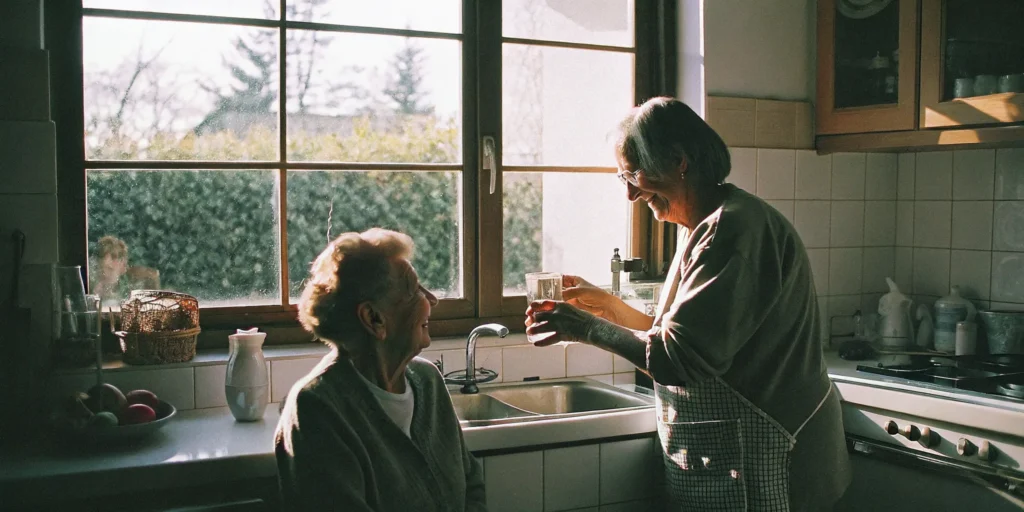
Most maintaining senior hydration goals are best met with a steady routine. Non-medical home care focuses on the habits that prevent a crisis. Caregivers give water reminders and track how much a person drinks each day. This active approach is great for those who forget to drink or lose their sense of thirst. Having a person there to hand over a glass of water makes a big difference in daily intake.
At Touching Hearts at Home Aurora, our Registered Nurse reviews every care plan. This RN oversight helps us find health shifts that others might miss. It fills the gap between simple help and medical care. If more clinical help is needed, we can point you toward private nursing support. This team effort makes sure that health and safety stay first every day.
,
,
]
Frequently Asked Questions About Dehydration in Seniors
Why are seniors at higher risk for dehydration?
Seniors are at higher risk because their body water content naturally decreases with age, leaving less fluid reserves. Additionally, the brain’s thirst centers become less sensitive, meaning they often do not feel thirsty even when their bodies require water. Medication side effects, chronic illnesses, and mobility issues can also increase risk or make it difficult to get a drink.
What is the fastest way to hydrate an elderly person?
The fastest way is to offer small, frequent sips of water, low-sodium broths, or electrolyte solutions. Giving too much fluid at once can cause nausea or stomach distress. If the senior is unable to swallow safely or shows signs of severe dehydration, seek immediate medical attention for IV fluids at a clinic or hospital.
Does medication contribute to dehydration in seniors?
Yes, many medications commonly prescribed to older adults can contribute to fluid loss. Diuretics for high blood pressure or heart failure are designed to rid the body of excess water and salt. Other drugs, including certain laxatives, chemotherapy agents, and kidney medications, can also increase the risk of dehydration. Always review medications with a physician.
What are the long-term effects of chronic dehydration in seniors?
Chronic dehydration in older adults can lead to recurring urinary tract infections (UTIs), kidney stones, and severe constipation. Over time, it can cause permanent kidney damage or kidney failure. It also reduces skin elasticity and joint lubrication, making seniors more vulnerable to pressure sores and muscle pain.
Empowering Senior Hydration and Safety at Home
Preventing dehydration in seniors requires more than just leaving a glass of water on a table; it requires consistent, compassionate encouragement and daily structure. While establishing healthy habits can take time, having a supportive professional by your loved one’s side can provide immense peace of mind. Our non-medical home care services are designed to protect vulnerable seniors, help families avoid preventable hospital stays, and ensure every older adult has the day-to-day assistance they need to thrive.
Our trained caregivers can help establish consistent hydration routines, prepare delicious water-rich snacks, and monitor your aging parent for any concerning physical or cognitive changes. With professional Registered Nurse oversight on our care plans, Touching Hearts at Home Aurora bridges the gap between home safety and early health detection.