Post-Hospital, Post-Rehab, or Post-Illness Recovery Care at Home in Syracuse
Supporting Stability, Strength, and Safe Continuity of Daily Life
Returning home after a hospital stay, rehabilitation program, illness, injury, or surgical procedure is a meaningful milestone — one that often brings relief, hope, and a sense of progress. Yet it is also a period where support, structure, and consistency become especially important. The transition from a medical environment back to the home requires thoughtful planning to help maintain recovery momentum, prevent complications, and promote confidence.
Across Syracuse and the surrounding communities — Liverpool, Baldwinsville, Camillus, Fayetteville, Manlius, DeWitt, Clay, and Skaneateles — families often seek guidance in navigating this transition. The goal does not simply involve returning home. It involves returning home safely, with the right level of support in place to assist daily life.
This is where post-hospital and post-rehab care at home plays a vital role.
The Transition From Hospital or Rehab to Home Is a Critical Phase
Evidence shows that the period immediately following discharge is one of the most vulnerable times for older adults. According to data from the Agency for Healthcare Research and Quality, nearly 20% of older adults are readmitted to the hospital within 30 days of discharge, often due to complications, missed follow-up care, falls, medication mismanagement, or lack of needed daily living support.
This does not reflect a lack of effort from families or providers.
It reflects the reality that:
- Recovery requires energy, which may already be limited.
- Instructions from medical teams can be complex or overwhelming.
- Home environments are not controlled the same way hospitals are.
- Daily tasks (bathing, dressing, preparing meals, managing medications) often require more support than anticipated.
- Even brief moments of fatigue, dizziness, or confusion can increase risk.
Recovery is not only medical —
It is practical, emotional, and environmental.
A structured, supportive plan helps ensure that the progress gained in the hospital or rehab setting continues at home.
Supporting Strength and Safety Day-to-Day
After a stay in the hospital or short-term rehabilitation, older adults may experience changes in mobility, stamina, balance, and cognitive clarity. It is common to feel weaker, more easily tired, or uncertain while moving around the home. This is particularly relevant in Central New York winters, where icy driveways, wet entryways, and snow-covered pathways can increase fall risk even further.
Thoughtful in-home support can help:
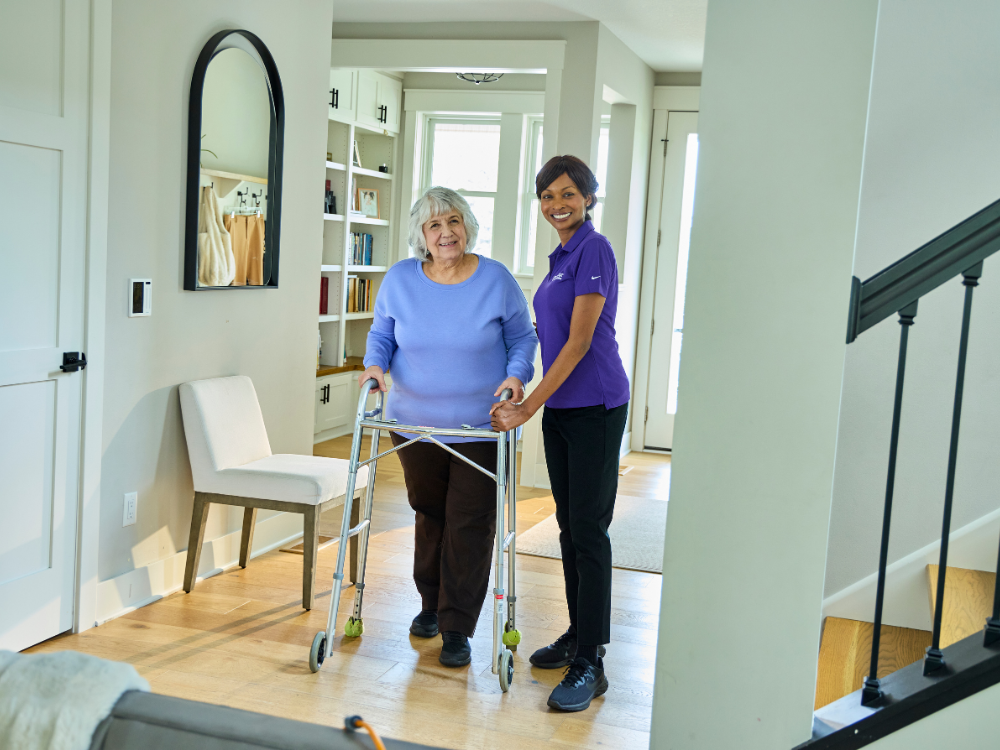
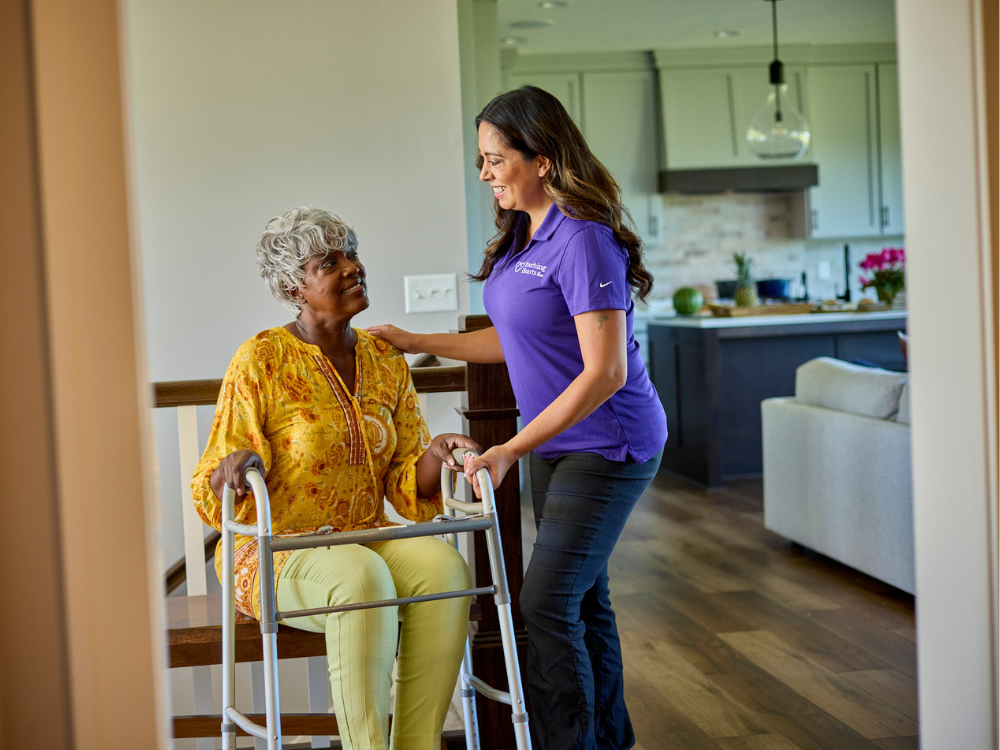
- Maintain physical stability and reduce fall risk
- Support steady movement and transfers
- Ensure meals are prepared safely and consistently
- Promote healthy sleep and hydration patterns
- Help maintain medication routines without confusion or urgency
- Reduce stress, which can interfere with recovery
- Reinforce confidence in daily routines
These daily supports are not small.
They play a direct role in long-term recovery outcomes.
Medication, Scheduling, and Care Coordination
During recovery, medication schedules may change — sometimes multiple times in a short period. Follow-up appointments, therapy schedules, and physician instructions may need to be tracked and organized. It can feel like a second full-time job to understand what is required and when.
Care coordination at home helps:
- Support clear medication reminders according to current directions
- Encourage safe pacing to avoid exhaustion or dizziness
- Track upcoming follow-up appointments and assist with transportation
- Document and communicate observations to family (at their request)
- Reinforce dietary needs or hydration cues
- Provide presence to ensure that new symptoms or discomforts are not overlooked
This creates continuity — and continuity is what stabilizes recovery.
Nutrition and Strength Support
Regaining strength requires consistent nourishment and hydration. After illness or surgery, appetite may be reduced, tastes may change, or a loved one may simply feel too tired to prepare meals.
Support at home can include:
- Preparing meals that align with preferences AND recovery needs
- Encouraging small and steady intake when appetite is low
- Providing companionship during mealtimes, which can increase appetite
- Ensuring hydration throughout the day
- Maintaining safe kitchen organization to prevent strain or falls
When meals are structured and consistent, recovery progresses more smoothly — and daily life feels more manageable.
Emotional Recovery Matters Too
Hospital stays and rehabilitation experiences can be disorienting or exhausting. Returning home can bring relief, but it can also introduce uncertainty — especially if the environment now feels harder to navigate.
Emotional recovery may include:
- Rebuilding confidence in movement and self-care
- Processing the experience of hospitalization or illness
- Adjusting daily expectations to match energy levels
- Accepting new forms of support with comfort, not frustration
Compassionate presence can help reduce the emotional stress of transition.
Recovery improves when a person feels supported, encouraged, and respected.
How Touching Hearts at Home of Syracuse Provides Post-Recovery Support
At Touching Hearts at Home of Syracuse, our post-hospital and post-rehab care focuses on stability, safety, and continuity. We work with each family to understand what recovery requires and to provide support that aligns with the older adult’s routines, strengths, preferences, and goals.
Our support may include:
- Standby and transfer assistance to help prevent falls
- Routine guidance throughout the day to reduce overwhelm
- Meal planning and preparation to support energy and healing
- Medication reminders according to current medical direction
- Assistance with bathing, grooming, and personal care in a dignified manner
- Home environment organization to reduce physical strain and confusion
- Companionship and consistent emotional support during recovery
- Transportation and accompaniment to follow-up appointments
- Communication with family (as desired) to provide meaningful updates
Care is customized, reviewed regularly, and adjusted as recovery progresses.
We do not replace clinical care — we extend its effectiveness into the home.
If Your Family Is Preparing for a Discharge or Home Recovery
You do not need to navigate this transition alone.
We are here to guide, support, and walk with you through the process — with steadiness, clarity, and care.
Support at home can make recovery safer, calmer, and more successful — so your loved one can return not just to the house they know, but to the life they know.